Welding Processes Handbook
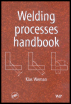
This explanatory guide to the commercially significant and commonly-used welding processes covers the design of welded joints, quality assurance and costing, and can be applied to all instruction levels.
 TABLE OF CONTENTS
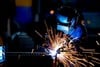
 A welding arc is an electric discharge between two electrodes. The welding current is conducted from the electrode to the workpiece through a heated and ionised gas, called plasma. The voltage drop and current in the arc give the amount of electric power that is released, the heat of which, melts the electrode and the joint faces.
The power must also be high enough to keep the temperature of the arc sufficient for the continued transport of the current. The temperature maintains ionisation of the gas, i.e. it creates electrically charged particles that carry the current.
Depending on the choice of shielding gas, different temperatures are needed to keep the plasma ionised. Argon, for example, is easier to ionise than helium. That means that welding in helium or helium-mixed gases produces a higher voltage drop and higher heat input to the weld pool.
When welding with a consumable electrode, such as MIG/MAG welding, the arc has two main functions. One is the above-mentioned supply of heat for melting the materials; the other is the transport of the molten electrode material down to the weld pool. This droplet transfer is very dependent on the electromagnetic forces and surface tension in the arc region. These forces have a great influence on the behaviour of the welding process, and enable one to distinguish between different arc types.
At high current, the resulting magnetic forces are directed downwards which helps the droplet to be released from the surface...