
Sealed Vibration Measurement Instruments and Vibration Analyzers
Description
Sealed Vibration Measurement Instruments and Vibration Analyzers are specialized tools designed to measure and analyze vibrations in various environments. These instruments typically consist of a transducer, data acquisition system, and a display or output interface. They are capable of accepting various types of transducers, including acceleration, linear velocity, proximity, and displacement sensors, as well as generic signal inputs like voltage and current. The sealed design allows these instruments to operate in extreme environments, such as those with excessive heat, moisture, or dust, enhancing their durability and reliability.
Working Principle
Sealed Vibration Measurement Instruments and Vibration Analyzers work by converting mechanical vibrations into electrical signals through sensors like accelerometers and proximity probes. Accelerometers measure vibrations across multiple axes and provide signals for analysis in the time or frequency domain, while proximity probes detect radial vibrations in rotating machinery. The data acquisition systems then collect and process these signals, often using analog-to-digital converters and signal conditioning modules, to enable detailed analysis. These instruments are useful because they provide high-fidelity vibration data that can be used to monitor machinery health, predict failures, and optimize performance.
Applications
These instruments are widely used in industries where machinery health monitoring is critical. For example, they are employed in the aerospace industry to monitor the vibrations of aircraft engines and in the manufacturing sector to ensure the smooth operation of production line equipment. In the energy sector, they are used to analyze the vibrations of turbines and generators to prevent unexpected downtimes.
Advantages over other Vibration Measurement Instruments and Vibration Analyzers
Sealed Vibration Measurement Instruments offer several advantages over their non-sealed counterparts. Their ability to withstand extreme environmental conditions makes them ideal for use in harsh industrial settings. Additionally, their compatibility with a wide range of transducers and signal inputs allows for versatile application across different types of machinery and environments. The inclusion of features like self-calibration and built-in filters further enhances their functionality and ease of use.
Limitations
Despite their advantages, sealed vibration measurement instruments have limitations. They can be more expensive than non-sealed versions due to their robust design and additional features. The complexity of these instruments may also require specialized training for proper operation and maintenance. Additionally, while they are designed to withstand harsh conditions, they may still be susceptible to damage from extreme shock or power surges.
Considerations
When considering the purchase and use of sealed vibration measurement instruments, several factors should be taken into account. Initial costs can be high, but this investment is often justified by the increased durability and reliability in harsh environments. Operating expenses may include regular calibration and maintenance to ensure accuracy and longevity. The accuracy of these instruments is generally high, but it is crucial to ensure proper sensor mounting and data acquisition setup to achieve optimal results. Replacement and maintenance costs should also be considered, as these can vary depending on the specific model and usage conditions.
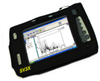
from Vibration Specialty Corporation
SV3X Data Collector. At every step of the way, the SV3X � makes it easy for you. The data you collect are complete, accurate and consistent. With up to 4-channel simultaneous data acquisition you can capture data from a triaxial accelerometer or from two to four bearings using single axis... [See More]
- Features: Environmentally / Hermetically Sealed
- Form Factor: Portable
- Device Type: Recorder / Totalizer

from Kistler Group
Small, light weight accelerometer for measuring impulse and high impact shock. • High impedance charge mode. • Wide measuring range. • Stable quartz element. • Lightweight, miniature package [See More]
- Features: Environmentally / Hermetically Sealed
- Frequency Range: 0.0 to 8000
- Acceleration: -20000 to 30000
- Sensor Technology: Piezoelectric