
MEMS Vibration Measurement Instruments and Vibration Analyzers
Description
MEMS Vibration Measurement Instruments and Vibration Analyzers are sophisticated devices designed to capture and analyze vibrational data. These instruments typically consist of a transducer, data acquisition system, and either a local display or an output to a computer or other device. They are capable of accepting various types of transducers, including acceleration, linear velocity, and displacement sensors, to convert vibrations into electrical signals for analysis.
Working Principle
MEMS Vibration Measurement Instruments operate by using sensors such as accelerometers to measure vibrations across multiple axes. These sensors convert mechanical vibrations into electrical signals, which are then processed by data acquisition systems. The systems include analog-to-digital converters and signal conditioning modules, allowing for high-fidelity signal capture. This data is then transferred to analysis software, where it can be examined in the time or frequency domain. These instruments are useful because they provide detailed insights into the vibrational characteristics of machinery, which is crucial for maintenance and fault detection.
Applications
MEMS Vibration Measurement Instruments are used in a variety of specific applications. For example, they are employed in the monitoring of rotating machinery to detect radial vibrations and measure relative shaft displacement. This is particularly useful in industries such as manufacturing and aerospace, where machinery reliability is critical. Additionally, these instruments are used in the automotive industry for testing vehicle components and in civil engineering for monitoring structural health.
Advantages over other Vibration Measurement Instruments and Vibration Analyzers
One of the key advantages of MEMS Vibration Measurement Instruments is their small size and ease of installation, particularly when using acceleration sensors. These sensors have a large frequency range (1-10,000 Hz) and can be integrated with velocity measurement tools to provide comprehensive vibrational analysis. Furthermore, some instruments offer features like event triggering, self-calibration, and the ability to withstand extreme environments, enhancing their functionality and usability.
Limitations
Despite their advantages, MEMS Vibration Measurement Instruments have limitations. Acceleration sensors, while small and versatile, require integration with other tools to measure velocity and are susceptible to shock and power requirements. Additionally, velocity sensors, although easier to install, are large, prone to calibration issues, and have a limited frequency range.
Considerations
When selecting MEMS Vibration Measurement Instruments, several factors should be considered. Initial costs can vary depending on the complexity and features of the instrument. Operating expenses may include calibration and maintenance, which are necessary to ensure accuracy and reliability. Durability is another consideration, as instruments must withstand the environmental conditions of their application. Accuracy is typically specified as a percentage of the full scale of measurement, and it is crucial to select an instrument with the appropriate accuracy for the intended application. Replacement and maintenance costs should also be factored into the overall cost of ownership.
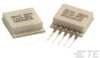
from TE Connectivity
Body Features. Material : Ceramic. Number of Axes : 1. Weight (G) : 3.1. Electrical Characteristics. Excitation Voltage (VDC) : 2 - 10. Full Scale Output Voltage (VDC) : ±.1. Zero Acceleration Output (MILV) : ±25. Mechanical Attachment. [See More]
- Sensor Technology: MEMS
- Frequency Range: 0.0 to 150
- Acceleration: 2
- Operating Temperature: -40 to 257

from ifm efector inc.
reliable and permanent monitoring of condition parameters in 3 axes. condition-based analysis of imbalance and rolling element bearing damages. Suitable for use in mobile machines in harsh operating conditions. Learn more. From May 1st 2025, products produced in EU and Singapore have an import... [See More]
- Sensor Technology: Capacitance; MEMS
- Linear Velocity: 0.0 to 12.6
- Acceleration: 0.0 to 50
- Frequency Range: 1 to 7500
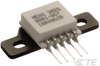
from TE Connectivity
Body Features. Material : Ceramic. Number of Axes : 1. Weight : 4.5 G [.158 OZ ]. Electrical Characteristics. Excitation Voltage (VDC) : 2 - 10. Full Scale Output Voltage (VDC) : ±.1. Zero Acceleration Output (MILV)... [See More]
- Sensor Technology: MEMS
- Frequency Range: 0.0 to 150
- Acceleration: 2
- Operating Temperature: -40 to 257

from ifm efector inc.
Reliable permanent monitoring of the overall vibration to DIN ISO 10816. Switching output with adjustable switch point and response delay. Simple switch point setting by means of two setting rings allowing optimum reading. With analog current output for vibration velocity. Clearly visible LEDs for... [See More]
- Sensor Technology: MEMS
- Frequency Range: 10 to 1000
- Linear Velocity: 0.0 to 0.9843
- Accuracy: 0.25
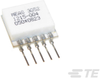
from TE Connectivity
Body Features. Material : Ceramic. Number of Axes : 1. Weight (G) : 3.1. Electrical Characteristics. Excitation Voltage (VDC) : 2.7 - 12. Full Scale Output Voltage (VDC) : ±.06. Zero Acceleration Output (MILV) : ±2. Mechanical Attachment. [See More]
- Sensor Technology: MEMS
- Frequency Range: 0.0 to 150
- Acceleration: 2
- Operating Temperature: -40 to 257
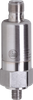
from ifm efector inc.
Reliable permanent monitoring of the overall vibration to DIN ISO 10816. Two-wire technology. Precise linearized analog output. Wide operating temperature range and high protection rating. Compact and robust housing for the requirements of harsh industrial environments. Learn more. From May 1st... [See More]
- Sensor Technology: MEMS
- Frequency Range: 10 to 1000
- Linear Velocity: 0.0 to 1.97
- Accuracy: 0.25
from TE Connectivity
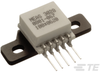
Body Features. Material : Ceramic. Number of Axes : 1. Weight : 4.5 G [.158 OZ ]. Electrical Characteristics. Excitation Voltage (VDC) : 2.7 - 12. Full Scale Output Voltage (VDC) : ±.06. Zero Acceleration Output (MILV)... [See More]
- Sensor Technology: MEMS
- Frequency Range: 0.0 to 150
- Acceleration: 2
- Operating Temperature: -40 to 257

from ifm efector inc.
Reliable permanent monitoring of the overall vibration to DIN ISO 10816. Two-wire technology. Precise linearized analog output. Wide operating temperature range and high protection rating. For applications in hazardous areas. Learn more. From May 1st 2025, products produced in EU and Singapore have... [See More]
- Sensor Technology: MEMS
- Frequency Range: 10 to 1000
- Linear Velocity: 0.0 to 0.9843
- Accuracy: 0.25
from TE Connectivity
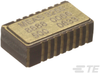
Body Features. Material : Ceramic. Number of Axes : 1. Weight (G) : 1.5. Electrical Characteristics. Excitation Voltage (VDC) : 2.7 - 5.5. Full Scale Output Voltage (VDC) : ±2. Zero Acceleration Output (MILV) : 2500 ±100. Mechanical... [See More]
- Sensor Technology: MEMS
- Frequency Range: 0.0 to 1500
- Acceleration: 100
- Operating Temperature: -65 to 250

from TE Connectivity
Body Features. Material : Anodized Aluminum. Number of Axes : 1. Weight : 1 G [.035 OZ ]. Configuration Features. Electrical Connection : Integral Cable. Electrical Characteristics. Excitation Voltage (VDC) : 2 - 10. Full Scale... [See More]
- Sensor Technology: MEMS
- Frequency Range: 0.0 to 8000
- Acceleration: 2000
- Operating Temperature: -40 to 250

from TE Connectivity
Body Features. Material : Stainless Steel. Number of Axes : 3. Weight : 185 G [6.475 OZ ]. Configuration Features. Electrical Connection : Integral Cable. Electrical Characteristics. Excitation Voltage (VDC) : 7 - 24. Full... [See More]
- Sensor Technology: MEMS
- Frequency Range: 0.0 to 300
- Acceleration: 5
- Operating Temperature: -40 to 185

from TE Connectivity
Body Features. Material : Anodized Aluminum. Number of Axes : 1. Weight : 1 G [.035 OZ ]. Configuration Features. Electrical Connection : Integral Cable. Electrical Characteristics. Excitation Voltage (VDC) : 2 - 10. Full Scale... [See More]
- Sensor Technology: MEMS
- Frequency Range: 0.0 to 2800
- Acceleration: 500
- Operating Temperature: -40 to 257
from TE Connectivity
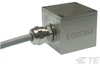
Body Features. Material : Stainless Steel. Number of Axes : 3. Weight : 185 G [6.25 OZ ]. Configuration Features. Electrical Connection : Integral Cable. Electrical Characteristics. Excitation Voltage (VDC) : 5 - 30. Full Scale... [See More]
- Sensor Technology: MEMS
- Frequency Range: 0.0 to 200
- Acceleration: 20
- Operating Temperature: -40 to 185
from TE Connectivity
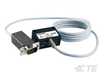
Body Features. Material : Anodized Aluminum. Number of Axes : 3. Weight : 38 G [1.33 OZ ]. Configuration Features. Electrical Connection : Integral Cable. Electrical Characteristics. Excitation Voltage (VDC) : 8.5 - 36. Full... [See More]
- Sensor Technology: MEMS
- Frequency Range: 0.0 to 800
- Acceleration: 2
- Operating Temperature: -40 to 185
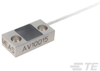
from TE Connectivity
Body Features. Material : Stainless Steel. Number of Axes : 1. Weight : 2.1 G [.073 OZ ]. Configuration Features. Electrical Connection : Integral Cable. Electrical Characteristics. Excitation Voltage (VDC) : 2 - 10. Full Scale... [See More]
- Sensor Technology: MEMS
- Frequency Range: 0.0 to 7000
- Acceleration: 50 to 6000
- Operating Temperature: -67 to 257
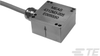
from TE Connectivity
Body Features. Material : Stainless Steel. Number of Axes : 1. Weight : 100 G [3.527 OZ ]. Configuration Features. Electrical Connection : Integral Cable. Electrical Characteristics. Excitation Voltage (VDC) : 7 - 24. Full... [See More]
- Sensor Technology: MEMS
- Frequency Range: 0.0 to 200
- Acceleration: 2
- Operating Temperature: -40 to 185

from TE Connectivity
Body Features. Material : Anodized Aluminum. Number of Axes : 1. Weight : 1 G [.035 OZ ]. Configuration Features. Electrical Connection : Integral Cable. Electrical Characteristics. Excitation Voltage (VDC) : 2 - 10. Full Scale... [See More]
- Sensor Technology: MEMS
- Frequency Range: 0.0 to 1900
- Acceleration: 200
- Operating Temperature: -40 to 194
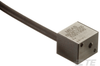
from TE Connectivity
Body Features. Material : Stainless Steel. Number of Axes : 3. Weight : 9 G [.315 OZ ]. Configuration Features. Electrical Connection : Integral Cable. Electrical Characteristics. Excitation Voltage (VDC) : 2 - 10. Full Scale... [See More]
- Sensor Technology: MEMS
- Frequency Range: 0.0 to 2000
- Acceleration: 500
- Operating Temperature: -4 to 199
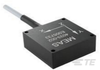
from TE Connectivity
Body Features. Material : Anodized Aluminum. Number of Axes : 3. Weight : 80 G [.17 OZ ]. Configuration Features. Electrical Connection : Integral Cable. Electrical Characteristics. Excitation Current (MAMP) : 4. Excitation... [See More]
- Sensor Technology: MEMS
- Frequency Range: 0.0 to 200
- Acceleration: 2
- Operating Temperature: -40 to 185
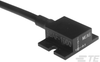
from TE Connectivity
Body Features. Material : Anodized Aluminum. Number of Axes : 3. Weight : 3.5 G [.122 OZ ]. Configuration Features. Electrical Connection : Integral Cable. Electrical Characteristics. Excitation Voltage (VDC) : 2 - 10. Full... [See More]
- Sensor Technology: MEMS
- Frequency Range: 0.0 to 3500
- Acceleration: 500
- Operating Temperature: -4 to 185
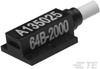
from TE Connectivity
Body Features. Material : Anodized Aluminum. Number of Axes : 1. Weight : 1 G [.035 OZ ]. Configuration Features. Electrical Connection : Integral Cable. Electrical Characteristics. Excitation Voltage (VDC) : 2 - 10. Full Scale... [See More]
- Sensor Technology: MEMS
- Frequency Range: 0.0 to 1900
- Acceleration: 200
- Operating Temperature: -40 to 250

from TE Connectivity
Body Features. Material : Anodized Aluminum. Number of Axes : 2. Weight : 35 G [1.225 OZ ]. Configuration Features. Electrical Connection : Integral Cable. Electrical Characteristics. Excitation Voltage (VDC) : 8.5 - 36. Full... [See More]
- Sensor Technology: MEMS
- Frequency Range: 0.0 to 10000
- Acceleration: 70
- Operating Temperature: -40 to 185
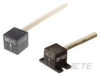
from TE Connectivity
Body Features. Material : Anodized Aluminum. Number of Axes : 1. Weight : 2.5 G [.087 OZ ]. Configuration Features. Electrical Connection : Integral Cable. Electrical Characteristics. Excitation Voltage (VDC) : 10. Full Scale... [See More]
- Sensor Technology: MEMS
- Frequency Range: 0.0 to 800
- Acceleration: 50
- Operating Temperature: -4 to 185

from TE Connectivity
Body Features. Material : Anodized Aluminum. Number of Axes : 3. Weight : 20 G [.7 OZ ]. Configuration Features. Electrical Connection : Integral Cable. Electrical Characteristics. Excitation Voltage (VDC) : 2 - 10. Full Scale... [See More]
- Sensor Technology: MEMS
- Frequency Range: 0.0 to 1500
- Acceleration: 50
- Operating Temperature: -4 to 185
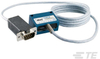
from TE Connectivity
Body Features. Material : Anodized Aluminum. Number of Axes : 1. Weight : 38 G [1.33 OZ ]. Configuration Features. Electrical Connection : Integral Cable. Electrical Characteristics. Excitation Voltage (VDC) : 8.5 - 36. Full... [See More]
- Sensor Technology: MEMS
- Frequency Range: 0.0 to 400
- Acceleration: 1
- Operating Temperature: -40 to 185
from TE Connectivity
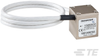
Body Features. Material : Nickel Plated Aluminum. Number of Axes : 1. Weight : 38 G [1.33 OZ ]. Configuration Features. Electrical Connection : Integral Cable. Electrical Characteristics. Excitation Voltage (VDC) : 8.5 - 36. [See More]
- Sensor Technology: MEMS
- Frequency Range: 0.0 to 800
- Acceleration: 6
- Operating Temperature: -40 to 185
from TE Connectivity
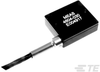
Body Features. Material : Anodized Aluminum. Number of Axes : 1. Weight : 10 G [.35 OZ ]. Configuration Features. Electrical Connection : Integral Cable. Electrical Characteristics. Excitation Voltage (VDC) : 4 - 30. Full Scale... [See More]
- Sensor Technology: MEMS
- Frequency Range: 0.0 to 1000
- Acceleration: 2
- Operating Temperature: -67 to 257

from TE Connectivity
Body Features. Material : Anodized Aluminum. Number of Axes : 3. Weight : 30 G [1.05 OZ ]. Configuration Features. Electrical Connection : Integral Cable. Electrical Characteristics. Excitation Voltage (VDC) : 4 - 30. Full... [See More]
- Sensor Technology: MEMS
- Frequency Range: 0.0 to 2000
- Acceleration: 200
- Operating Temperature: -67 to 257
from TE Connectivity
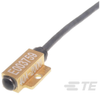
Body Features. Material : Anodized Aluminum. Number of Axes : 1. Weight : 5 G [.175 OZ ]. Configuration Features. Electrical Connection : Integral Cable. Electrical Characteristics. Excitation Voltage (VDC) : 2 - 10. Full Scale... [See More]
- Sensor Technology: MEMS
- Frequency Range: 0.0 to 1500
- Acceleration: 25
- Operating Temperature: -4 to 176

from Polytec, Inc.
The new all-in-one CLV-2534 Compact Laser Vibrometer is made up of a rack-mountable 19'' controller supplying laser power to the sensor head via a fiber optical cable. Both compact and flexible in application, surface vibration in velocity and displacement are measured with high precision and low... [See More]
- Sensor Technology: MEMS
- Linear Velocity: 394
- Acceleration: 16000 to 1.53E7
- Frequency Range: 0.5000 to 3.20E6

from LORD MicroStrain Sensing Systems
Wireless Accelerometer Node. Overview. The G-Link ® -LXRS ™ Wireless Accelerometer Node features on-board triaxial ±2 g or ±10 g MEMS accelerometers and an internal temperature sensor. G-Link ® -LXRS ™ can be employed to measure vibration or acceleration, or as a... [See More]
- Sensor Technology: MEMS
- Frequency Range: 1 to 512
- Acceleration: -10 to 10
- Device Type: Instrument / Meter

from Convergence Instruments
Product Description. The Vibration Meter Data Logger – Vibration Sentry E-200g is a new generation of smart data logger that can record acceleration, inclination, vibration and impacts. It includes a 3-axis +-200g MEMS accelerometer, an accurate date/time clock and a non-volatile 128 Mb... [See More]
- Sensor Technology: MEMS
- Device Type: Recorder / Totalizer
- Acceleration: 200
- Signal Inputs: Serial

from Micromega Dynamics
Our new wireless vibration recorder, the RECOVIB TINY measures vibrations and shocks in all three axes. It is extremely practical for a vibration diagnosis, offering up to 6 hours of measurement. Its wireless technology and intuitive operation provides substantial time savings in the performance of... [See More]
- Sensor Technology: MEMS
- Frequency Range: 0.0 to 250
- Acceleration: 2 to 200
- Accuracy: 0.30 to 0.50

from Polytec, Inc.
Polytec's New UHF-120 Vibrometer Laser-Doppler Vibrometers (LDV) can characterize the out-of-plane vibrations at ultra-high frequencies. Polytec's UHF-120 extends the vibration frequency bandwidthup to 600 MHz. Complete with a new optical arrangement, the system retains the advantages and features... [See More]
- Sensor Technology: MEMS
- Accuracy: 1.00
- Frequency Range: 0.0 to 1.20E9
- Number Channels: 4

from LORD MicroStrain Sensing Systems
The G-Link2 ™ -LXRS ® Wireless Accelerometer Node features on-board triaxial or external single axis ±1 g to ±200 g MEMS accelerometers in a small, IP67 rated enclosure. The 16-bit G-Link2 streamlines vibration/acceleration measurement and monitoring in remote deployments. [See More]
- Sensor Technology: MEMS
- Frequency Range: 32 to 512
- Acceleration: -200 to 200
- Device Type: Instrument / Meter

from Micromega Dynamics
RECOVIB Feel has been designed for performing an immediate vibratory analysis. It is connected to an Android device or tablet PC via a USB connection. The supplied application enables the streaming of real-time vibration data on a chart in the time domain and in the frequency domain. Once the data... [See More]
- Sensor Technology: MEMS
- Frequency Range: 0.0 to 250
- Acceleration: 2 to 15
- Accuracy: 0.30 to 0.50
from Polytec, Inc.
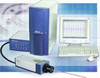
Digital vibrometer systems utilize the latest technologies for digital signal acquisition and processing. They are based on a purely numerical Doppler signal decoding technique, where displacement information is not recovered by analog demodulators but by powerful data processing algorithms. [See More]
- Sensor Technology: MEMS
- Frequency Range: 0.0 to 2.00E6
- Linear Velocity: 31.89
- Accuracy: 1.00