
Temperature Vibration Measurement Instruments and Vibration Analyzers
Description
Temperature Vibration Measurement Instruments and Vibration Analyzers are sophisticated tools designed to measure and analyze vibrations and temperature in various systems. These instruments typically consist of a transducer, data acquisition system, and either a local display or an output to a computer or other device. They are capable of accepting various types of transducers, including those for acceleration, linear velocity, proximity, displacement, rotary velocity, and temperature, as well as generic signal inputs like voltage, current, frequency, and serial inputs .
Working Principle
These instruments work by using sensors such as accelerometers and proximity probes to capture vibrational data. Accelerometers measure vibrations across multiple axes and provide signals that can be analyzed in the time or frequency domain, while proximity probes detect radial vibrations in rotating machinery, measuring relative shaft displacement . The data acquisition systems collect and process this vibration data, typically including analog-to-digital converters, signal conditioning modules, and software interfaces, enabling high-fidelity signal capture and transfer to analysis software for further processing . Temperature sensors, often integrated with vibration sensors, provide additional data by measuring temperature changes, which can be crucial for comprehensive system analysis .
Applications
Temperature Vibration Measurement Instruments and Vibration Analyzers are particularly effective in high-speed rotating equipment, allowing users to evaluate the condition of machinery and avoid failures . Specific examples include their use in process systems, where models like the PC425 and PC427 are employed, and in portable data collection, where models like the 786T are used with portable analyzers to acquire both vibration and temperature data .
Advantages over other Vibration Measurement Instruments and Vibration Analyzers
One of the key advantages of these instruments is their ability to accept a wide range of transducers and signal inputs, including wireless data transmissions, which enhances their versatility and applicability in various environments . Additionally, the integration of temperature measurement with vibration analysis provides a more comprehensive understanding of system conditions, which is not always possible with instruments that measure only vibration .
Limitations
A significant limitation of these instruments is the initial cost, particularly the expense of setting up vibration sensors, which can be the most costly component of a predictive maintenance program . Furthermore, many portable analyzers do not provide power to the temperature sensor, necessitating additional considerations for power supply .
Considerations
When considering the use of Temperature Vibration Measurement Instruments and Vibration Analyzers, it is important to account for initial costs, which can be high due to the expense of vibration sensors . Operating expenses may also be significant, depending on the complexity and frequency of data collection and analysis. Durability and accuracy are crucial, especially in extreme environments, where instruments must withstand excessive heat, moisture, or dust . Replacement and maintenance costs should also be considered, as these can impact the long-term viability and cost-effectiveness of the instruments.

from SKF/Global
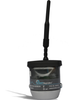
The SKF Machine Condition Indicator is an economical vibration sensor and indicator for monitoring non-critical machines. It is ideal for machinery with constant operating conditions not previously monitored in plants. The device can be compared to the "check engine" light in a car. What the "check... [See More]
- Sensor Input: Acceleration; Linear Velocity; Temperature
- User Interface: Manual
- Device Type: Instrument / Meter
- Form Factor: Handheld; Portable
from KCF Technologies, Inc.
Vibration Sensor Nodes Version 2.0 have twice the range, twice the frequency, and are two and a half times more robust than before. The sensors can easily transmit a higher density of data, and can be powered with either a battery or an energy harvester. In a layout that can be configured for any... [See More]
- Sensor Input: Temperature
- Signal Inputs: Wireless
- Frequency Range: 32 to 9192
- Form Factor: Portable
from SKF/North America
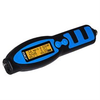
Now both novice users and experts can easily, quickly, and accurately check the condition of rotating equipment throughout your facility. Equipping your maintenance and operations personnel with this rugged, ergonomic and easy-to-use instrument can provide early warning of potential machine problems... [See More]
- Sensor Input: Acceleration; Linear Velocity; Temperature
- Linear Velocity: 0.0276 to 2.56
- Acceleration: 0.2000 to 50
- Frequency Range: 10 to 1000
from SKF/Global
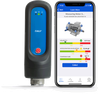
Your entry point to predictive maintenance. SKF Pulse combines an easy-to-use, portable sensor with a free iOS app to monitor machine health and quickly identify machinery issues before operations are impacted. Acting as a smart vibration tool, the sensor transmits wirelessly to the SKF Pulse app,... [See More]
- Sensor Input: Acceleration; Linear Velocity; Temperature
- Linear Velocity: 2.17
- Acceleration: 20
- Frequency Range: 2000 to 10000