
Voltage Vibration Measurement Instruments and Vibration Analyzers
Description
Voltage Vibration Measurement Instruments and Vibration Analyzers are sophisticated devices designed to measure and analyze vibrations in various systems. These instruments typically consist of a transducer, data acquisition system, and a display or output interface. They are capable of accepting various types of transducers, including those for acceleration, linear velocity, proximity, displacement, rotary velocity, and temperature. Additionally, they can process generic signal inputs such as voltage, current, frequency, and serial inputs.
Working Principle
The working principle of these instruments involves converting mechanical vibrations into electrical signals using sensors. The sensors, which are often mounted using magnets, detect vibrations and transform them into electrical signals that can be analyzed. The data acquisition system processes these signals, which can then be displayed or outputted to a computer for further analysis. This process is crucial for evaluating the condition of equipment, particularly high-speed rotating machinery, to prevent failures and maintain operational efficiency.
Applications
Voltage Vibration Measurement Instruments and Vibration Analyzers are widely used in predictive maintenance (PdM) programs, especially for high-speed rotating equipment. They are essential in industries where machinery reliability is critical, such as in manufacturing plants, power generation facilities, and automotive sectors. For example, they can be used to monitor the condition of turbines, motors, and gearboxes, allowing for early detection of potential issues and reducing downtime.
Advantages over other Vibration Measurement Instruments and Vibration Analyzers
One of the significant advantages of these instruments is their ability to accept a wide range of transducer types and signal inputs, including wireless data transmissions. This versatility allows for comprehensive vibration analysis across different applications. Additionally, they often come with advanced features such as event triggering, self-calibration, and built-in filters, enhancing their functionality and usability in various environments, including those with extreme conditions like excessive heat or moisture.
Limitations
A notable limitation of these instruments is the initial cost associated with setting up a vibration monitoring system, particularly the expense of the sensors. Furthermore, the complexity of the equipment may require specialized training for proper operation and data interpretation. The sensors themselves can be susceptible to shock and power requirements, which may affect their performance in certain conditions.
Considerations
When considering the implementation of Voltage Vibration Measurement Instruments and Vibration Analyzers, it is important to evaluate the initial costs, including the price of sensors and data acquisition systems. Operating expenses should also be considered, as well as the durability and accuracy of the instruments in the intended environment. Maintenance and replacement costs are additional factors, as regular calibration and potential sensor replacements can impact the overall cost-effectiveness of the system.
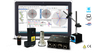
from Erbessd Instruments
A complete and useful Dynamic Balancing System ‘ The DigivibeMX M10 is the Dynamic Balancing System with more functions in the market. It is built with an intuitive interface and designed also for the most demanding users. DigivibeMX M10 includes these features: Accurate balancings in just 2... [See More]
- Signal Inputs: Voltage; Current
- Linear Velocity: 7.87E-5 to 118
- Acceleration: 1.00E-4 to 100
- Frequency Range: 0.3200 to 15000

from Columbia Research Labs, Inc.
The Columbia Models SR-107RFR and SR-207RFR are precision force balance angular accelerometers. This design makes use of the fluid rotor concept of sensing angular acceleration and in conjunction with the Columbia patented HP suspension system provides the ultimate in reliability and ruggedness... [See More]
- Signal Inputs: Voltage
- Linear Velocity: 0.1000 to 300
- Acceleration: 0.1000 to 300
- Frequency Range: 1 to 1000
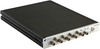
from Crystal Instruments
Highlights. •Highly modular, distributed, networkable dynamic measurement system. • 4 - 1024 input channels. •Time synchronization accuracy up to 100 ns for all channels. •PC Tethered mode or standalone Black Box mode. •All input channels sampled simultaneously up to 102.4... [See More]
- Signal Inputs: Voltage
- Number Channels: 8
- Frequency Range: 102400
- User Interface: Computer Interface
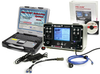
from MTI Instruments Inc.
Portable vibration analysis and engine trim balance instruments and accessories for commercial and military aviation. Designed to swiftly pinpoint engine problems and eliminate avoidable engine removals. Rapid configuration and intuitive user interface make it straightforward and uncomplicated to... [See More]
- Signal Inputs: Voltage; Frequency
- Device Type: Instrument / Meter
- Frequency Range: 5 to 10000
- Sensor Input: Acceleration; Linear Velocity; Displacement; Angular Velocity
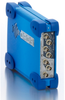
from OROS
OR34 is the compact real-time multi-analyzer that integrates the best of noise & vibration analysis technology in an ultra mobile instrument. OR34 is the synthesis of the ultimate OR3x technology and OROS' wealth of experience in measurement. Designed to offer the essentials in a professional... [See More]
- Signal Inputs: Voltage
- Accuracy: 0.01
- Frequency Range: 2000 to 102400
- Number Channels: 2 to 4

from Signalysis, Inc.
Rictor identifies vibration sources in the manufacturing facility or construction site, enabling a vibration-aware environment. This allows a facility to set up processes by knowledgeably working within the environment. To further enhance productivity, facilities can correlate vibration levels to... [See More]
- Signal Inputs: Voltage; Frequency
- Number Channels: 8
- Frequency Range: 0.1500 to 4000
- Device Type: Instrument / Meter

from Columbia Research Labs, Inc.
The Columbia Model VM-300 Vibration Meter is a general-purpose vibration measuring instrument for periodic routine vibration checks of industrial machinery and general field use where portability and ease of use are required. This hand-held device is the ideal preventive maintenance tool. Model... [See More]
- Signal Inputs: Voltage
- Linear Velocity: 300
- Acceleration: 0.1000 to 300
- Displacement Range: 1.00E-3 to 3

from MTI Instruments Inc.
Test cell vibration analysis and engine trim balance instruments and accessories for commercial and military aviation gas turbine engines. Designed to quickly isolate engine problems and locate troubles. Rapid configuration and intuitive user interface make it straightforward and uncomplicated to... [See More]
- Signal Inputs: Voltage; Frequency
- Accuracy: 1.00
- Frequency Range: 5 to 10000
- Number Channels: 8
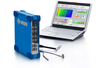
from OROS
OR35 is the portable real-time multi-analyzer that integrates the best of sound & vibration analysis technology in a truly mobile instrument. OR35 is the synthesis of the ultimate OR3x technology and OROS' wealth of experience of measurement. Designed to be the best for field operations, OR35 takes... [See More]
- Signal Inputs: Voltage
- Accuracy: 0.01
- Frequency Range: 2000 to 102400
- Number Channels: 8