
Piezoresistive Vibration Measurement Instruments and Vibration Analyzers
Description
Piezoresistive Vibration Measurement Instruments and Vibration Analyzers are specialized tools designed to detect and measure vibrations. These instruments typically consist of a transducer that converts mechanical vibrations into electrical signals, a data acquisition system to capture and process these signals, and a display or output system to present the data for analysis. They are capable of measuring various parameters of vibration, such as amplitude, frequency, and phase, providing critical insights into the vibrational characteristics of different systems.
Working Principle
Piezoresistive vibration measurement instruments operate based on the piezoresistive effect, where the resistance of a material changes in response to mechanical stress. When vibrations occur, the piezoresistive sensor detects these changes in resistance and converts them into electrical signals. These signals are then processed by data acquisition systems, which include analog-to-digital converters and signal conditioning modules, to ensure accurate and high-fidelity data capture. The processed data can be analyzed in both time and frequency domains, making these instruments highly useful for diagnosing and monitoring the health of mechanical systems.
Applications
Piezoresistive vibration measurement instruments are used in a variety of applications. For instance, they are employed in semiconductor fabrication facilities to monitor micro-vibrations that could affect the precision of manufacturing processes. They are also used in rotating machinery to detect radial vibrations and measure shaft displacement, which is crucial for maintaining equipment performance and preventing failures.
Advantages over other Vibration Measurement Instruments and Vibration Analyzers
One of the key advantages of piezoresistive vibration measurement instruments is their ability to provide high-resolution data across a broad frequency range. This makes them particularly effective in environments where precise vibration monitoring is critical, such as in semiconductor fabs or in the analysis of high-speed rotating machinery. Additionally, these instruments can be equipped with features like self-calibration and built-in filters, enhancing their functionality and usability in various conditions.
Limitations
Despite their advantages, piezoresistive vibration measurement instruments have some limitations. They can be susceptible to environmental factors such as temperature changes, which may affect their accuracy. Additionally, the initial cost of these instruments can be high, and they may require regular calibration and maintenance to ensure optimal performance.
Considerations
When considering the use of piezoresistive vibration measurement instruments, it is important to evaluate factors such as initial costs, operating expenses, and maintenance requirements. These instruments can be expensive to purchase and maintain, but their high accuracy and reliability can justify the investment in critical applications. Durability is another consideration, as these instruments must withstand the specific environmental conditions of their application. Regular calibration and maintenance are essential to maintain their accuracy and extend their operational lifespan.

from Instrumented Sensor Technology
Use IST's new MotionMaster ™ a portable accelerometer that ’s used as an acceleration data logger that has angular rate sensors and to characterize 6DOF motion environments of amusement rides, airborne vehicles, watercraft, underwater vehicles, vehicular crashes, shipping environments... [See More]
- Sensor Technology: Piezoresistive
- Device Type: Recorder / Totalizer
- Number Channels: 6
- User Interface: Computer Interface
from MonoDAQ
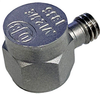
High performance IEPE accelerometers are the basis for high quality vibration measurement with MonoDAQ 1xACC amplifiers. DJB A/120 is a general purpose IEPE accelerometer available in two versions with different sensitivity. Specifications. Voltage sensitivity (+-10%): 10 mV/g | 100 mV/g. HP filter... [See More]
- Sensor Technology: Piezoresistive
- Accuracy: 5.00
- Frequency Range: 1 to 9000
- Maximum Vibration: 1000