
Wireless Vibration Measurement Instruments and Vibration Analyzers
Description
Wireless Vibration Measurement Instruments and Vibration Analyzers are sophisticated devices designed to monitor and analyze vibrations in various systems. These instruments typically consist of a transducer, data acquisition system, and a means to transmit data wirelessly to a computer or other device for analysis. They are capable of accepting various types of transducers, including acceleration, linear velocity, and displacement sensors, and can process generic signal inputs such as voltage and frequency.
Working Principle
These instruments operate by converting mechanical vibrations into electrical signals using sensors like accelerometers or proximity probes. The data acquisition system then collects and processes these signals, often using analog-to-digital converters and signal conditioning modules. The processed data is transmitted wirelessly to analysis software, where it can be examined in the time or frequency domain. This wireless capability allows for real-time monitoring and analysis, making these instruments particularly useful for detecting and diagnosing issues in machinery without the need for physical connections.
Applications
Wireless Vibration Measurement Instruments and Vibration Analyzers are used in a variety of applications. For instance, they are employed in the monitoring of rotating machinery in industrial settings to detect imbalances or misalignments. They are also used in the automotive industry for testing vehicle components and in the aerospace sector for monitoring the structural integrity of aircraft. Additionally, these instruments are valuable in the energy sector for monitoring the condition of turbines and generators.
Advantages over other Vibration Measurement Instruments and Vibration Analyzers
One of the primary advantages of wireless vibration measurement instruments is their ability to provide real-time data without the need for cumbersome wiring, which can be particularly beneficial in hard-to-reach or hazardous environments. They also offer greater flexibility in terms of sensor placement and can be easily integrated into existing systems. Furthermore, the wireless capability allows for remote monitoring, reducing the need for on-site personnel and enabling quicker response times to potential issues.
Limitations
Despite their advantages, wireless vibration measurement instruments have certain limitations. They may be susceptible to interference from other wireless devices, which can affect data accuracy. Additionally, the range of wireless transmission can be limited, potentially requiring additional infrastructure to ensure reliable communication. Power requirements for wireless sensors can also be a concern, as they may need frequent battery replacements or recharging.
Considerations
When selecting wireless vibration measurement instruments, several factors should be considered. Initial costs can be higher compared to wired systems due to the need for wireless technology and compatible software. Operating expenses may include ongoing maintenance of wireless networks and battery replacements. Durability is another consideration, as these instruments must withstand harsh environmental conditions. Accuracy is critical, and potential interference should be evaluated to ensure reliable data transmission. Finally, replacement and maintenance costs should be factored into the overall investment, as these can impact the long-term viability of the system.
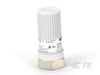
from TE Connectivity
Body Features. Number of Sensing Axes : 1. Primary Product Material : 316L Stainless Steel, Polymer. Product Weight : 200 G [7.05 OZ ]. Industry Standards. Hazardous Area Approval : No. IP Rating : IP67. Wireless Application... [See More]
- Features: Wireless
- Operating Temperature: -40 to 176
- Frequency Range: 2 to 15000
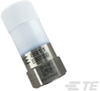
from TE Connectivity
Body Features. Number of Sensing Axes : Uniaxial. Primary Product Material : Stainless Steel. Product Weight : 200 G [7.1 OZ ]. Industry Standards. Hazardous Area Approval : No. IP Rating : IP66. Wireless Application :... [See More]
- Features: Wireless
- Frequency Range: 1 to 10000
- Acceleration: 50
- Operating Temperature: -4 to 140
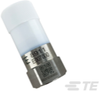
from TE Connectivity
Body Features. Number of Sensing Axes : Uniaxial. Primary Product Material : Stainless Steel. Product Weight : 200 G [7.1 OZ ]. Industry Standards. Hazardous Area Approval : No. IP Rating : IP66. Wireless Application :... [See More]
- Features: Wireless
- Frequency Range: 0.0 to 10000
- Acceleration: 50
- Operating Temperature: -4 to 140
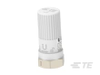
from TE Connectivity
Body Features. Number of Sensing Axes : Uniaxial. Primary Product Material : 316L Stainless Steel, Polymer. Product Weight : 165 G [5.82 OZ ]. Industry Standards. Communication Protocol : LoRaWAN. IP Rating : IP67. Other. [See More]
- Features: Wireless
- Operating Temperature: -40 to 176
- Frequency Range: 2 to 15000

from TE Connectivity
Body Features. Number of Sensing Axes : Triaxial. Primary Product Material : Polymer, 316L Stainless Steel. Product Weight : 165 G [5.82 OZ ]. Industry Standards. Communication Protocol : LoRaWAN. IP Rating : IP67. Other. [See More]
- Features: Wireless
- Operating Temperature: -40 to 176
- Frequency Range: 2 to 15000
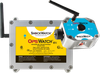
from SpotSee
OpsWatch WiFi Recorder allows you to improve the performance and safety of your equipment, extend its life time and avoid any unplanned downtime and maintenance. Vibration and shock monitoring is an integral part of machine condition monitoring programs. Change in equipment vibration serves as an... [See More]
- Features: Wireless
- Form Factor: Stand Alone
- Device Type: Recorder / Totalizer

from LORD MicroStrain Sensing Systems
Features precision time-keeping and extended range capabilities; measures strain, torque, load, pressure and magnetic fields. Overview. The SG-Link ® -LXRS ™ 3 Channel Wireless Analog Sensor Node features 1 differential input channel with optional bridge completion, 1 single ended input... [See More]
- Features: Battery Powered; Wireless
- Device Type: Instrument / Meter
- Number Channels: 3
- Signal Inputs: Wireless
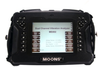
from Moons' Electric Co. Ltd.
#9679; Dual Channel, 24Bit Amplitude Resolution, 80KHz Bandwidth, 25600 Lines Spectrum. ● High/Low RPM/Frequency Analysis, Cross-Channel Analysis. ● Dynamic Balancing (1/2 plane), Long period data measurement. ● Shaft orbit and position Analysis, Run up Coast down Analysis. [See More]
- Features: Wireless

from Micromega Dynamics
Our new wireless vibration recorder, the RECOVIB TINY measures vibrations and shocks in all three axes. It is extremely practical for a vibration diagnosis, offering up to 6 hours of measurement. Its wireless technology and intuitive operation provides substantial time savings in the performance of... [See More]
- Features: Wireless
- Frequency Range: 0.0 to 250
- Acceleration: 2 to 200
- Accuracy: 0.30 to 0.50

from LORD MicroStrain Sensing Systems
OEM Wireless Analog Sensor Node - Low Power. Overview. The SG-Link ®-OEM -LS Wireless Analog Sensor Node features 1 differential input channel with optional bridge completion, 1 single ended input channel with 0-3 volt excitation, and an internal temperature sensor channel. This array supports a... [See More]
- Features: Battery Powered; Wireless
- Device Type: Instrument / Meter
- Number Channels: 3
- Signal Inputs: Wireless
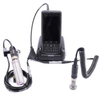
from Moons' Electric Co. Ltd.
#9679; Support rotation machinery condition inspection by vibration, infrared temperature, rotation speed measurement. ● Single vibration channel, 16Bit amplitude resolution, 52K sampling rate, 6400 Lines Spectrum. ● Embedded Infrared temperature detection. ● Dynamic Balancing (1... [See More]
- Features: Wireless

from LORD MicroStrain Sensing Systems
Wireless Accelerometer Node. Overview. The G-Link ® -LXRS ™ Wireless Accelerometer Node features on-board triaxial ±2 g or ±10 g MEMS accelerometers and an internal temperature sensor. G-Link ® -LXRS ™ can be employed to measure vibration or acceleration, or as a... [See More]
- Features: Battery Powered; Wireless
- Frequency Range: 1 to 512
- Acceleration: -10 to 10
- Device Type: Instrument / Meter

from LORD MicroStrain Sensing Systems
The G-Link2 ™ -LXRS ® Wireless Accelerometer Node features on-board triaxial or external single axis ±1 g to ±200 g MEMS accelerometers in a small, IP67 rated enclosure. The 16-bit G-Link2 streamlines vibration/acceleration measurement and monitoring in remote deployments. [See More]
- Features: Battery Powered (optional feature); Wireless
- Frequency Range: 32 to 512
- Acceleration: -200 to 200
- Device Type: Instrument / Meter

from LORD MicroStrain Sensing Systems
OEM Wireless Analog Sensor Node - Extended Range. Overview. The SG-Link ®-OEM-LXRS ™ Wireless Analog Sensor Node features 1 differential input channel with optional bridge completion, 1 single ended input channel with 0-3 volt excitation, and an internal temperature sensor channel. This... [See More]
- Features: Battery Powered; Wireless
- Device Type: Instrument / Meter
- Number Channels: 3
- Signal Inputs: Wireless
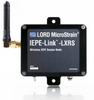
from LORD MicroStrain Sensing Systems
Delivering 24-bit resolution and up to 104 kHz sample rates, the IEPE-Link ™ -LXRS ® Wireless IEPE Sensor Node is designed for high-speed vibration sensing in challenging applications. Ideally suited for critical structure and machine health monitoring, IEPE-Link ™ works through... [See More]
- Features: Battery Powered; Wireless
- Frequency Range: 1 to 33000
- Acceleration: 200
- Number Channels: 1