
Foot Rodless Cylinders
Last Updated: April 1, 2025
Description
Foot rodless cylinders are pneumatic devices designed to convert pneumatic energy into mechanical work. They consist of a movable element, such as a piston, operating within a cylindrical bore. These cylinders are unique in that they do not have a traditional piston rod extending outside the cylinder, which allows for a more compact design and the ability to operate in confined spaces.
Working Principle
Foot rodless cylinders operate by using a magnetic coupling system. The carriage, which is the part of the cylinder that moves the load, is not mechanically attached to the piston inside the cylinder. Instead, it is propelled along the outside of the cylinder by the magnetic attraction between a magnet on the piston and a corresponding magnet on the carriage. This design prevents contaminants from entering the cylinder, making it suitable for environments where cleanliness is crucial. The magnetic coupling also allows for easy re-coupling of the carriage to the piston, simply by placing the carriage over the location of the piston inside the cylinder.
Applications
Foot rodless cylinders are used in a variety of applications, particularly where space constraints are a concern. They are ideal for heavy-duty applications such as opening gates or bay doors, lifting materials or products, and counterbalancing. Their compact design and ability to operate without a protruding rod make them suitable for use in automated systems and machinery where space is limited.
Advantages over other Rodless Cylinders
One of the primary advantages of foot rodless cylinders over other types of rodless cylinders is their ability to prevent contaminant entry due to their enclosed design. This makes them particularly useful in environments where cleanliness is essential. Additionally, the magnetic coupling system allows for easy re-coupling of the carriage to the piston, which can be advantageous in applications requiring frequent adjustments or maintenance.
Limitations
Foot rodless cylinders have some limitations, including a higher initial cost compared to other types of rodless cylinders. They may also experience uncoupling at high speeds or during hard deceleration, which can limit their use in certain high-speed applications. Additionally, the magnetic coupling system may not provide sufficient force for very heavy loads, requiring careful consideration of the load capacity during selection.
Considerations
When selecting foot rodless cylinders, it is important to consider factors such as initial costs, operating expenses, and maintenance requirements. The higher initial cost may be offset by the reduced maintenance needs due to the enclosed design that prevents contaminant entry. However, operating expenses may vary depending on the specific application and environmental conditions. Durability and accuracy are generally high, but regular maintenance, such as keeping surfaces clean and ensuring proper cushioning, is essential to maximize reliability and service life. Proper selection of the cylinder based on load capacity and operating conditions is crucial to ensure optimal performance and longevity.

from Tolomatic
Will accommodate a wide variety of applications where space is limited [See More]
- Mounting: Foot; Tube Supports
- Operating Pressure: 0.0 to 100
- Stroke: 175
- Bore Size: 0.5000

from Tolomatic
Maximum load weight of 60lbs. custom-made to meet application requirements [See More]
- Mounting: Floating Mount Bracket (optional feature); Foot; Tube Supports
- Operating Pressure: 0.0 to 100
- Stroke: 283
- Bore Size: 1

from Tolomatic
For moderate to heavy applications, maximum of 120 lbs [See More]
- Mounting: Floating Mount Bracket (optional feature); Foot; Tube Supports
- Operating Pressure: 0.0 to 100
- Stroke: 281
- Bore Size: 1.25

from Tolomatic
For moderate to heavy applications, maximum of 180 lbs [See More]
- Mounting: Floating Mount Bracket (optional feature); Foot; Tube Supports
- Operating Pressure: 0.0 to 100
- Stroke: 278
- Bore Size: 1.5

from Tolomatic
Either short- or long-stroke applications, maximum load capacity of 300 lbs [See More]
- Mounting: Floating Mount Bracket (optional feature); Foot; Tube Supports
- Operating Pressure: 0.0 to 100
- Stroke: 158
- Bore Size: 2

from Tolomatic
Either short- or long-stroke applications, maximum load capacity of 400 lbs [See More]
- Mounting: Floating Mount Bracket (optional feature); Foot; Tube Supports
- Operating Pressure: 0.0 to 100
- Stroke: 145
- Bore Size: 2.5

from Tolomatic
4 porting options with cross over porting capabilities, max load of 591 lbs [See More]
- Mounting: Floating Mount Bracket (optional feature); Foot; Tube Supports
- Operating Pressure: 0.0 to 100
- Stroke: 205
- Bore Size: 1

from Tolomatic
6 porting options w/ cross over porting capabilities, max load of 1454 lbs [See More]
- Mounting: Floating Mount Bracket (optional feature); Foot; Threaded; Tube Supports
- Operating Pressure: 0.0 to 100
- Stroke: 205
- Bore Size: 1.5
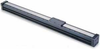
from Tolomatic
Max load capacity of 2008 lbs, able to deliver force of 314 lbs at 100 psi [See More]
- Mounting: Floating Mount Bracket (optional feature); Foot; Threaded; Tube Supports
- Operating Pressure: 0.0 to 100
- Stroke: 120
- Bore Size: 2

from Tolomatic
Accommodates thrust up to 30 lbs, customer-specified stroke lengths [See More]
- Mounting: Foot; Threaded; Tube Supports
- Operating Pressure: 0.0 to 100
- Stroke: 211
- Bore Size: 0.6250

from Tolomatic
Accommodates thrust up to 78 lbs, customer-specified stoke lengths [See More]
- Mounting: Floating Mount Bracket (optional feature); Foot; Threaded; Tube Supports
- Operating Pressure: 0.0 to 100
- Stroke: 210
- Bore Size: 1

from Tolomatic
Maximum thrust of up to 122 lbs, customer-specified stroke lengths [See More]
- Mounting: Floating Mount Bracket (optional feature); Foot; Threaded; Tube Supports
- Operating Pressure: 0.0 to 100
- Stroke: 209
- Bore Size: 1.25

from Tolomatic
Max thrust 176 lbs, excellent for applications of moderate to heavy loads [See More]
- Mounting: Floating Mount Bracket (optional feature); Foot; Threaded; Tube Supports
- Operating Pressure: 0.0 to 100
- Stroke: 206
- Bore Size: 1.5

from Tolomatic
Accommodates loads up to 270 lbs, with customer-specified stroke lengths [See More]
- Mounting: Floating Mount Bracket (optional feature); Foot; Threaded; Tube Supports
- Operating Pressure: 0.0 to 100
- Stroke: 156
- Bore Size: 2

from Tolomatic
Space-saving profile, accommodates loads up to 370 lbs, "custom-made" [See More]
- Mounting: Floating Mount Bracket (optional feature); Foot; Threaded; Tube Supports
- Operating Pressure: 0.0 to 100
- Stroke: 211
- Bore Size: 2.5

from Tolomatic
Self-supporting slide system, increased torsional stability [See More]
- Mounting: Foot; Threaded; Mounting Plates
- Operating Pressure: 0.0 to 100
- Stroke: 72
- Bore Size: 0.5000

from Tolomatic
Precision linear ball bearings allows the slide to operate in any attitude [See More]
- Mounting: Foot; Threaded; Mounting Plates
- Operating Pressure: 0.0 to 100
- Stroke: 72
- Bore Size: 1