
Polyethylene (PE) Check Valves
Last Updated: April 1, 2025
Description
Polyethylene (PE) check valves are designed to allow fluid to flow in one direction while preventing backflow. These valves are typically used in systems where maintaining a unidirectional flow is crucial to prevent contamination or damage to equipment.
Working Principle
PE check valves operate based on a simple mechanism that utilizes the pressure of the fluid to open and close the valve. When fluid flows in the desired direction, it pushes against a movable part, such as a ball or diaphragm, which opens the valve. If the flow reverses, the pressure causes the movable part to seal against the valve seat, preventing backflow. This self-sealing feature ensures that the valve is not dependent on gravity or mounting position, making it versatile for various installations .
Applications
Specific applications for PE check valves include their use in chemical processing plants where they help prevent the backflow of hazardous chemicals. They are also employed in water treatment facilities to ensure that treated water does not mix with untreated water. Additionally, PE check valves are used in irrigation systems to maintain consistent water flow and prevent contamination from backflow.
Advantages over other Manufacturing - Vacuum Equipment
PE check valves offer several advantages over traditional vacuum equipment. They are lightweight and resistant to corrosion, making them suitable for use in harsh chemical environments. The absence of metal parts internally or externally reduces the risk of corrosion and extends the valve's lifespan .
Limitations
One limitation of PE check valves is their pressure rating. They typically have a maximum working pressure of 150 PSI at the inlet and 100 PSI backpressure at 77°F, which may not be sufficient for high-pressure applications .
Considerations
When considering PE check valves, it is important to evaluate the initial costs, which can be lower than metal valves due to the material used. Operating expenses are generally low because of their durability and resistance to corrosion. However, regular maintenance is necessary to ensure the valves function correctly over time. Replacement costs should also be considered, especially in systems where high reliability is required.

from Cole-Parmer
bull; Ideal for low-pressure applications. Choose from economical LDPE with neoprene disc; autoclavable PP with neoprene disc; or autoclavable PP with Hastelloy C <reg > springs, O-rings made of Viton <reg >, and built-in 149- Â µm screen <emdash >available in check... [See More]
- Material Of Construction: PE
- Maximum Pressure: 10.00

from Qosina Corp.
Check Valve, Female Luer Lock Inlet, Male Luer Lock Outlet with Cap - 65140 [See More]
- Material Of Construction: SAN, Silicone, LDPE; PE
- Media: Air; Water
- Maximum Pressure: 0.17
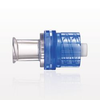
from Qosina Corp.
Qosina offers an extensive line of Check Valves available in a variety of styles that are in stock and ready for immediate delivery. Made of Acrylic, MABS, TPE and silicone, Qosina part # 80198 features a 2.9 psi cracking pressure ideal for infusion, drainage and irrigation applications. This check... [See More]
- Material Of Construction: Acrylic, MABS, TPE, Silicone; PE
- Media: Air; Water
- Maximum Pressure: 2.90

from Qosina Corp.
Qosina offers an extensive line of Check Valves available in a variety of styles that are in stock and ready for immediate delivery. Made of Acrylic, MABS, TPE and silicone, Qosina part # 80199 features a 2.9 psi cracking pressure ideal for infusion, drainage and irrigation applications. This check... [See More]
- Material Of Construction: MABS, TPE, Silicone; PE
- Media: Air; Water
- Maximum Pressure: 2.90