
Acetal Check Valves
Last Updated: April 1, 2025
Description
Acetal check valves are devices designed to allow fluid to flow in one direction while preventing backflow in the opposite direction. They are typically made from acetal, a thermoplastic known for its strength, stiffness, and low friction properties. These valves are used to maintain the integrity of fluid systems by ensuring that the flow remains unidirectional.
Working Principle
Acetal check valves operate based on a simple mechanism where a movable part, such as a ball or a disk, is pushed open by the forward flow of fluid. When the flow reverses, the pressure causes the movable part to seal against a seat, preventing backflow. This mechanism is crucial in maintaining system pressure and preventing contamination or damage from reverse flow. The utility of check valves lies in their ability to automatically prevent reverse flow without the need for manual intervention, making them essential in various fluid systems.
Applications
Check valves, including those made from acetal, are used in a wide range of applications. For instance, they are employed in hydraulic systems and fluid power applications to ensure proper flow direction. They are also used in chemical, fuel, and beverage dispensing systems, as well as in pumps and spray devices. A specific example includes their use in oil baths to regulate oil pressure, especially in environments with extreme temperatures ranging from -20° C to 200° C, where they help maintain system efficiency and safety.
Advantages over other Manufacturing - Vacuum Equipment
Acetal check valves offer several advantages over other types of valves used in vacuum equipment. They are known for their quiet operation and ability to handle high flow velocities, which is beneficial in systems where noise reduction is important. Additionally, they can be installed in both horizontal and vertical orientations, providing flexibility in system design. Their design also minimizes slamming action, which can be a significant advantage in maintaining the longevity and reliability of the system.
Limitations
One of the limitations of acetal check valves is that they cannot be used in clean or sterile applications, as they are not easily cleaned. Dirt and debris can cause excessive wear on the valve components, potentially leading to failure. Additionally, they may not perform well in systems with rapidly fluctuating flow, as the seat tightness can deteriorate at low differential pressures, affecting their ability to prevent backflow effectively.
Considerations
When selecting acetal check valves, several considerations should be taken into account. Initial costs and operating expenses are generally low, making them an economical choice for many applications. However, their durability can be affected by the presence of dirt and debris, which may increase maintenance costs over time. Accuracy in preventing backflow is generally high, but it can be compromised in systems with low differential pressures. Replacement and maintenance costs should also be considered, as the need for frequent cleaning or replacement of worn components can impact the overall cost-effectiveness of using acetal check valves in certain applications.

from Flomatic Valves
190D - Acetal body and strainer, Nylon 11 poppet. Stainless steel spring and NITRILE (Buna-N) seal. 193D - Similar to the 190D with one-piece acetal body and strainer. 190P - Polypropylene body and strainer. Stainless steel spring and VITON seal. For reference use only. Please check Flomatic's... [See More]
- Material Of Construction: Acetal
- Valve Size: 0.38 to 2.00
- Valve Type: Foot Valve; Poppet
- Maximum Pressure: 150.00
from Reid Supply
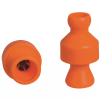
Friction from metal blades cutting metal causes heat. It can cause enough heat that the tool bit and waste chips can weld to the surface of the workpiece, damaging the surface. Heat can also cause the workpiece to bow slightly, throwing off precision cuts, as well as shorten the life of the cutting... [See More]
- Material Of Construction: Acetal
- Media: Hydraulic

from Mid-America Fittings, Inc.
Black acetal copolymer with food grade nitrile rubber o-rings [See More]
- Material Of Construction: Acetal
- Connection Description: Tube Fitting; 6mm Inlet 12mm Outlet
- Valve Size: 0.24 to 0.47
- Media: Water; Potable Water

from Cole-Parmer
Use these push-to-connect check valves for rigid and semirigid plastic tubing. Acetal body with EPDM O-rings. Temperature range of 34 <deg >F (1.1 <deg >C) to 150 <deg >F (65.6 <deg >C). [See More]
- Material Of Construction: Acetal
from U.S. Plastic Corporation
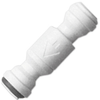
Connect and disconnect tubing without tools. These Acetal Celcon fittings meet FDA standards and are NSF listed. The O ring/collet design features S.S. teeth for extra gripping power. Acetal bodies, Nitrile O-rings, and acetal/stainless steel collets meet requirements for food grade and high-purity... [See More]
- Material Of Construction: Acetal
- Connection Description: Tube Fitting

from Flomatic Valves
The 297D - is an acetal body check valve. Threaded female x female construction. Features a VITON seal, Nylon 11 poppet and stainless steel spring. For reference use only. Please check Flomatic's website for the latest valve product specifications. [See More]
- Material Of Construction: Acetal
- Valve Size: 0.38 to 0.75
- Valve Type: Poppet
- Connection Description: Threaded

from Cole-Parmer
Constructed of acetal, NBR rubber, and 303 stainless steel. Maximum temperature is 150 <deg >F (66 <deg >C). Install in any position. [See More]
- Material Of Construction: Acetal
- Flow (Cv): 1.45
- Maximum Pressure: 235.00