
Switch / Relay Input Flow Controllers
Last Updated: April 1, 2025
Description
Switch/Relay Input Flow Controllers are devices designed to manage and control the flow of fluids or gases within a system. They achieve this by using switches or relays to adjust the flow rate, ensuring that the system operates within the desired parameters. These controllers are integral in maintaining the proper function of various systems by regulating the flow based on pre-established thresholds.
Working Principle
Switch/Relay Input Flow Controllers operate by sensing the flow of a fluid or gas through a system. They utilize a switching unit that reads signals from the flow, which can then increase or decrease the electrical signal to control the flow. This process involves turning pumps or valves on or off to maintain the desired flow rate. The controllers are useful because they help in monitoring flow characteristics such as volume, speed, and pressure, and they adjust for changes as they occur, ensuring the system remains efficient and functional.
Applications
Switch/Relay Input Flow Controllers are used in a variety of specific applications. For example, they are employed in HVAC systems to manage air flow, ensuring optimal temperature and air quality. They are also used in industrial processes where precise control of fluid flow is critical, such as in chemical processing plants or water treatment facilities. Additionally, they play a crucial role in marine terminals to prevent spills by ensuring safe operation of loading arms.
Advantages over other Process - Fluid and Gas Processing Equipment
One of the key advantages of Switch/Relay Input Flow Controllers is their ability to handle high power switching, which is essential in systems requiring robust control mechanisms. They are also versatile, with compatibility for various control types such as PLC and discrete control, making them adaptable to different system requirements. Furthermore, their ability to provide real-time adjustments to flow rates enhances system efficiency and reliability.
Limitations
Despite their advantages, Switch/Relay Input Flow Controllers have limitations. Electromechanical switches, for instance, have a limited contact life cycle and can be large in size with a slow response time. Solid-state switches, while faster and more durable, can be costly, especially when high current ratings are required. These limitations can affect the overall cost and efficiency of the system in which they are used.
Considerations
When selecting Switch/Relay Input Flow Controllers, several factors should be considered. Initial costs can vary significantly depending on the type of switch used, with solid-state options generally being more expensive. Operating expenses may also be higher for systems requiring frequent maintenance or replacement of components. Durability and accuracy are critical, as these factors influence the long-term reliability and performance of the system. Additionally, the cost of replacement and maintenance should be factored into the overall budget, as these can impact the total cost of ownership over time.

from Florite International, Inc.
The 900 Series is an economic one loop microcomputer-based instrument incorporating user selectable digital and analog inputs, as well as analog and relay outputs. Other 900 Series features include .005% high accuracy PID, batch, and dose control functions. Additionally, the 900 Series encompasses... [See More]
- Type: DC Voltage Inputs; Current Loop (Transmitter) Excitation; Resistive/ Potentiometer Inputs; Switch / Relay Input; Frequency Inputs; Serial / Digital Input; Fieldbus / Network Input; Screw Terminal
- Control: Limit; Linear; Feedforward; PID
- Controller Type: Laboratory
- Features: PLC; Multi-Function; Datalogger; Is a Chart Recorder; Rate Indication/ Control; Totalizing (Length or Roll Diameter) Indication/ Control
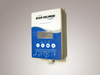
from Bijur Delimon International
Application. The SMC Controller is available in various timer and divider valve cycle count-based models, with adjustable on and off ranges to control electric motor-driven lubrication systems. The controller has the ability to detect abnormal operating situations. The unit has a lapsed time... [See More]
- Type: DC Voltage Inputs; Switch / Relay Input
- Control: Limit; Linear
- Controller Type: Lubrication
- Features: Rate Indication/ Control

from Florite International, Inc.
The Florite Model 990X is an innovative, technically superior, high quality and reliable microcomputer-based controller suitable for any commercial or industrial application. The instruments user configurable screw-terminal channels enable any mix of up to eight inputs and or outputs regardless of... [See More]
- Type: DC Voltage Inputs; Current Loop (Transmitter) Excitation; Resistive/ Potentiometer Inputs; Switch / Relay Input; Frequency Inputs; Serial / Digital Input; Fieldbus / Network Input; Screw Terminal, DA15
- Control: Limit; Linear; Feedforward; PID
- Controller Type: Laboratory
- Features: PLC; Multi-Function; Datalogger; Is a Chart Recorder; Rate Indication/ Control; Totalizing (Length or Roll Diameter) Indication/ Control