
Circuit Board Flow Controllers
Last Updated: April 1, 2025
Description
Circuit Board Flow Controllers are devices designed to manage and regulate the flow of fluids or gases within a system. They are typically integrated into a circuit board, allowing for compact and efficient control of flow rates. These controllers are essential for ensuring that the desired flow conditions are maintained, contributing to the overall stability and efficiency of the system.
Working Principle
Circuit Board Flow Controllers operate by using a combination of sensors, controllers, and flow control valves. The flow sensors measure the flow rate of the fluid or gas, and this data is sent to the controller. The controller processes this information and adjusts the flow control valve to maintain the desired flow rate. This process often involves proportional, integral, and derivative (PID) control, which helps to minimize errors and maintain consistent flow despite changes in pressure, temperature, or other variables. The use of PID control makes these devices particularly useful for achieving high levels of accuracy and reliability in flow management.
Applications
Circuit Board Flow Controllers are used in a variety of specific applications. For instance, they are employed in chemical and petrochemical plants to regulate the flow of reactants and products. In the food and beverage industry, they ensure precise flow rates for ingredients, contributing to consistent product quality. Additionally, these controllers are used in water treatment facilities to manage the flow of water and chemicals, ensuring efficient and safe processing.
Advantages over other Process - Fluid and Gas Processing Equipment
One of the primary advantages of Circuit Board Flow Controllers is their ability to provide precise control over flow rates, which is crucial in applications requiring high accuracy. Unlike some other fluid and gas processing equipment, these controllers can offer real-time adjustments and feedback through PID control, enhancing system stability and performance. Their compact design also allows for easy integration into existing systems without requiring significant space or infrastructure changes.
Limitations
Despite their advantages, Circuit Board Flow Controllers have limitations. They may not be suitable for applications involving extremely high flow rates or pressures, as their compact design might not accommodate the necessary components for such conditions. Additionally, the complexity of PID control systems can require specialized knowledge for setup and maintenance, potentially increasing the initial setup time and cost.
Considerations
When considering Circuit Board Flow Controllers, it is important to evaluate factors such as initial costs, operating expenses, and maintenance requirements. While these controllers can offer high accuracy and reliability, they may come with higher initial costs due to their advanced control systems. Operating expenses can vary depending on the specific application and usage conditions. Durability and accuracy are generally high, but regular maintenance and calibration may be necessary to ensure optimal performance. Replacement and maintenance costs should also be considered, as these can impact the overall cost-effectiveness of the system over time.
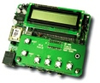
from Florite International, Inc.
The Model N920 is an embedded version of the 900 Series instrument incorporating user selectable digital and analog inputs, as well as analog and relay outputs. Other Model N920 features include .005% high accuracy PID, batch, and dose control functions. Additionally, the Model N920 encompasses rate... [See More]
- Form Factor: Board; Chassis; PCB Mount
- Features: PLC; Datalogger; Is a Chart Recorder; Rate Indication/ Control; Totalizing (Length or Roll Diameter) Indication/ Control
- Control: Limit
- Interface: Digital Front Panel; Computer Programmable; Network
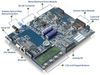
from Acro Associates, Inc.
Acro's Acrosense ™ Fluid Control Platform offers engineers the ability to quickly design, prototype and integrate fluid components used for developing medical device and bioprocessing systems. Our patent-pending technology consists of several preconfigured boards that enable basic to... [See More]
- Form Factor: Board
- Control: PID
- Controller Type: Laboratory; Valve Controller
- Features: Multi-Function; Rate Indication/ Control; PC-Based