
Service Robot Robots
Last Updated: April 1, 2025
Description
Service robots are designed to perform tasks autonomously, enhancing efficiency and reducing the need for human intervention. They are equipped with advanced sensors and AI capabilities, allowing them to navigate environments, recognize objects, and interact with their surroundings effectively. These robots are user-friendly, often featuring intuitive interfaces that make them accessible to users without technical expertise.
Working Principle
Service robots operate using a combination of autonomous navigation, advanced sensors, and AI-driven machine learning. They can move independently within an environment, avoiding obstacles and selecting efficient paths to complete tasks. The integration of AI allows these robots to learn from their experiences, adapt to new tasks, and improve their performance over time. This adaptability and precision make them valuable tools for handling repetitive, dangerous, or time-consuming tasks, ultimately improving efficiency and safety.
Applications
Service robots have a wide range of applications across various industries. For example, delivery service robots are used to transport items within facilities or manage last-mile delivery to customers, ensuring quick and efficient service. Guidance service robots assist visitors in locations such as airports, malls, and hospitals by providing information, directions, and assistance. Additionally, servicing service robots perform maintenance and repairs, conducting routine checks and fixing issues to keep equipment and facilities in optimal condition.
Advantages over other Robots
Service robots offer several advantages over other types of robots. Their autonomous navigation and mobility allow them to operate without constant supervision, making them more efficient in dynamic environments. The advanced sensors and perception systems enable precise interaction with their surroundings, which is crucial for tasks requiring high accuracy. Furthermore, their AI and machine learning capabilities allow them to continuously improve and adapt, providing long-term value and efficiency gains.
Limitations
Despite their advantages, service robots have limitations. They may face challenges in complex or unpredictable environments where their sensors and AI might not fully comprehend the situation. Additionally, the initial setup and integration of service robots can be complex and time-consuming, requiring significant investment in time and resources.
Considerations
When considering the implementation of service robots, several factors should be taken into account. Initial costs can be high due to the advanced technology and integration required. Operating expenses may vary depending on the complexity of tasks and the environment in which the robots operate. Durability and accuracy are critical, as these factors influence the robot's ability to perform tasks effectively over time. Replacement and maintenance costs should also be considered, as regular upkeep is necessary to ensure optimal performance and longevity.

from ElectroCraft
Wheel Drive Systems for Mobile Robots require efficient, durable, high torque DC brush or brushless gearmotors to achieve the long-term performance and reliability that users expect. The ElectroCraft MP, MPP or MPS series right-angle gearmotors are specifically designed for heavy-payload... [See More]
- Robot Type: Service Robot
- Features: Mobile
- Industry / Application: Material Handling (e.g., Loading/Unloading, Palletizing)
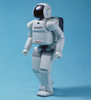
from Honda Motor Co., Ltd.
Honda's ASIMO, an acronym for Advanced Step in Innovative Mobility, was one of the most advanced humanoid robots during its time of active development. Engineered to operate in human environments, ASIMO could walk or run on two legs, with the ability to navigate around people and objects without... [See More]
- Robot Type: Service Robot; Humanoid Robot
- Industry / Application: Domestic Robot; Home and Office Assistance
- Drive System: Electric
- Features: Mobile
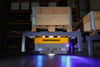
from Jungheinrich AG
The Jungheinrich arculee S is a compact and maneuverable Autonomous Mobile Robot (AMR) designed to optimize logistics and automate underload transport. With standout features and capabilities, it offers versatile solutions for various industries and applications. The arculee S excels in underload... [See More]
- Robot Type: Service Robot
- Industry / Application: Material Handling (e.g., Loading/Unloading, Palletizing); Sprue Picker
- Load Capacity: 1000
- Features: Mobile
from Gausium
The Gausium Phantas is an advanced cleaning robot designed for various environments, including commercial spaces and public facilities. One of its standout features is its AI-powered navigation system, which allows for precise and efficient cleaning routes. The robot is equipped with a combination... [See More]
- Robot Type: Service Robot
- Features: Artificial Intelligence (A.I.)
- Industry / Application: Medical / Pharmaceutical
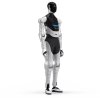
from NEURA Robotics GmbH
The Neura Robotics 4NE-1 is a humanoid robot distinguished by its advanced cognitive abilities and human-like form factor. Standing 180 cm tall and weighing 80 kg, it's built to operate in environments designed for humans, making it highly adaptable and approachable. The robot features a unique... [See More]
- Robot Type: Service Robot
- Load Capacity: 15
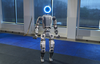
from Boston Dynamics
Atlas, Boston Dynamics' most dynamic humanoid robot, is designed with a focus on advanced mobility and dexterity. This robot is fully electric and utilizes an intricate hydraulic system, making it capable of complex, agile movements. Atlas is equipped with 28 joints and advanced control algorithms... [See More]
- Robot Type: Service Robot
- Industry / Application: Inspection Robot; Aerospace and Defense|Energy and Utilities
- Drive System: Electric; Hydraulic
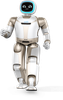
from UBTECH Robotics, Inc.
The UBTECH Walker is a bipedal humanoid robot designed to serve as a personal assistant in various environments, including homes, offices, and public spaces. Standing at approximately 1.45 meters tall, Walker is equipped with 36 high-performance actuators that allow it to execute smooth and precise... [See More]
- Robot Type: Service Robot
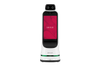
from LG Electronics, Inc.
The LG CLOi GuideBot is designed primarily as an autonomous guiding service, capable of navigating various types of facilities to assist visitors. It features advanced speech recognition and an interactive touchscreen, enhancing user interaction and engagement. Equipped with a dedicated Content... [See More]
- Robot Type: Service Robot
- Industry / Application: Security / Military Robot
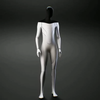
from Tesla Motors
Tesla Optimus, unveiled by Tesla Inc., is a humanoid robot designed to handle mundane, repetitive, or dangerous tasks. It stands approximately 1.73 meters tall and weighs about 57 kilograms. The robot is constructed from lightweight materials and is powered by the same type of batteries and... [See More]
- Robot Type: Service Robot
- Industry / Application: Robotic Assembly; Domestic Robot; Inspection Robot; Material Handling (e.g., Loading/Unloading, Palletizing); Packaging Robot
- Load Capacity: 20
- Features: Mobile
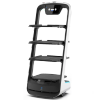
from Pudu Technology Inc.
The webpage did not load successfully, and I couldn't retrieve the specific details directly from the Pudu Robotics site for the PuduBot. However, I can provide some general information about the typical features and applications of service robots like PuduBot based on common knowledge: The PuduBot... [See More]
- Robot Type: Service Robot
- Industry / Application: Packaging Robot