
FOUNDATION Fieldbus Pressure Transmitters
Last Updated: April 1, 2025
Description
FOUNDATION Fieldbus Pressure Transmitters are devices used to measure pressure levels in various industrial processes. They provide precise pressure readings and communicate this data through the FOUNDATION Fieldbus protocol, which is a digital communication standard used in process automation.
Working Principle
FOUNDATION Fieldbus Pressure Transmitters operate by converting pressure measurements into digital signals that can be transmitted over the FOUNDATION Fieldbus network. This network allows for seamless integration of sensor diagnostics into process control systems, enhancing the ability to monitor and manage industrial processes efficiently. The digital communication capability of these transmitters makes them particularly useful for complex systems where precise data transmission and integration are critical.
Applications
FOUNDATION Fieldbus Pressure Transmitters are commonly used in industries that require precise pressure monitoring and control. Specific examples include their use in nuclear power plants, where they are part of the instrumentation that ensures safe and efficient plant operation. They are also used in chemical processing plants, oil and gas refineries, and other environments where accurate pressure measurement is essential for maintaining process integrity and safety.
Advantages over other Pressure Transmitters
One of the key advantages of FOUNDATION Fieldbus Pressure Transmitters is their ability to integrate seamlessly with digital control systems, providing enhanced diagnostic capabilities and real-time data transmission. This integration allows for more efficient process control and monitoring compared to traditional analog transmitters. Additionally, the FOUNDATION Fieldbus protocol supports advanced features such as Plug and Measure functionality, which simplifies installation and configuration.
Limitations
While FOUNDATION Fieldbus Pressure Transmitters offer many benefits, they also have limitations. The initial setup and configuration can be complex, requiring specialized knowledge and training. Additionally, the digital communication infrastructure may require significant investment in terms of both time and resources to implement effectively.
Considerations
When considering the use of FOUNDATION Fieldbus Pressure Transmitters, it is important to evaluate factors such as initial costs, which can be higher due to the need for digital infrastructure and specialized training. Operating expenses may be reduced over time due to improved process efficiency and reduced downtime. Durability and accuracy are generally high, but regular maintenance and calibration are necessary to ensure optimal performance. Replacement and maintenance costs should also be factored into the overall cost-benefit analysis when deciding to implement these transmitters in an industrial setting.

from Siemens Process Instrumentation
SITRANS P320/420 are the first pressure transmitters with remote safety handling: It enables the user to program all devices from the control room instead of each individual transmitter on site. This shortens commissioning, especially in applications that require functional safety. A test period of... [See More]
- Signal Output: Analog Current; HART® Protocol; PROFIBUS®; FOUNDATION
- Accuracy: 0.0650
- Pressure Measurement: Absolute; Differential; Gauge
- Media: Gas
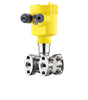
from VEGA Americas, Inc.
Application area. For applications with liquids in small containers under simple process conditions. Possible applications can be found in almost all industrial sectors. The VEGADIF 85 is a universal differential pressure transmitter for measurement of liquids, gases and vapours. Typical application... [See More]
- Signal Output: Analog Current; PROFIBUS®; FOUNDATION
- Working Pressure Range: -580 to ?
- Pressure Measurement: Differential
- Features: Intrinsically Safe
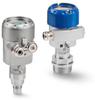
from KROHNE Messtechnik
The OPTIBAR PC 5060 is a pressure transmitter for process pressure and hydrostatic level measurement in all kinds of process applications. It is designed for absolute and gauge pressure measurement in open tanks and – as dual version for electronic differential pressure measurement –... [See More]
- Signal Output: Analog Current; HART® Protocol; PROFIBUS®; FOUNDATION
- Pressure Measurement: Absolute; Differential (optional feature); Gauge; Negative Pressure
- Sensor Technology: Ceramic Capacitive
- Working Pressure Range: 0.7300 to 1450
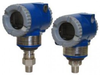
from Viatran
The Model IGP10 gage pressure sensor is an intelligent two-wire transmitter that provides precise, reliable measurement of gauge or absolute pressure and transmits a 4 to 40 mA output signal with a superimposed HART digital signal for remote configuration and monitoring. [See More]
- Signal Output: Analog Voltage; Analog Current; HART® Protocol; PROFIBUS®; FOUNDATION
- Pressure Measurement: Absolute; Gauge
- Sensor Technology: Strain Gauge
- Working Pressure Range: 0.0 to 6000

from VEGA Americas, Inc.
Application area. Universally applicable pressure transmitter. The ceramic measuring cell is resistant to temperature shocks. Can be combined with any other sensor of VEGABAR Series 80 for electronic differential pressure measurement. The VEGABAR 82 pressure transmitter can be used universally for... [See More]
- Signal Output: Analog Current; PROFIBUS®; FOUNDATION
- Working Pressure Range: -14.5 to ?
- Pressure Measurement: Differential
- Features: Intrinsically Safe