
Optically Isolated Machine Controllers and Monitors
Description
Optically isolated machine controllers and monitors are devices that use optical isolation to manage and monitor machinery. These devices incorporate electronic numeric control and monitoring interfaces, allowing for the programming and calibration of computerized machinery. They are available in various form factors, including card, desktop, DIN rail, embedded, handheld, panel mounted, and rack mounted, each designed to suit different installation and operational needs .
Working Principle
Optically isolated machine controllers and monitors operate by using an optoisolator or optocoupler, which consists of an LED and a phototransistor. The LED emits photons that are detected by the phototransistor, allowing information to be transmitted without a direct electrical connection. This method provides high-voltage isolation, typically rated in thousands of volts, and is inherently immune to electromagnetic interference (EMI), making it a reliable choice for protecting sensitive circuits from electrical noise .
Applications
These controllers and monitors are used across various industries, including aerospace, automotive, marine, medical, military, and general industrial applications. For example, in the automotive industry, they can be used to control and monitor the performance of engine systems, while in the medical field, they might be employed to ensure the precise operation of diagnostic equipment .
Advantages over other Machine Controllers and Monitors
One of the primary advantages of optically isolated controllers and monitors is their immunity to EMI, which is crucial in environments with high electrical noise. This feature ensures that sensitive circuits are protected, enhancing the reliability and safety of the system. Additionally, optical isolation allows for the coexistence of multiple power domains, which can improve performance and reduce the component count in a system .
Limitations
Despite their advantages, optically isolated devices can have limitations, such as potential issues with signal speed and bandwidth compared to other isolation technologies. These limitations might affect the performance in applications requiring high-speed data transmission .
Considerations
When selecting optically isolated machine controllers and monitors, several factors should be considered. Initial costs can vary depending on the complexity and specifications of the device. Operating expenses might be influenced by the need for regular maintenance to ensure optimal performance. Durability is generally high due to the robust nature of optical components, but accuracy can be affected by environmental factors such as temperature and humidity. Replacement and maintenance costs should also be factored into the overall cost of ownership, as these devices may require periodic calibration and component replacement to maintain their effectiveness .

from Nutfield Technology
The Pipeline-1 Scan C ontroller incorporates the SurfBoard-1, power supply, signal interface board and other components in a 19-inch 1U rack mount enclosure. A front panel key switch with 5-second delay, mark in progress indicator, and safety interlock loop are provided. The interface board... [See More]
- Features: Encoder Feedback; Optically isolated
- DC Input: 5 to 24
- Form Factor: Rack Mount
- Input: Analog Input
from Nutfield Technology
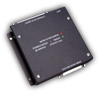
Nutfield Technology ’s SurfBoard-1 USB scan controller coordinates any laser with a 2-axis or 3-axis galvo scanning system. Hardware I/O can be configured to interact with other devices for handshaking and synchronizing functions, and can control motion devices such as XY tables and rotary... [See More]
- Features: Encoder Feedback; Optically isolated
- DC Input: 5 to 24
- Form Factor: DIN Rail
- Input: Analog Input

from Nutfield Technology
The SurfBoard-2 Scan Controller includes SurfBoard-1 capabilities adding Ethernet, dedicated stepper motor output, analog and digital I/O, and on-board flash hardware for Standalone/Flash operation. The SurfBoard-2 scan controller coordinates any laser with a 2-axis or 3-axis galvo scanning system. [See More]
- Features: Encoder Feedback; Optically isolated
- DC Input: 5 to 24
- Form Factor: DIN Rail
- Input: Analog Input; Transistor Input