
Desktop / Stand Alone / Tower Machine Controllers and Monitors
Description
Desktop, stand-alone, or tower machine controllers and monitors are devices used to control and monitor computerized machinery. These devices are often housed in a tower or desktop form factor, providing a stable and robust platform for managing various machine operations. They are equipped with electronic numeric control and monitoring interfaces, which allow for the programming and calibration of machinery. These controllers and monitors are designed to handle electrical, drive, memory, and application specifications, making them versatile tools in industrial settings.
Working Principle
The working principle of desktop or stand-alone machine controllers and monitors involves the use of electronic numeric control systems that interface with machinery to manage operations. These devices typically include a computer interface, control panel, or other input methods to set up and control machinery. They utilize real-time system feedback, often through proportional, integral, and derivative (PID) control, to ensure precise operation. The controllers may also include features like alarms, event monitoring, and data logging, which enhance their utility by providing critical operational insights and ensuring safety.
Applications
Desktop and stand-alone machine controllers and monitors are used in a wide range of applications across various industries. For example, in the aerospace industry, they are employed to control complex machinery used in manufacturing aircraft components. In the automotive sector, these controllers manage assembly line operations, ensuring precision and efficiency. They are also used in medical device manufacturing, where accuracy and reliability are paramount. Additionally, these controllers find applications in marine, military, and general industrial settings, where they help automate and monitor diverse processes.
Advantages over other Machine Controllers and Monitors
One of the primary advantages of desktop or stand-alone machine controllers and monitors is their processing power. According to , desktop computers can house larger, more powerful processors, which is beneficial for data-intensive applications that require fast data analysis and logging. This makes them particularly suitable for applications where high processing power is necessary but mobility is not a concern. Additionally, their ability to integrate with various communication standards and provide real-time feedback enhances their versatility and effectiveness in complex industrial environments.
Limitations
A notable limitation of desktop or stand-alone machine controllers and monitors is their lack of mobility. As mentioned in , these devices are typically intended for use at a single location and are not designed to be moved frequently. This can be a drawback in environments where flexibility and portability are required. Furthermore, while they offer high processing power, their larger size may not be suitable for all industrial settings, particularly those with space constraints.
Considerations
When selecting desktop or stand-alone machine controllers and monitors, several considerations should be taken into account. Initial costs can vary depending on the specifications and features required for specific applications. Operating expenses may include energy consumption, especially for devices with high processing power. Durability is another important factor, as these devices need to withstand industrial environments. Accuracy is crucial for ensuring precise control and monitoring of machinery. Lastly, replacement and maintenance costs should be considered, as these can impact the long-term cost-effectiveness of the device.
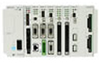
from Yaskawa America, Inc. - Motion Division
Up to 256 Axes. The MP2200 expands the MP2300's capabilities to a rack system of 9 slots and up to 256 axes of motion control while maintaining the same position, speed, torque and phase control as well as electronic camming ability. [See More]
- Form Factor: Desktop, Stand Alone or Tower
- Input: DC Input
- DC Input: 24
- Output: DC Output
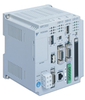
from Yaskawa America, Inc. - Motion Division
Up to 48 Axes. The MP2300 synchronizes sequence control and motion control in one tightly integrated platform. Position, speed, torque, and phase control such as electronic gearing and electronic cam profiles are available for a variety of applications. [See More]
- Form Factor: Desktop, Stand Alone or Tower
- DC Input: 24
- AC Input: 85 to 276
- Input: DC Input

from MECCO
The T2 Controller is the time-tested, industrial strength electric controller for COUTH marking machines. The T2 controller embodies the best properties of all previous COUTH marking system control units and incorporates cutting-edge superior technology. As a result, it is the most flexible and... [See More]
- Form Factor: Desktop, Stand Alone or Tower
- Phase : Single Phase
- AC Input: 110 to 220
- Frequency: 50 Hz; 60 Hz

from Opto 22
Opto 22 Modular Controller designed for use with FactoryFloor software. [See More]
- Form Factor: Desktop, Stand Alone or Tower
- Main Memory: 1.00E-3 to 0.2560
- DC Input: 5 to 24
- Flash Memory: 1.00E-3 to 0.2560
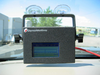
from Taylor Dynamometer, Inc.
DynoMotive ’s WX dyno controller system includes a ruggedized, WiFi, touch screen tablet PC and a graphic heads up display. Our easy to use, intuitive DynControl software not only makes testing simple, but also fully contols the dyno wirelessly and displays muliple channels of real time data. [See More]
- Form Factor: Desktop, Stand Alone or Tower

from KUKA Deutschland GmbH
More powerful, safer, more flexible, and above all more intelligent. The revolutionary concept of the KR C4 provides a firm foundation for the automation of tomorrow. It reduces costs in automation for integration, maintenance and servicing. The long-term efficiency and flexibility of the systems... [See More]
- Form Factor: Desktop, Stand Alone or Tower
- Input: AC Input
- AC Input: 380 to 480
- Features: Integral Software

from HydraForce, Inc.
The ECU-0710 Machine Controller is a general-purpose programmable controller designed to withstand the real-world environmental demands of the off-highway mobile market. The ECU-0710 can be used as a stand-alone controller, or for integrating into a CAN network with other devices. Input... [See More]
- Form Factor: Desktop, Stand Alone or Tower
- Input: Analog Input; Frequency or Pulse; Digital In (SWG,SWB) PWM
- DC Input: 9 to 30
- Output: Analog Output

from Opto 22
Opto 22 Modular Controller is designed for use with FactoryFloor software. [See More]
- Form Factor: Desktop, Stand Alone or Tower
- Input: Analog Input; Digital, Multifunction
- DC Input: 5 to 24
- Output: Analog Output; Digital

from HydraForce, Inc.
The ECU-0809 Controller is a compact and robust multi-function programmable. controller designed to withstand the real-world environmental demands of the. off-highway mobile market. The ECU-0809 can be used in both centralized and. distributed intelligence systems. It has a light, leakproof,... [See More]
- Form Factor: Desktop, Stand Alone or Tower
- Input: Analog Input; Frequency or Pulse; Digital
- DC Input: 8.5 to 33
- Output: PWM, Current
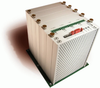
from Opto 22
SNAP Modular M4 Controller for FactoryFloor systems [See More]
- Form Factor: Desktop, Stand Alone or Tower
- Main Memory: 4
- DC Input: 5
- Flash Memory: 2

from HydraForce, Inc.
The ECU-ML Machine Control is a heavy-duty general-purpose programmable controller designed to withstand the extreme environmental demands of the agricultural, marine, mining and construction industries. Based on a 32-bit MPC555. microprocessor running at 40MHz, the ECU-ML is a monitor and... [See More]
- Form Factor: Desktop, Stand Alone or Tower
- Input: Analog Input; Frequency or Pulse; Interrupt Input; Analog, PWM, Resistance
- DC Input: 9 to 32
- Output: Analog Output; Frequency or Pulse