
-
Supplier: Rieker, Inc.
Description: The BDK Series are dynamic accelerometers that measure vibration and acceleration of any object over a wide frequency range without the influence of gravity. All models are supplied with a ratiometric type analog output. Features Single Supply Input Very Low Power Consumption
- Acceleration: -10 to 10 g
- Frequency Range: 1 to 800 Hz
- Maximum Shock: 10,000 g
- Operating Temperature: -40 to 185 F
-
Supplier: Silicon Designs, Inc.
Description: The SDI Model 2290 Single-Axis MEMS DC Precision Reference Calibration Accelerometer offers a precise, reliable, and accurate means of determining the sensitivity and frequency response characteristics of unknown MEMS DC accelerometers during end-to-end calibrations and related
- Acceleration: 5 to 50 g
- Frequency Range: 0 to 1,800 Hz
- Maximum Shock: 2,000 to 5,000 g
- Operating Temperature: -67 to 257 F
-
Supplier: VAST STOCK CO., LIMITED
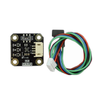
Description: Acceleration Sensor Development Tools Gravity I2C Triple Axis Accelerometer
-
-
Supplier: DigiKey
Description: LIS331HH Accelerometer Sensor Gravity Platform Evaluation Expansion Board
- Features: Other
-
Supplier: Instrumented Sensor Technology
Description: and shock. The new generation devices offer several improved capabilities over the standard Snap Shock accelerometer model. In addition to measuring peak-g shock levels with a built-in accelerometer sensor, the SSP also measures and records shock duration and velocity change
- Inputs: Accelerometer Input
- Data Acquisition: Datalogger / Recorder
- Application: General Lab and Industrial, Vehicular
- User Interface: None
-
Supplier: LORD MicroStrain Sensing Systems
Description: Miniature Attitude Heading Reference System (AHRS) Overview The 3DM-GX3® -25 is a high-performance, miniature Attitude Heading Reference System (AHRS), utilizing MEMS sensor technology. It combines a triaxial accelerometer, triaxial gyro, triaxial magnetometer, temperature
- Angular Rate Range: 49.999999999999986 to 1,200 deg/sec
- Bandwidth: 440 Hz
- Linear Acceleration Range: -50 to 50 g
- Maximum Dimension: 1.7322844 inch
-
Supplier: Xsens Technologies BV
Description: gravity referenced roll and pitch and unreferenced heading on top of the sensor data of the MTi. The 30-AHRS is a full 3D AHRS, also providing magnetic-referenced heading. Signal processing pipeline All products from the MTi 10-series feature the same state-of-the-art signal processing
-
Supplier: Xsens Technologies BV
Description: gravity referenced roll and pitch and unreferenced heading on top of the sensor data of the MTi. The 30-AHRS is a full 3D AHRS, also providing magnetic-referenced heading. Signal processing pipeline All products from the MTi 10-series feature the same state-of-the-art signal processing
-
Supplier: Xsens Technologies BV
Description: gravity referenced roll and pitch and unreferenced heading on top of the sensor data of the MTi. The 30-AHRS is a full 3D AHRS, also providing magnetic-referenced heading. Signal processing pipeline All products from the MTi 10-series feature the same state-of-the-art signal processing
-
Supplier: DigiKey
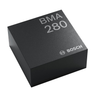
Description: Accelerometer X, Y, Z Axis ±2g, 4g, 6g, 8g, 16g 8Hz ~ 500Hz 12-LGA (2x2)
- Acceleration: 2 to 16 g
- Frequency Range: 8 to 500 Hz
- Operating Temperature: -40 to 185 F
- Sensor Outputs: Acceleration
-
Supplier: Tronics Microsystems
Description: AXO315 redefines precision navigation in extreme environments. This single-axis, closed-loop digital MEMS accelerometer delivers exceptional stability and repeatability, crucial for accurate navigation under severe temperature fluctuations and intense vibrations. Offering a ±14 g input range,
- Acceleration: 14 g
- Frequency Range: 300 Hz
- Maximum Shock: 50 g
- Maximum Vibration: 4.12 g
-
Supplier: Silicon Designs, Inc.
Description: SDI's Premium Models 2470 and 2476 High-Performance Three-Axis MEMS DC Accelerometers are rugged plug-and-play measurement devices that provide enhanced performance over temperature for use in zero to medium frequency applications experiencing large or rapid temperature variations or
- Acceleration: 2 to 400 g
- Frequency Range: 0 to 4,200 Hz
- Maximum Shock: 2,000 to 5,000 g
- Operating Temperature: -67 to 257 F
-
Supplier: Silicon Designs, Inc.
Description: SDI's 1-axis Model 2012 and 3-axis Model 2422 MEMS DC Test & Measurement Accelerometer Modules are designed for applications in which the power supply may be limited, or if only a steady +5V DC excitation is available or preferred.
- Acceleration: 2 to 400 g
- Frequency Range: 0 to 4,200 Hz
- Maximum Shock: 2,000 to 5,000 g
- Operating Temperature: -67 to 257 F
-
Supplier: Marposs Corp
Description: MODULAR, GEMAMS or GEMVM. The piezo sensors VA-1 and VA-2 are suitable for monitoring of one axis. The piezo sensor VA-3D measures the accelerations of up to three axes. The VA-3D MEMS sensor can measure up to three axes and is preferably used in combination with the GEMAMS
- Measurement Axes: Biaxial, Single Axis, Triaxial
- Sensor Technology: MEMS, Piezoelectric
- Device Category: Sensor / Transducer
-
Supplier: Tronics Microsystems
Description: AXO314 redefines precision inertial sensing, delivering exceptional stability and repeatability for navigation systems operating under severe vibration conditions. This digital MEMS accelerometer, with a ±14 g input range, offers performance comparable to traditional quartz
- Acceleration: 14 g
- Frequency Range: 300 Hz
- Maximum Shock: 50 g
- Maximum Vibration: 4.12 g
-
Supplier: Silicon Designs, Inc.
Description: The Model 1531 is an industrial-grade surface mount MEMS DC accelerometer that is specifically designed for use in higher-temperature applications. Its performance specifications are virtually identical to those of the SDI Model 1521, yet with the further incorporation of higher-temperature
- Acceleration: 5 to 400 g
- Frequency Range: 0 to 2,000 Hz
- Maximum Shock: 2,000 to 5,000 g
- Operating Temperature: -67 to 347 F
-
Supplier: Tronics Microsystems
Description: AXO305 redefines navigation accuracy with its exceptional stability and repeatability, directly challenging the performance of traditional quartz accelerometers. This single-axis, closed-loop digital MEMS accelerometer, boasting a ±5 g input range, delivers unparalleled 1-year
- Acceleration: 5 g
- Frequency Range: 120 Hz
- Maximum Shock: 50 g
- Maximum Vibration: 4.12 g
-
Supplier: DynaTronic Corporation
Description: DynaTronic Corporation was formed by an innovative and professional team, who are dedicating to vibration test and measurement fields. DynaTronic Corporation provides leading edge instrumentation for vibration testing and measurement, e.g., VENZO 800 vibration controller can provide you with the
- Acceleration: 2,000 g
- Frequency Range: 0.5 to 8,000 Hz
- Operating Temperature: -40 to 302 F
- Sensor Outputs: Acceleration
-
Supplier: Columbia Research Labs, Inc.
Description: vibration. The sensors incorporate an inverted shear crystal-mass assembly within a stainless steel body to provide reliable sensors that are insensitive to environmental inputs such as base bending and thermal transients. Signal ground is connected to the outer case of the units.
- Acceleration: 1,000 g
- Frequency Range: 2 to 10,000 Hz
- Minimum Accuracy: 5 +/-% FS
- Maximum Shock: 5,000 g
-
Supplier: MonoDAQ
Description: High performance IEPE accelerometers are the basis for high quality vibration measurement with MonoDAQ 1xACC amplifiers. DJB A/123 is a miniature IEPE accelerometer available in three versions with different sensitivity. Specifications Voltage sensitivity (+-10%): 5 mV/g | 10 mV/g |
- Frequency Range: 1 to 12,000 Hz
- Minimum Accuracy: 5 +/-% FS
- Maximum Vibration: 1,000 g
- Operating Temperature: -58 to 365 F
-
Supplier: Columbia Research Labs, Inc.
Description: The Models 8301 and 8302 Piezoelectric Accelerometers are completely self-contained vibration measuring systems having a built-in amplifier within the housing. These units are offered in a range of sensitivities for the measurement of low to medium level broadband frequency vibrations. The
- Acceleration: 500 g
- Frequency Range: 2 to 7,000 Hz
- Minimum Accuracy: 5 +/-% FS
- Maximum Shock: 5,000 g
-
Supplier: MonoDAQ
Description: High performance IEPE accelerometers are the basis for high quality vibration measurement with MonoDAQ 1xACC amplifiers. DJB A/120 is a general purpose IEPE accelerometer available in two versions with different sensitivity. Specifications Voltage sensitivity (+-10%): 10 mV/g | 100
- Frequency Range: 1 to 9,000 Hz
- Minimum Accuracy: 5 +/-% FS
- Maximum Vibration: 1,000 g
- Operating Temperature: -58 to 365 F
-
Supplier: Kistler Group
Description: Small, light weight accelerometer for measuring impulse and high impact shock. • High impedance charge mode • Wide measuring range • Stable quartz element • Lightweight, miniature package
- Acceleration: -20,000 to 30,000 g
- Frequency Range: 0 to 8,000 Hz
- Maximum Shock: 30,000 g
- Operating Temperature: -319 to 392 F
-
Supplier: Setra Systems
Description: A highly accurate accelerometer that can maintain a stable output even under the most extreme vibration and temperature conditions. Along with its ability to withstand extreme vibration without damage, the Model 141 can sense accelerations ranging from static acceleration up to 3000 Hz.
- Acceleration: -600 to 600 g
- Frequency Range: 200 to 3,000 Hz
- Minimum Accuracy: -1 to 1 +/-% FS
- Operating Temperature: -65 to 220 F
-
Supplier: Columbia Research Labs, Inc.
Description: The Models 904 and 904-HT Piezoelectric Accelerometers are primarily designed for industrial applications where monitoring and measurement of vibration levels are desirable but only a minimum of electronic equipment is available. The internal construction of the piezoelectric seismic system
- Acceleration: 500 g
- Frequency Range: 2 to 10,000 Hz
- Minimum Accuracy: 5 +/-% FS
- Maximum Shock: 2,000 g
-
Supplier: DynaTronic Corporation
Description: DynaTronic Corporation was formed by an innovative and professional team, who are dedicating to vibration test and measurement fields. DynaTronic Corporation provides leading edge instrumentation for vibration testing and measurement, e.g., VENZO 800 vibration controller can provide you with the
- Acceleration: 10,000 g
- Frequency Range: 1 to 15,000 Hz
- Operating Temperature: -40 to 302 F
- Sensor Outputs: Acceleration
-
Supplier: DynaTronic Corporation
Description: DynaTronic Corporation was formed by an innovative and professional team, who are dedicating to vibration test and measurement fields. DynaTronic Corporation provides leading edge instrumentation for vibration testing and measurement, e.g., VENZO 800 vibration controller can provide you with the
- Acceleration: 2,000 g
- Frequency Range: 1 to 7,000 Hz
- Operating Temperature: -40 to 302 F
- Sensor Outputs: Acceleration
-
Supplier: Rieker, Inc.
Description: The B1, B2, and B3 sensors are capacitive spring mass accelerometers with integrated sensor electronics. Requiring very low power consumption these are characterized by a high degree of longterm stability. Resonant peaks are minimised by means of a special gas-dynamic damping in
- Acceleration: -10 to 10 g
- Frequency Range: 0 to 350 Hz
- Operating Temperature: -40 to 185 F
- Sensor Outputs: Acceleration
-
Supplier: Wilcoxon Sensing Technologies
Description: Vibration sensor, ultra-low noise, velocity output, 500 mV/in/sec, ±10% sensitivity tolerance, case isolated, top exit MIL-C-5015 connector
- Frequency Range: 5 to 7,000 Hz
- Operating Temperature: -58 to 248 F
- Device Category: Sensor / Transducer
-
Supplier: Kionix, Inc.
Description: These high-performance silicon micromachined linear accelerometers and inclinometers consist of a sensor element and an ASIC packaged in a 5x5x1.2mm Dual Flat No-lead (DFN). The sensor element is fabricated from single-crystal silicon with proprietary Deep Reactive Ion Etching
- Acceleration: 2 g
- Frequency Range: 800 Hz
- Maximum Shock: 5,000 g
- Operating Temperature: -40 to 185 F
-
Supplier: Jewell Instruments, LLC
Description: Jewell Instruments is proud to introduce the RoHS-compliant LSLR Ultra-Low Range Accelerometer. This single-axis accelerometer combines the high accuracy and ruggedness of force-balanced technology with the capacity to record very low inertial outputs. The fluid damped mechanism
- Acceleration: 0.1 to 2 g
- Frequency Range: 2 to 30 Hz
- Maximum Shock: 1,500 g
- Operating Temperature: -40 to 176 F
-
Supplier: Kistler Group
Description: The side connector Type 8703A... and top connector accelerometer Type 8705A... utilizes Kistler’s unique PiezoStar seismic element that provides both wide operating frequency and ultra low temperature coefficient of sensitivity of 0,004 %/°C. The accelerometer family operates from –55
- Acceleration: 50 to 250 g
- Frequency Range: 0.5 to 10,000 Hz
- Maximum Shock: 2,000 g
- Operating Temperature: -320.8 to 329 F
-
Supplier: PCB Piezotronics, Inc.
Description: Sensor, 6 Degrees of Freedom
- Device Category: Sensor / Transducer
-
Supplier: Micromega Dynamics
Description: The RECOVIB® industrial accelerometers bridge the gap between the performance of laboratory accelerometers (which are often expensive, fragile and offer low protection) and the robustness of industrial accelerometers (which are sometimes cheaper but often noisy and inaccurate).
- Acceleration: 2 to 6 g
- Frequency Range: 0 to 1,000 Hz
- Operating Temperature: -4 to 185 F
- Sensor Outputs: Acceleration
-
Supplier: PMC Engineering LLC
Description: KAT Series of low bandwidth accelerometers offer a compact and rugged solution for the motorsport and automotive testing industries with integral signal conditioning to give a standard signal of 0.5V to 4.5V which is ideal for most data acquisition systems. The low bandwidth sensor
- Acceleration: 2 to 10 g
- Frequency Range: 0 to 20 Hz
- Minimum Accuracy: 1 +/-% FS
- Operating Temperature: -5 to 214 F















Find Suppliers by Category Top
Featured Products Top
-
 TDK Corporation announces the extension of its high-performance MEMS inertial sensors portfolio with Tronics AXO315®T1, a high-temperature MEMS accelerometer with ±14 g input range and a digital interface for measurement while drilling (MWD) applications operating up to +175°C. (read more)
Browse Accelerometers Datasheets for Tronics Microsystems -
Accelerometers are commonly used for determining the tilt or inclination of industrial assets and systems. By measuring the projection of the gravity vector on the sensitive axis of the sensor, one can easily determine the inclination angle of the system. (read more)
Browse Accelerometers Datasheets for Tronics Microsystems -
. Viscosity — ASTM D8092 Viscosity is measured using a temperature-controlled kinematic viscometer with a patented split-cell design. A funnel, with a 100 micron gap, is formed in the center of the cell. Optical sensors in the cell detect the flow (read more)
Browse Oil Sensors and Analyzers Datasheets for AMETEK Spectro Scientific -
viscosity is the resistance of a fluid to flow under gravity. Viscosity is the most important lubricant physical property. Lubricants must have suitable flow characteristics to insure that an adequate supply reaches lubricated parts at different operating temperatures. The viscosities of lubricants (read more)
Browse Oil Sensors and Analyzers Datasheets for AMETEK Spectro Scientific -
improving the MTBF of the pump. Kinematic Viscosity The resistance of a fluid to flow under gravity. Viscosity is the most important lubricant physical property for pumps. The viscosities of lubricants vary depending on their classification or grade, as well as the degree (read more)
Browse Oil Sensors and Analyzers Datasheets for AMETEK Spectro Scientific
More Information Top
 Indicates content that may require registration and/or purchase.

-
Recognition of Grip-Patterns by Using Capacitive Touch Sensors
The internal gravity sensor ( accelerometer ) further determines the proper orientation of the display.
-
An externally powered, multichannel, implantable stimulator-telemeter for control of paralyzed muscle
More technically demanding applications, such as adding triceps stimulation for overhead reaching [6], or control of wrist movement and forearm [7], may require 12 or more channels of stimulation, two joint angle sensors, a gravity sensor ( accelerometer ), and two MES channels as …
-
Observation of the Earth System from Space
A highly sensitive accelerometer ( gravity sensor , Fig. 2b) is located in the centre and measures vertical acceleration.
-
Gravity, Geoid and Space Missions
A highly sensitive accelerometer ( gravity sen- sor , Fig. 2) is located in the centre and is responsible for measuring the vertical acceleration.
-
AIRGrav Results: a Comparison of Airborne Gravity Survey Data With GSC Test Site Data
Where “Au” is the vertical accelerometer ( gravity sensor ) reading, “wie” is the angular rotation rate of the earth, “lat” is the current latitude of the gravimeter, “Ve” and “Vn” are the aircraft east and north components of velocity, and Vu is the …
-
Pose estimation of a vehicle on rough terrain by using the Sun direction
We implemented the pose estimation algorithm proposed in Section 2, on our experimental mobile robot platform “Yamabico AQURO’.(Fig.9) The system consists of the Sun Direction Sensor,three gyro sensors, and an two dimensional accelerometer ( gravity sensor ).
-
Comparison of control techniques for a robotic manipulator with base disturbances
… The angle RMISE with the adaptive Slotine–Li controller for joints S2 and E1 (mostly affected by gravity) is lower than with the accelerometer measurement, which can be attributed to additional noise being transmitted from the accelerometer sensor gravity measurement (which is also …
-
Avionics Navigation Systems 2nd Edition Complete Document
As discussed in Section 7.3.1. gravity sensors and accelerometers are synonymous: the former term refers to a low-accuracy instrument for vcnical references.
-
Wireless Algorithms, Systems, and Applications
Since common sensors such as gravity sensors , accelerometers , gyroscopes, linear accelerometers and magne- tometers have been already equipped in Android or iOS based smart phones, the sensor data can be easily recorded by the smart phone that an experimenter carries around.
-
Proposed wall climbing robot with permanent magnetic tracks for inspecting oil tanks
Gravity and accelerometer sensors can be fused together to derive the orientation information of the robot [20].