
Products & Services
See also: Categories | Featured Products | Technical Articles | More Information-
Supplier: Rex Gauge Company, Inc.
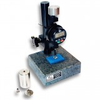
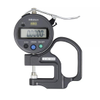
Description: Range: 0-1 inch (0-25 mm) Certified Electronic Indicator Resolution: 0.0001" (0.002 mm) Data Transfer Outputs: USB Left Hand Lifting Lever Certified Granite Base 6"x6"x2" (Grade AA, .00005") Conforms to ASTM D1777 SPEC 2
- Range: 0 to 1 inch
- Graduation / Resolution: 0.0001 inch
- Resolution: 0.0001 inch
- Features: Benchtop / Floor, Digital Display, English, Mechanical, Thickness Gage
-
Supplier: Phase II Plus
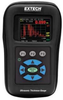
Description: Utilizing color waveform A-scan and time based B-scan for absolute correctness, this new state of the art thickness gauge is packed with useful features allowing users to be confident of the displayed values on the most critical of applications.
- Range: 0.01 to 23 inch
- Graduation / Resolution: 0.0001 to 0.01 inch
- Resolution: 0.0001 to 0.01 inch
- Features: Digital Display, English, Handheld / Portable, NIST Traceability, Thickness Gage
-
Supplier: PCE Instruments / PCE Americas Inc.
Description: PCE-CT 65 is a thickness gauge that uses magnetic induction (ferrous) or eddy current (non-ferrous) to take non-destructive measurements of coating and dry film thickness (DFT) on metal substrates such as steel and aluminum. This thickness gauge is ideal for
- Range: 0 to 0.053149635 inch
- Graduation / Resolution: 0.00000393701 to 0.0000393701 inch
- Resolution: 0.00000393701 to 0.0000393701 inch
- Features: Digital Display, Handheld / Portable, Metric, Thickness Gage
-
-
Supplier: Reid Supply
Description: Thickness gauges are used to measure the thickness of sheet metals, pipe, tubing, wire, and other materials. . PSW-19G20
- Range: 0.025 inch
- Features: Gage Set / Tool Kit, Thickness Gage
-
Supplier: ABB Measurement & Analytics
Description: The gauge has no fragile parts or parts that will age. Therefore the MTG provides a superior long-term stability. From a maintenance point of view the system is the most dependable thickness gauge on the market. An aluminium-bronze housing is used as a case for the measuring
- Range: 0.5905515 inch
- Features: Benchtop / Floor, Dial / Analog / Direct Reading Scale, Gaging System / Station, Mechanical, Metric, Thickness Gage
-
Supplier: OMEGA Engineering, Inc.
Description: • Measures Coating Thickness on Ferrous Materials • One-Hand Operation • BackLit Display • User Selectable Units, micormeter or mils • Auto Hold and Shut off Functions • Calibration Kit Included
- Range: 0 to 0.04 inch
- Graduation / Resolution: 0.0001 inch
- Resolution: 0.0001 inch
- Features: Digital Display, Handheld / Portable, Metric, Thickness Gage
-
Supplier: PCE Instruments / PCE Americas Inc.
Description: PCE-CT 27FN is a Coating Thickness Gauge that takes non-destructive measurements of nonmagnetic coating, insulating layer and dry film thickness (DFT) on metal substrates such as steel and aluminum. Ideal for surface testing, automotive paint inspection, material testing
- Range: 0 to 0.049212625 inch
- Graduation / Resolution: 0.00000393701 inch
- Resolution: 0.00000393701 inch
- Thickness Gauge Application: Coating Thickness
-
Supplier: REED-Direct
Description: Broad band receiving sensitivity means the meter can read probes of different frequencies 4-digit, 0.4" (10mm) high LCD readout Automatic material calibration Selectable metric or imperial Includes hard carrying case and batteries SPECIFICATIONS: Range: 0.06 to 8"/1.5 to 200mm Resolution:
- Range: 0.06 to 8 inch
- Graduation / Resolution: 0.001 inch
- Resolution: 0.001 inch
- Features: Digital Display, English, Handheld / Portable, Metric, Thickness Gage
-
Supplier: InspectorTools
Description: MIG" Laser Glass Thickness Gauge The 'MIG' Laser Glass Thickness Gauge is a durable tool used to measure glass and air space thickness in sealed insulating glass units. Laser reflections off the surfaces of glass appear on the graduated scale of the gauge.
- Thickness Gauge Application: Material Thickness
- Features: Optical, Optical - Laser, Thickness Gage
-
Supplier: ABB Measurement & Analytics
Description: Material property measurement on metal strip are normally done in laboratory according to a spot test procedure. The MTG, with built-in resistivity function, measures the resistivity on-line with an accuracy equal to the best available lab instruments. An air-temperature sensor is included in
- Features: Machine Mounted, Metric, Thickness Gage
-
Supplier: MTI Instruments Inc.
Description: PLC/PC. The controller simplifies thickness applications through high speed internal sampling and digital thickness computation, reducing errors often encountered with traditional analog summing methods. The controller can detect out of range thickness conditions within 0.00025
- Range: 0 to 0.1574804 inch
- Graduation / Resolution: 0.0000014960638 inch
- Resolution: 0.0000014960638 inch
- Features: Automatic / Inline, Digital Display, Internal Micrometer, Metric, Micrometer, Non-contact, Thickness Gage
-
Supplier: Evident Scientific
Description: The Olympus 72DL PLUS™ ultrasonic thickness gauge delivers precision thickness measurements at high speed in a portable, easy-to-use device. With fast scanning, advanced algorithms, and our lowest-ever minimum thickness capability, you can confidently measure the
- Features: Other
- Form Factor: Portable / Hand Held / Mobile
-
Supplier: Micro-Epsilon Group
Description: Thickness measurement for control and quality inspection is at many positions and is an important element in the process landscape of cold rolling mills. Common places of application for thicknessCONTROL MTS 8202.K systems for detecting the center thickness or the cross-profile are
- Range: 1.181103 inch
- Graduation / Resolution: 0.000014173236 inch
- Resolution: 0.000014173236 inch
- Features: Automatic / Inline, English, Gage Set / Tool Kit, Machine Mounted, Metric, Non-contact, Optical, Other Gage, SPC Capability, Thickness Gage
-
Supplier: MTI Instruments Inc.
Description: PLC/PC. The controller simplifies thickness applications through high speed internal sampling and digital thickness computation, reducing errors often encountered with traditional analog summing methods. The controller can detect out of range thickness conditions within 0.00025
- Operating Temperature: 32 to 104 F
- Display & Special Features: Computer Interface / Networkable
- Features: Form Measurement, Surface Profilometry
- Mounting / Loading Options: Machine Mounted
-
Supplier: Hitachi High-Tech America
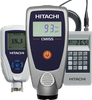
Description: 50984, ISO 2360 and BS 5411 Part 3 Instrument is a is a 16-key handheld device powered by a 9V battery Measurements can be taken in automatic or continuous modes Scanning option compensates for uneven or textured substrate materials, enhancing performance of gauge repeatability and
- Thickness Gauge Application: Coating Thickness
- Gaging Technology: Eddy Current / Electromagnetic, Electronic, Magnetic
- Features: Handheld / Portable, Thickness Gage
-
Supplier: Micro-Epsilon Group
Description: The thicknessCONTROL MTS 9201.LLT systems are equipped with special sensor technology and can precisely measure sheets and slabs with a thickness of more than 400 mm in both hot and cold states. Potential applications are behind quarto stands for mill control or quality control and in
- Range: 3.93701 to 15.74804 inch
- Graduation / Resolution: 0.0000787402 to 0.00001968505 inch
- Resolution: 0.0000787402 to 0.00001968505 inch
- Features: Automatic / Inline, English, Gage Set / Tool Kit, Machine Mounted, Metric, Non-contact, Optical, Optical - Laser, Other Gage, SPC Capability, Thickness Gage
-
Supplier: Micro-Epsilon Group
Description: The thicknessCONTROL MTS 9202.LLT stands for exceptional performance and overcomes the challenges of one of the most difficult applications for optical thickness measurements. The C-frame-shaped systems are designed for use in hot rolling mills. They are resistant to harsh environmental
- Range: 2.362206 inch
- Graduation / Resolution: 0.00000787402 inch
- Resolution: 0.00000787402 inch
- Features: Automatic / Inline, English, Gage Set / Tool Kit, Machine Mounted, Metric, Non-contact, Optical, Optical - Laser, Other Gage, SPC Capability, Thickness Gage
-
Supplier: Micro-Epsilon Group
Description: mechanics at large widths, a patented temperature compensation is integrated. This system is particularly suitable for slitting lines where the high lateral resolution of the laser line enables high precision thickness measurements of each strip up to the edge and complete documentation of
- Range: 3.93701 to 15.74804 inch
- Graduation / Resolution: 0.0000787402 to 0.00001968505 inch
- Resolution: 0.0000787402 to 0.00001968505 inch
- Features: Automatic / Inline, English, Gage Set / Tool Kit, Machine Mounted, Metric, Non-contact, Optical, Optical - Laser, Other Gage, SPC Capability, Thickness Gage
-
Supplier: Transcat, Inc.
Description: Product Highlights Wide Measurement Range: 5MHz Probe: 0.040" to 20" of Steel Sunlight Readable Dot-Matrix Display with Backlight Multiple Transducer Options for High Temperature and Difficult to Measure Materials Fast Minimum Feature to Capture Minimum Thicknesses On Screen Display of 8
- Data Acquisition: Datalogger / Recorder
-
Supplier: Transcat, Inc.
Description: Product Highlights Wide Measurement Range: 5MHz Probe: 0.040" to 20" of Steel Sunlight Readable Dot-Matrix Display with Backlight Multiple Transducer Options for High Temperature and Difficult to Measure Materials Fast Minimum Feature to Capture Minimum Thicknesses On Screen Display of 8
- Data Acquisition: Datalogger / Recorder
-
Supplier: Marposs Corp
Description: DESCRIPTION Marposs NCG gauge is a gauge to measure thickness based on interferometric technology: light waves, which are reflected at the layer boundaries of different surfaces of the object being measured, are brought to interference and the layer thickness is then
- Features: Non-contact, Thickness Gage
-
Supplier: Centurion NDT
Description: The Centurion NDT MX-10 is a microprocessor-based ultrasonic thickness gauge capable of measuring up to 9.999 inches in steel with an accuracy of ±0.001”. The MX-10 standard transducer will meet most needs and it withstands temperatures up to 600ºF (316ºC). Other transducers are
-
Supplier: Accuris
Description: Paints and related materials - Methods of test, Method 107.3: Determination of wet film thickness by gauge
-
Supplier: ASTM International
Description: 1.1 This test method covers the determination of the thickness of plastic film, ranging in thickness from 2.5 to 250 µm, with a non-contact thickness gauge that uses capacitance-based technology. It includes a method to generate a series of thickness data points
-
Supplier: Accuris
Description: Paints and related materials - Methods of test, Method 108.2: Dry film thickness - Paint inspection gauge
-
Supplier: Reid Supply
Description: Thickness gauges are used to measure the thickness of sheet metals, pipe, tubing, wire, and other materials. . Digimatic ABSOLUTE Thickness Gage. 0-12mm range
- Range: 0.46850419 inch
- Graduation / Resolution: 0.0005 inch
- Resolution: 0.0005 inch
- Features: Digital Display, Thickness Gage
-
Supplier: OMEGA Engineering, Inc.
Description: SPECIFICATIONS Foil Thickness: 5m Carrier Material: Polyimide Carrier Thickness: 50m Connection: Solder pads (Constantan gages); solder dots (Karma gages) Nominal Resistance: 350 and 1000 Ohms Resistance Tolerance: 0.5% Gage Factor: 2.0 nominal (actual value printed on each
- Active Gauge Length (Grid Length): 0.49212625 inch
- Nominal Resistance: 1000
 , 350
, 350 - Construction: Electrical Resistance
- Features: Encapsulated
-
Supplier: Hitachi High-Tech America
Description: The CMI95M is a handheld copper plating coating thickness gauge that is specifically designed for PCB electronics manufacturers who require quick, easy, accurate and repeatable measurements on printed circuit board substrate materials.
- Range: 0.0001968505 to 0.005511814 inch
- Thickness Gauge Application: Coating Thickness, Other
- Features: Digital Display, Handheld / Portable, Thickness Gage
- Gaging Technology: Electronic
-
Supplier: Fischer Technology, Inc.
Description: experience in many sectors, Fischer offers a wide-ranging portfolio of high quality probes for tactile measurement technology, for both coating thickness measurement and material testing. With Fischer probes you can, for example, determine changes such as heat damage or material
- Probe Style: Angled / Curved Tip
- Application: Coating Thickness, Conductivity
- NDT Probe Technology: Eddy Current, Inductive, Magnetic / Hall Effect














Find Suppliers by Category Top
Featured Products Top
-
 the marine industry, Cygnus offers unmatched expert solutions that address challenges faced by the industry. Our Cygnus 1 Ex Ultrasonic Thickness Gauge delivers an exceptional experience in user control and safety, setting a new standard in intrinsically safe Ultrasonic Thickness Measurement (read more)
Browse Nondestructive Testing (NDT) Material Testers Datasheets for Cygnus Instruments Limited -
Dexmet® Corporation, a part of PPG’s engineered materials division
PolyGrid® precision-expanded polymers
is our specialty. Dexmet’s extensive manufacturing resources can accommodate many variations for plastic materials in a range of finished thicknesses. PolyGrid's® flexibility and its unique properties allow our expanded polymers to be used in a (read more)
Browse Expanded Sheet Materials Datasheets for Dexmet® Corporation, a part of PPG’s engineered materials division -
The coating thickness gauge PCE-CT 26FN can measure non-destructive coatings (paints, plastics ...) on steel / iron and non-ferrous metals. The coating thickness gauge is ideally suited, for example, to detect accidental damage to the vehicle immediately (read more)
Browse Thickness Gages Datasheets for PCE Instruments / PCE Americas Inc. -
The material thickness meter is used for non-destructive material testing. When testing with the material thickness meter, ultrasonic waves are sent through the test object using a probe. The ultrasound is reflected and scattered at interfaces of different materials with unequal density and wave (read more)
Browse Thickness Gages Datasheets for PCE Instruments / PCE Americas Inc. -
pressure, load, or environmental conditions as per the application’s demands. Wall Thickness Wall thickness is measured using specialized tools like gauges or micrometers. This measurement ensures accuracy and consistency, vital for (read more)
Browse Tubing Datasheets for Eagle Stainless Tube & Fabrication, Inc. -
S-102 The 1.3" diameter S-102 roll-formed painted fence rail is engineered for use as the top horizontal member in light-duty and hobby-farm fencing systems. Manufactured from 26-gauge galvanized steel and finished in a durable red pre-painted coating (read more)
Browse Datasheets for MP Metal Products -
thicknessGAUGE sensor systems are used for precise thickness measurement of strip materials, sheets and plates up to 50 mm. Several models with different sensor types, measuring ranges and measuring widths enable inline thickness measurements of different materials and surfaces based on an (read more)
Browse Thickness Gages Datasheets for Micro-Epsilon Group -
gage block comparator with many more uses besides gage blocks and can be used as a high precision height gage. The Labmaster Standard is also the instrument of choice for thickness measurement of thin, soft materials such as poly films, meshes, magnetic tape or disk substrates, and metal foils (read more)
Browse Calibration Instruments Datasheets for Pratt & Whitney Measurement Systems, Inc. -
and constant welding quality, increase the produce rate much and save much cost, will develop special welding fixtures and prepare the special gauge. has supplied to USA, Eur, Aus, over 20 years. we will be your steady supplier for metalwork. Material: low carbon steel (read more)
Browse Welding and Fabrication Services Datasheets for Running Industry Co., Ltd -
Dexmet® Corporation, a part of PPG’s engineered materials division
Dexmet Thin-gauge Perforated Foils
: material cost, the pattern level of difficulty (hole size vs. material thickness, perforation end patterns, tolerances, and the quantity ordered). It is always best to contact Dexmet so that we can recommend a product that is suitable for your application, or help in developing a perforated (read more)
Browse Metal Foils and Foil Stock Datasheets for Dexmet® Corporation, a part of PPG’s engineered materials division
Conduct Research Top
-
Measuring Thin Single-Layer Material Using a High- Frequency Thickness Gauge and Transducer (Above 20 MHz)
Many handheld ultrasonic corrosion thickness gauges only use dual element transducers and have an upper frequency limit of about 10 MHz. These gauges work well for most traditional corrosion applications but have a minimum thickness of about 0.020 inches or 0.5 millimeters. In contrast, ultrasonic
-
Converting Gauge to Inches
Tubing comes in a variety of gauges (sometimes spelled 'gage ' and abbreviated as ga.). This term refers to the wall thickness of the material. Popular gauges of tube are 10, 11, 12, 13, 14, 16, 18, and 20. The lower the gauge the greater the wall thickness of the tube. For example 10 gauge tube
-
Thickness Gauging of Commercial Product
With costs soaring and people becoming more environmentally aware, it is important for manufacturers of commercial products to try to reduce the amount of materials used where possible.
-
Combining 2-D and 3-D Laser Applications
. A typical job shop with laser cutting equipment processes either 4- by 8-foot or 5- by 10-ft. sheets of mild steel, stainless, and aluminum. Thicknesses are from 20 gauge to 0.5 inch, depending on the resonator 's beam output. The operator seeks to improve both productivity and profits
-
A Microfluidic System for Biological Particle Enrichment Using Contactless Dielectrophoresis
conductive. fluid to act as electrodes and provide the necessary electric. field. These reservoirs are placed adjacent to the main microfluidic. channel and are separated from the sample by a thin. barrier of a dielectric material as shown in Figure 1H. The. application of a high-frequency electric field
More Information Top
 Indicates content that may require registration and/or purchase.

-
CR4 - Thread: Gamma Ray Thickness Gauge - Longer Life & Amp; Reliable
I think gamma ray material thickness gauge is long life and very reliable type.
-
Nondestructive evaluation needs in fossil fuel power plants
Material thickness gauging (including • Damage characterization .
-
X-ray imaging methods for internal quality evaluation of agricultural produce
X-ray attenuation is widely used in material thickness gauging in industry (Arslan et al. 2000).
-
Meetings Calendar
~ 87 Material Thickness Gauge : Data sheet details operator's control station, main- tenance features, functional features, appli- cations, and performance specifications for new thickness gauge.
-
Helpful Literature
~ 87 Material Thickness Gauge : Data sheet details operator's control station, main- tenance features, functional features, appli- cations, and performance specifications for new thickness gauge.