
Products & Services
See also: Categories | Featured Products | Technical Articles | More Information-
Supplier: Marposs Corp
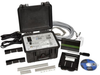
Description: The most important optional tests are the Partial Discharge Test that are strongly suggested. E.D.C. is the first European Company to study (since 1998) and propose new tests that allow identification of insulation problems between windings to GND and between turns of the same winding
-
Supplier: Accuris
Description: Rotating electrical machines Part 32: Measurement of stator end-winding vibration at form-wound windings
-
Supplier: Accuris
Description: Rotating electrical machines \x96 Part 32: Measurement of stator end-winding vibration at form-wound windings
-
-
Supplier: Accuris
Description: Wire-Rope Pull Test Procedure for Stator Winding Wire Welds of Electric Motors
-
Description: IEC TS 60034-32:2016(E) is intended to provide consistent guidelines for measuring and reporting end-winding vibration behaviour during operation and at standstill. It - defines terms for measuring, analysis and evaluation of stator end-winding vibration and related structural
-
Supplier: CSA Group
Description: IEC TS 60034-32:2016(E) is intended to provide consistent guidelines for measuring and reporting end-winding vibration behaviour during operation and at standstill. It - defines terms for measuring, analysis and evaluation of stator end-winding vibration and related structural
-
Supplier: Accuris
Description: Rotating electrical machines \x97 Part 32: Measurement of stator end-winding vibration at form-wound windings
-
Supplier: CSA Group
Description: coatings operating at a rated voltage of 6 kV and higher. This standard applies to individual form-wound stator bars and coils outside a core (uninstalled), individual stator bars and coils installed in a core and complete form-wound stator winding of machines in new or
-
Description: coatings operating at a rated voltage of 6 kV and higher. This standard applies to individual form-wound stator bars and coils outside a core (uninstalled), individual stator bars and coils installed in a core and complete form-wound stator winding of machines in new or
-
Description: documentation of results; - the interpretation of results; with respect to partial discharge on-line measurements on the stator winding insulation of non‑converter driven rotating electrical machines with rated voltage of 3 kV and up. This document covers PD measuring systems and
-
Description: Provides a common basis for measuring techniques and instruments, the arrangement of test circuits, normalization and testing procedures, noise reduction, the documentation of test results, the interpretation of test results with respect to partial discharge off-line measurements on the
-
Supplier: Swiger Coil Systems, A Wabtec Company
Description: Swiger Coil Systems, A Wabtec Company was founded in 1975 to provide armature coils, stator coils, and field service coils for the motor repair industry. We have grown to provide production quantities of OEM coils, repair or manufacture edgewound coils and large synchronous field coils.
- Capabilities: AC Motors, Armatures / Rotors, Brush Motor, Brushless Motor, Chokes, Clutch / Brake Coil, Coils / Bobbins, DC Motors, Generators, Inductors, Lamination Stacking, Solenoid Coil, Stators, Transformers
- Applications: Aerospace / Avionics, Automation, Automotive, Industrial, Machine Tools, Marine, Medical, Military, Motor / Drive, Robotics
- Insulation: Blends - Multiple, Encapsulation, Epoxies, High Voltage / Reliability, Kapton® , Nomex®
- Features: Midwest US Only, North America, Other, United States Only
-
Description: The procedure for quality control testing of external discharges on stator coils, bars and windings of large air-cooled ac electric machines is described in this recommended practice.
-
Supplier: CSA Group
Description: partial discharge on-line measurements on the stator winding insulation of non-converter driven rotating electrical machines with rated voltage of 3 kV and up. Keywords: rotating electrical machines
-
Description: This guide describes the procedure for quality control testing of external discharges on stator coils, bars and windings of large air-cooled ac electric machines.
-
Supplier: Bartell Machinery Systems, LLC
Description: The TDS-980 construction makes it ideal for a stand-alone replacement of your existing weftless winder as well as an integral part of a whole new bead system. The TDS-980 capabilities include : Nominal Bead Range -Either 4″to 30″ (100 -762mm) or 30″ to 60″ (762 -1524mm). Maximum Ribbon Width of
-
Supplier: ASTM International
Description: This specification covers high strength, cold drawn or cold rolled steel wire with rectangular cross-section and round mill edge. The wire is intended for use in pre-stressed vessel and press frame windings. The steel shall be manufactured by basic oxygen, electric furnace, or vacuum
-
Supplier: Allen-Bradley / Rockwell Automation
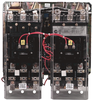
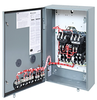
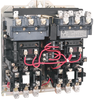
Description: 520E NEMA 2 Speed Separate Winding Starter ,SIZE 3, Open, 24V 60Hz ,with E1 Plus Overload Relays , Constant or Variable Torque , 24V 60Hz ,
- Control Voltage (Separate Control): 24 volts
- NEMA Size: 3
- Standard Rating: NEMA Rated
- Overload Protection: Solid State
-
Supplier: Allen-Bradley / Rockwell Automation
Description: 520E NEMA 2 Speed Separate Winding Starter ,SIZE 2, Open, 115-120V 60Hz ,with E1 Plus Overload Relays , Constant or Variable Torque , 115-120V 60Hz ,
- Control Voltage (Separate Control): 115 to 120 volts
- NEMA Size: 2
- Standard Rating: NEMA Rated
- Overload Protection: Solid State
-
Supplier: Allen-Bradley / Rockwell Automation
Description: 520E NEMA 2 Speed Separate Winding Starter ,SIZE 0, Open, 200-208V 60Hz ,with E1 Plus Overload Relays , Constant or Variable Torque , 200-208V 60Hz ,
- Control Voltage (Separate Control): 200 to 208 volts
- NEMA Size: 0
- Standard Rating: NEMA Rated
- Overload Protection: Solid State
-
Supplier: Essen Magnetics Pty Ltd
Description: The rotor is a moving component of an electromagnetic system in the electric motor, electric generator, or alternator. Its rotation is due to the interaction between the windings and magnetic fields which produces a torque around the rotor’s axis. The stator is the stationary part of a
-
Supplier: Allen-Bradley / Rockwell Automation
Description: 520E NEMA 2 Speed Separate Winding Starter ,SIZE 1, Open, 115-120V 60Hz ,with E1 Plus Overload Relays , Constant or Variable Torque , 115-120V 60Hz ,
- Control Voltage (Separate Control): 115 to 120 volts
- NEMA Size: 1
- Standard Rating: NEMA Rated
- Overload Protection: Solid State
-
Supplier: Qualitrol Company, LLC
Description: can be compared to all other wedges in the winding, the wedges of another winding or any user selected external reference. Repeatable, objective, numeric test data removes subjectivity of hand tapping methods. Fast, easy wedge tightness testing and analysis. Permanent record of test
- Instrument Type: Condition Monitor / Fault Detector
-
Supplier: Qualitrol Company, LLC
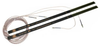
Description: Sensors installed within the stator slots to detect partial discharge activity Features Permanently installed under the line end stator winding wedges (in existing machines), or between the top and bottom bars (in new or rewound machines) Not connected to the high voltage
-
Supplier: Microtest Corporation
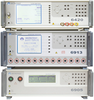
Description: The 6913 motor stator test system collocates the MT-6913 and the 6905 tester. Optional 6420 LCR Meter for testing inductor. It is provided with eight 4-line independent measurement test points and 13 channels. The testing projects include the DC resistance tests which may detect the errors of
- Operating Humidity: 20 to 90 % (non-condensing)
- Operating Temperature: 10 to 40 C
- Features: Data Storage
- Form Factor: Stand Alone / Bench
-
Supplier: JiuJiang Ingiant Technology Co., Ltd.
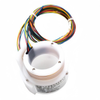
Description: separate parts. The rotor and stator can be installed independently and need to be meter for installation. The split structure can save installation space and weight. The V-groove gold-plated design is anti-oxidation and wear-resistant. 2-parts slip ring can stably transmit power and signal,
- Features: Military Grade
-
Supplier: SAE International
Description: new T.F. motor also has a simple structure, consisting of two winding wires and three stators. This has improved torque density.
-
Supplier: SAB BRÖCKSKES GmbH & Co. KG
Description: For the temperature collection at Hairpin windings in the stator very small and at the same time robust thermocouples are needed. The scattering effect of electromagnetic radiation from the surrounding copper windings shall not distort the measuring result. For this application
- Base, Noble and Refractory Metal Type: K, N
- Probe Configuration: Surface
- Features: Thermocouple
-
Supplier: JiuJiang Ingiant Technology Co., Ltd.
Description: 2 Parts Slip Ring Rotor & Stator Seperated can stably transmit power and signal, Slip Ring, Slip Ring Connector, slip ring crane, slip ring motor,slipring, slipring brush, Slipring For Robot, Product Description Jiujiang Ingiant Technology was founded in December 2014 and located in Jiujiang
- Features: Military Grade
-
Supplier: JiuJiang Ingiant Technology Co., Ltd.
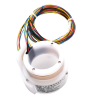
Description: • DHK028-5 2 parts slip ring rotor & stator seperated Due to the limited installation size of some customers, our company has developed 2-parts slip ring for customers. The 2-parts slip ring is an open structure, and the ring channel and brush board are two separate parts. The rotor and
- Number of Circuits: 5
- Slip Ring Design: Separate
-
Supplier: Lee Spring Company
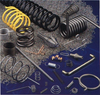
Description: Lee Spring operates technologically advanced plants strategically located to service the United States, Canada, Mexico, Europe, China and other Asian countries. State-of-the-Art manufacturing equipment combines with Lean Manufacturing Techniques to produce the exact springs and metal parts you need
- Additional Services: Assembly Services, CAD / CAM Support, Design Assistance, High Volume Production, Low Volume Production, Prototype Services
- Capabilities: Compression Springs, Conical / Taper Springs, Die Springs, Disc / Washer Springs, Extension Springs, Flat Springs, Stamping, Torsion Springs, Wire Forming
- Materials: Exotic Metals, Music Wire, Spring Steel, Stainless Steel
- Features: North America, Northeast US Only, Other, Southern US Only, Southwest US Only, United States Only
-
Supplier: Precision Coil Spring Company
Description: Precision Coil Spring makes springs using alloys from music wire to titanium for the production of conventional compression, extension, and torsion configurations. In addition, PCS uses state-of-the-art equipment to form complex shapes to meet our customers' unique requirements. From coiling and
- Additional Services: Assembly Services, CAD / CAM Support, Design Assistance, High Volume Production, Just-In-Time Delivery, Low Volume Production, Prototype Services, Reverse Engineering
- Capabilities: Compression Springs, Conical / Taper Springs, Die Springs, Disc / Washer Springs, Extension Springs, Flat Springs, Garter Springs, Power / Clock Springs, Stamping, Torsion Springs, Variable Pitch Springs, Wire Forming
- Materials: Exotic Metals, Music Wire, Spring Steel, Stainless Steel
- Features: North America, Other, Other / Special, Southwest US Only, United States Only
-
Supplier: Radwell International
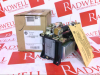
Description: MOTOR WINDING HEATER SOLID STATE 600VAC MAX. FREE 2 YEAR RADWELL WARRANTY
-
Supplier: AENOR
Description: Rotating electrical machines - Part 32: Measurement of stator end-winding vibration at form-wound windings (Endorsed by Asociación Española de Normalización in November of 2021.)
-
Supplier: R & L Spring Company
Description: Precision springs, wireforms, fourslide components to industrial and medical markets worldwide. Wire diameters from .001" to .500" as well as shaped and flat wires, utilizing state-of-the-art CNC equipment for production and secondary operations. Tackling difficult applications for precision
- Additional Services: Assembly Services, CAD / CAM Support, Design Assistance, High Volume Production, Just-In-Time Delivery, Low Volume Production, Prototype Services, Reverse Engineering
- Capabilities: Compression Springs, Conical / Taper Springs, Extension Springs, Flat Springs, Leaf Springs, Stamping, Torsion Springs, Variable Pitch Springs, Wire Forming
- Materials: Exotic Metals, Music Wire, Spring Steel, Stainless Steel
- Features: Midwest US Only, North America, Other, United States Only








Find Suppliers by Category Top
Featured Products Top
-
 Solid-state batteries are advancing from pilot lines toward industrialization, driving a clear need for higher-range, high-precision force measurement. Compared with liquid batteries, solid-state processes rely on stronger compaction to eliminate (read more)
Browse Force and Load Sensors Datasheets for XJCSENSOR Technology Co., Ltd. -
and environmental stresses. Depending on motor design and operating conditions the full stator (or just the winding head) can be casted. Insulation by casting materials results in improved thermal conductivity and noise (read more)
Browse Casting Resins Datasheets for ELANTAS North America LLC -
-Loop and Closed-Loop Stepper Motors. There are now four standard capacities in the model lineup, supporting 12 to 80 VDC motor windings and providing up to 24A continuous and 60A peak output current, while customized versions are also offered to meet large volume OEM requirements. For (read more)
Browse DC Motor Drives Datasheets for ElectroCraft -
requirements. ElectroCraft's SolidPower Plus AC motors are designed from the ground-up to create efficient, low-noise power. Annealed laminations and stator windings electronically matched to your application ensure efficient operation. While dynamically balanced, skewed rotor bars and precision (read more)
Browse AC Motors Datasheets for ElectroCraft -
The difference between quality and value between domestically produced springs and those made in Low-Cost producers overseas.
(read more)
Browse Spring Winding Services Datasheets for Coiling Technologies, Inc. -
CTI has made another acquisition of a Pyromaitre in-line oven to strengthen our small spring production capacity. The P106 has the capability to process 740 lbs (340 kg) per hour at 700°F (370°C). This is critical when processing high-tensile CrSi alloy wire, which requires immediate stress relief following the coiling operation. This ensures minimal risk of material fracture aft...
(read more)
Browse Spring Winding Services Datasheets for Coiling Technologies, Inc. -
Coiling Technologies is proud to be Made In The USA
(read more)
Browse Spring Winding Services Datasheets for Coiling Technologies, Inc. -
Why Should You Heat Treat Springs
Heat treatment of springs offers enormous advantages such as improved fatigue life, toughness, and ductility. When heat treating a spring it changes the special properties of the material such as hardness, strength, toughness and elasticity which are some of the key concerns for high-quality spring.
Heat Treatment Process:
... (read more)
Browse Spring Winding Services Datasheets for Coiling Technologies, Inc. -
Advantages of Powder Coating
- Protective and Decorative finish
- Limitless range of colors and textures available which enhance the look and feel of the spring
- The ability to apply much thicker coatings than liquid solutions and they produce almost no volatile organic compounds (VOC)
- Improves performance properties
Applyi...
(read more)
Browse Spring Winding Services Datasheets for Coiling Technologies, Inc. -
straightforward. Impregnation or over-moulding of motor windings can improve heat transfer from coil windings to stator, enhance isolation, and improve resistance to vibration, and to hostile environments (read more)
Browse DC Motors Datasheets for GEEPLUS Inc.
Conduct Research Top
-
Testing and Inspecting Turbine Generator Stator Windings
There are many on-line and off-line methods of testing and inspecting Turbine Generator Stator (TGS) windings. All involve some degree of investment in equipment and hardware - at times quite expensive. However, a visual inspection of a generator can speak volumes to you, with regard to its
-
Motor (Rotor and Stator)
The rotor is a moving component of an electromagnetic system in the electric motor, electric generator, or alternator. Its rotation is due to the interaction between the windings and magnetic fields which produces a torque around the rotor's axis.
-
Controlling 3-Phase AC Induction Motors Using the PIC18F4431
than the PIC18F452 or PIC16F7X7. Practically speaking, control of a 3-phase AC induction motor requires pulse-width modulated control of the six switches of a 3-phase inverter bridge connected to the motor's stator windings (Figure 1). The six switches form 3 pairs of "half-bridges", which can
-
Sensorless Brushless DC Motor Reference Design
designers using Silicon Laboratories MCUs, significantly reducing the design time and time to market. Brushless dc motors consist of a permanent magnet rotor with a three-phase stator winding. Brushless dc motors evolved from conventional dc motors where the function of the brushes is replaced
-
An Overview of Stepper Motor Drivers and Their Types
A stepper motor is a brushless DC electric motor that turns in steps, with input in the form of programmed energization of the stator windings and output in the form of discrete angular rotation. The defining characteristic of a stepper is its shaft, which rotates by performing steps
-
Difference Between DC and AC Motor
and DC brushless motors according to the type of steering gear. Among them, the stator of the brushed DC motor is a permanent magnet, and the rotor is a winding metal armature, which is commutated by carbon brushes and a commutator. The stator of the brushless DC motor is a winding coil, and the rotor
-
Stepper Motor Theory
motors incorporate a permanent magnet rotor, coil windings and magnetically conductive stators. Energizing a coil winding creates an electromagnetic field with a north and south pole as shown in figure 1. The stator carries the magnetic field which causes the rotor to align itself with the magnetic
-
Energy Efficiency Improvement with Permanent Magnet Motors and Variable-Frequency Drives
In the induction motor, slip frequency (i.e., the frequency difference between stator rotating flux and mechanical rotating speed) induces current in the rotor windings. The interaction between rotating magnetic field and induced rotor current produces a driving force, but the motor current causes
More Information Top
 Indicates content that may require registration and/or purchase.

-
Electrical Machines
153 8.1 Stator Winding with Distributed Conductors . . . . . . . . . . . . . . .
-
Alternating Current Multi-Circuit Electric Machines
… the rotor, the components of the electric machine resulting field are the stator current field obtained in the absence of a current in the rotor winding and the rotor current field existing in the absence of a current in the stator winding .
-
AC Machine Systems
Chapter 6 provides description of inner asymmetric problems in the stator winding and squirrel-cage rotor of ac machines.
-
Axial Flux Permanent Magnet Brushless Machines
36 2.2.3 Coreless Stator Winding . . . . . . . . . . . . . . . . . . . . . . . . . . .
-
http://dspace.mit.edu/bitstream/handle/1721.1/34465/70716608-MIT.pdf?sequence=2
Vector Potentials due to the Current in the Stator windings ........................................
-
Design of Rotating Electrical Machines
… Mutual Inductance Per Unit Values Phasor Diagrams Bibliography Windings of Electrical Machines Basic Principles 2.1.1 Salient-Pole Windings 2.1.2 Slot Windings 2.1.3 End Windings Phase Windings Three-Phase Integral Slot Stator Winding Voltage Phasor Diagram and …
-
Design of Rotating Electrical Machines
2.3 Three-Phase Integral Slot Stator Winding .
-
Condition Monitoring of Rotating Electrical Machines
2.7.2 Stator winding insulation 40 .