Biotreatment of Industrial Effluents

Intended for practicing environmental engineers and technologists from any industry, this book discusses the treatment procedures using biochemical means for all types of solid, liquid and gaseous contaminants.
 TABLE OF CONTENTS
 The basic design parameters for various types of reactors are as follows;
Batch Reactor
| (4-1) |  |
Continuously Stirred Tank Reactor
| (4-2) | 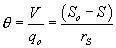 |
The Monod Chemostat is an extension of the continuously stirred tank reactor (CSTR) model, which considers both substrate utilization and the cell growth.
The cell balance is
| (4-3) |  |
where D = V/q o. If the number of cells entering the reactor is approximately 0, then
| (4-4) |  |
The substrate balance is given by
| (4-5) | 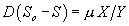 |
where ? is the specific growth rate and is given by the Monod equation,
| (4-6) |  |
This leads to equations for exit substrate and cell concentrations, respectively,
| (4-7) |  |
| (4-8) | 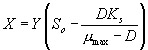 |
CSTR with Recycle
| (4-9) |  |
Plug Flow Reactor
| (4-10) | 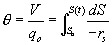 |
In this mode of operation there is no outflow, but after the initial reactor charge, nutrient(s) addition is intermittent, causing the substrate concentration and reactor volume to vary with time.
| (4-11) | 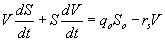 |
A sequential batch reactor operates in the fed batch mode; both concentration and reactor volume vary with time.
In this method the feed to the reactor is constant, leading to a constant substrate concentration inside the reactor (i.e., dS/dt = 0).
The performance of a biotower (a tall biotrickling filter with well-structured packing that uses a modular plastic media, leading to high porosity) is given by the following correlation:

| where Q = | hydraulic loading rate, m 3/m 2 min |
| k = | treatability constant, a function... |