Biotreatment of Industrial Effluents
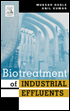
Intended for practicing environmental engineers and technologists from any industry, this book discusses the treatment procedures using biochemical means for all types of solid, liquid and gaseous contaminants.
 TABLE OF CONTENTS
 Pharmaceutical and antibiotic residues from human and animal medical care enter the water and soil from (1) the effluent treatment plants of manufacturing facilities, (2) the municipal sewage treatment plant, (3) hospital waste treatment plants, or (4) animal farms as shown in Fig. 21-1. Treating effluent from a pharmaceutical plant that manufactures drugs and antibiotics is relatively easier than treating waste from a hospital or municipal sewage plant; in the former case the substances that need to be degraded are well known. The waste from hospital or municipal sewage plants may contain low concentrations of many different pharmaceuticals and their metabolites, which makes the task very difficult.
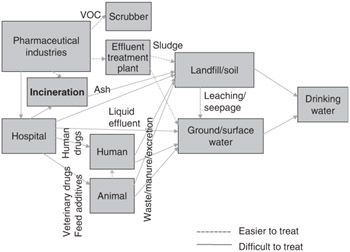
Excess medication excreted by humans and animals, as well as unused or expired medicines, find their way into municipal sewage effluent treatment plants. Since the 1980s, pharmaceuticals like clofibrate, various analgesics, cytostatic drugs, antibiotics, and others have been reported to be present in the surface waters of many European countries. This has raised growing concern that some of these persistent products may find their way back into the drinking water. Genotoxic substances may represent a health hazard to humans and may have adverse effects on other organisms. Since antibiotics mainly interfere with bacterial metabolism, it can be assumed that bacterial communities in aquatic ecosystems feel the primary effects of antibiotic-containing effluents. One of these effects is the increase in resistance to certain antibiotics, which in turn gives...