Biotreatment of Industrial Effluents
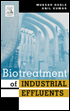
Intended for practicing environmental engineers and technologists from any industry, this book discusses the treatment procedures using biochemical means for all types of solid, liquid and gaseous contaminants.
 TABLE OF CONTENTS
 Fluoride exists in the environment as a result of both natural and anthropogenic causes. The natural contamination of groundwater by fluoride ions is due to leaching of fluoride from rocks (soil) into the aquifers, while the wide use of fluorinated compounds by industry is the major anthropogenic cause. In the former situation, the fluoride is in an ionic form, while in the latter it may be present in a covalent form. This chapter deals with the removal of both these types of fluorine.
The synthetic diversity of nature is also reflected in a large number of naturally produced halogenated compounds discovered in many different organisms. Until today, more than 3,500 halogenated metabolites have been isolated from bacteria, fungi, marine algae, lichens, higher plants, mammals, and insects. Whereas brominated metabolites are predominant in the marine environment, chlorine-containing metabolites are preferentially produced by terrestrial organisms. Although fluorine is the most abundant halogen in the earth's crust, biologically produced fluorinated metabolites are quite rare, as is the case of iodated metabolites. Hence, many fluorinated compounds in the environment are of anthropogenic origin, making them recalcitrant to degradation.
The chemicals of humanmade origin that are used as refrigerants, fire retardants, paints, solvents, herbicides, and pesticides are predominantly halogenated organic compounds and cause considerable environmental pollution and human health problems as a result of their persistence and toxicity (Mohn and Tiedje, 1992). They also transform into hazardous metabolites. As a general rule, the strength of resistance to enzymatic cleavage of carbon-halogen bonds...