Biotreatment of Industrial Effluents

Intended for practicing environmental engineers and technologists from any industry, this book discusses the treatment procedures using biochemical means for all types of solid, liquid and gaseous contaminants.
 TABLE OF CONTENTS
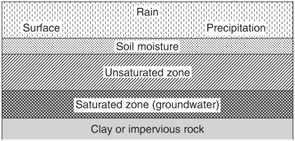
 A large amount of the available freshwater on earth lies underground. As one digs into the ground, first an initial belt of soil moisture is encountered. Below that, soil along with a thin film of water and air is encountered, which is called the aeration or unsaturated zone. Then the saturated zone in which the water has displaced all the air is encountered. We find the water table here. Groundwater is the name given to the freshwater in the saturated zone (see Fig. 28-1). Nearly 30 to 35% of the world's total drinking water supply is from this groundwater.
Industrialization has brought in its wake the problem of waste disposal. Lack of proper planning in siting of industrial units, inadequate development of infrastructure, and lack of waste management facilities have resulted in contamination of surface water bodies and groundwater aquifers. The collective discharges from industries, municipalities, small industries, and farms is one source of organic pollutants (nitrates, harmful bacteria and viruses, detergents, and household cleaners) in groundwater. Much of the groundwater pollution is blamed on intensive farming practices that depend on increased use of chemical fertilizers and pesticides. It has been estimated that 35 to 45% of chemical fertilizers leach into the groundwater in the form of nitrates. Gasoline enters the soil via surface spills, underground storage tank leaks, and pipeline ruptures. Once they descend to groundwater, the water soluble components are preferentially leached into water and can migrate...