DCOM Explained
The "big picture" of DCOM architecture for system designers and technical managers.
 TABLE OF CONTENTS
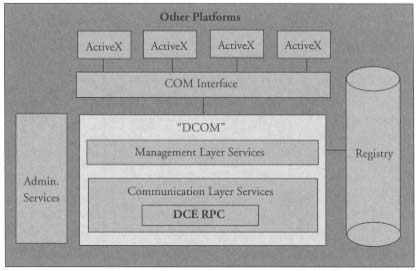
 If you want to build a distributed application, the last thing you need is to be told is that the middleware you have available, to act as the infrastructure, only runs on Windows with links to the IBM mainframe. Given the number of other perfectly good (even excellent) middleware products there are around, no one would blame you for deciding to use TOP END, Tuxedo, or DCE instead, for example, which run on numerous platforms, so would provide no limit on your design or how you connected up your existing systems and databases. DCOM may be free with Windows, but if it doesn't work with the other platforms you need to incorporate in your design, it isn't a lot of use.
You shouldn't have to migrate your systems your heritage systems, your working systems, your working databases to new platforms. Really good middleware enables you to link them all up. Your company's investment in those systems can be preserved, and you can be saved the tedium of pointless migration (a thankless task at the best of times as most end users consider it a waste of money and time).
So this chapter is particularly important for those of us that believe the D in DCOM should stand for more than distributed over a Windows network.
We will be seeing that DCOM is being ported to other platforms, but the number of platforms is still limited and the functionality is not as rich as on the Windows platform itself.