DCOM Explained

The "big picture" of DCOM architecture for system designers and technical managers.
 TABLE OF CONTENTS
 A Directory is a key service provided by all middleware, but one the developer rarely sees or uses directly. In fact, although the developer may never actually see the Directory, its design and the way it is configured is key to the reliability, availability, and performance of the application he or she builds. A poor Directory can result in system downtime, slow response, and may involve the administrator in a considerable amount of work. We will be looking at the Directory service in general in this chapter and then comparing the approaches that could be used with that used by Microsoft in DCOM.
Most developers are familiar with the concept of databases. A database is an organized file of structured data that contains information used by an application at runtime. Thus, for example, an Order Processing application may use a database with information about Orders, Products, Customers, Deliveries, Stock, and so on.
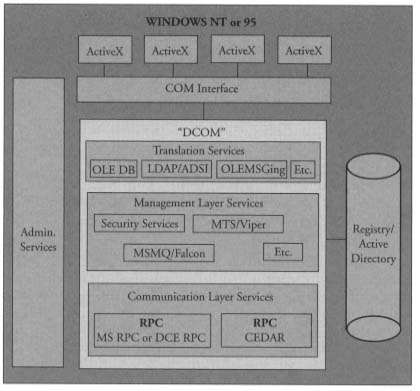
A Directory is the developer's runtime database. It contains (or should contain) all the information the system software that his application uses (network software, middleware, DBMS, System Management Software, e-mail, and so on) and needs at runtime. Thus it could contain information on users, the user groups, their security information (passwords, access control lists), network addresses, processes/components found at each address, mail addresses, data found at the address, queues found at each address and their characteristics, performance data and statistics collected at runtime on the applications and...