DCOM Explained
The "big picture" of DCOM architecture for system designers and technical managers.
 TABLE OF CONTENTS
 We can't take any action to protect ourselves from theft or malicious damage unless we first understand the risks associated with distributed applications.
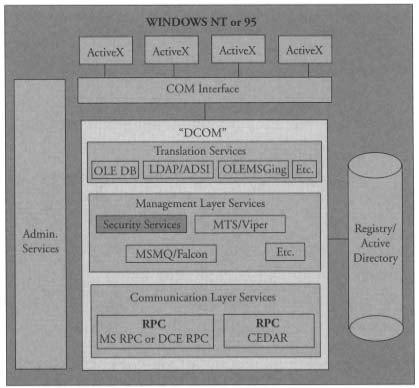
Whenever we build a distributed application we are not only vulnerable to the normal risks associated with functions and data resident on machines, but to these a new set of risks is added those associated with data passing over the network. We can thus classify the threats under two main headings:
Risks associated with the data going across the network
Removal of the message en route (theft or malicious damage)
Corruption of the data en route (accidental damage)
Tampering of the data en route (malicious damage or theft)
Loss of the data en route (accidental damage)
Diversion of the message en route (theft or simply malicious tampering)
Risks associated with data and functions on machines
Unauthorized access of data on a machine to look, copy, add, delete,remove, or amend it (theft or malicious damage)
Unauthorized use of applications on a machine (theft or malicious damage)
Unauthorized removal of applications from a machine (theft or malicious damage)
Unauthorized copying of applications on a machine (theft)
Unauthorized addition of applications on a machine (theft or malicious damage)
Unauthorized change to an application on a machine (theft or malicious damage)
These threats/risks actually apply to whatever the type of distributed application you are using.
If you are using an e-mail application as opposed to building a distributed application, for example, the removal of...