DCOM Explained
The "big picture" of DCOM architecture for system designers and technical managers.
 TABLE OF CONTENTS
 Microsoft Transaction Server is a key component within DCOM. It not only provides distributed transaction processing support, but also a number of additional services aimed at providing the sorts of support found in products like CICS (a TP monitor). MTS is a step towards making DCOM more like the heavy-duty advanced Distributed Transaction Processing Monitors such as Tuxedo or TOP END. In this chapter we will look first at the additional services, and then I will explain in some detail what is meant by distributed trans-action processing and how it works in MTS.
Work started on Microsoft Transaction Server code-named Viper in early 1995. An early specification of the OLETX transaction protocol was made available to ISVs and database vendors for comment in June 1995 with the final specification posted on the Internet in March 1996. Nearly 80 companies were involved in the alpha testing of Viper, and it went into beta testing in June 1996.
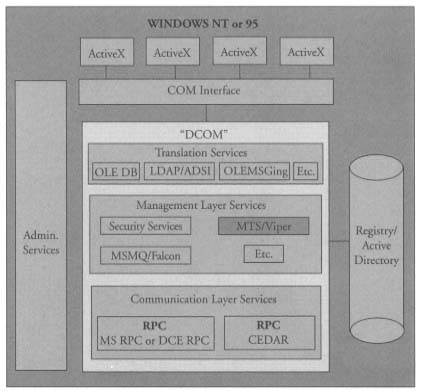
Microsoft Transaction Server was released in December 1996. At the time, 80 technology vendors committed to the product including test tool vendors such as SQA and NuMega; tool vendors such as PowerSoft and MicroFocus; package vendors such as Software 2000 and Marcam; and DBMS vendors such as Informix, Sybase, and IBM with DB2.
Overall, the extra services Microsoft Transaction Server provides over and above DCOM services are:
Additional administration utilities to help monitor transactions, monitor performance, etc.