Rapid System Prototyping with FPGAs

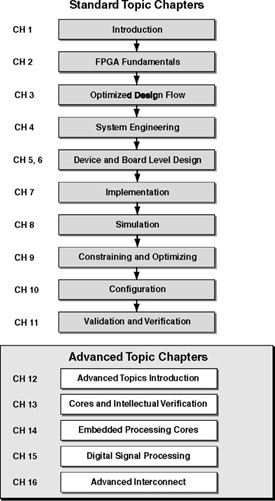
It is important to develop and follow a disciplined and optimized design flow when implementing a rapid system prototyping effort. Effective design flow optimization requires addressing the trade-offs between additional project risk and associated schedule reduction. This balance is likely to vary between projects. In order to efficiently implement a project with an optimized design flow system, engineering decisions become even more important since these key decisions affect every subsequent design phase. It is important to understand the design phases, their order, their relationships, and the decisions that must be made in each of these phases. This book attempts to address these topics. Figure 1.1 presents the order of topics addressed within the chapters of this book. This topic order has been arranged to parallel the order of design stages of an FPGA rapid system prototyping effort. Topics that are common to all rapid development FPGA efforts are covered first in the standard topic chapters, while the advanced topic chapters present topics that may not be required in all projects. This book attempts to address commonly avoided topics from a working engineer's perspective, and should promote further discussion and research on important subjects.
The intended audience for this book includes embedded designers with an interest in efficient product development with FPGAs. The text seeks to provide a working introduction to the essential technology fundamentals and common design flows for FPGAs; to provide references to resources for further research on basic and advanced FPGA design topics;