Materials: Engineering, Science, Processing and Design

Chapter 8: Fracture and Fracture Toughness

8.1 Introduction and Synopsis

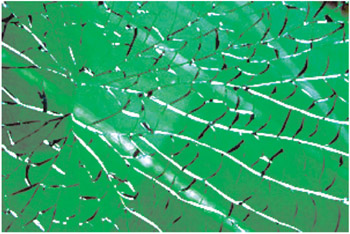
It is easy to set a value on the engineering science that enables success, that makes things happen, much harder to value engineering science that prevents failure, that stops things happening. One of the great triumphs of recent engineering science has been the development from the 1960s onwards of a rigorous mechanics of material fracture. We have no numbers for the money and lives it has saved by preventing failures; all we know is that, by any measure, it is enormous. This chapter is about the ways in which materials fail when loaded progressively, and design methods to ensure that fracture won't happen unless you want it to.

Sometimes, of course, you do. Aircraft engines are attached to the wing by shear-bolts, designed to fail and shed the engine if it suddenly seizes. At a more familiar level, peel-top cans, seals on food containers and many other safety devices rely on controlled tearing or fracture. And processes like machining and cutting use a combination of plasticity and fracture.

We start by distinguishing strength from toughness. Toughness resistance to fracture requires a new material property, the fracture toughness developed in Section 8.3, to describe it. This new property is explored in Section 8.4 using charts like those we have already seen for modulus and strength. The underlying science mechanisms (Section 8.5) give insight into ways in which toughness can be manipulated (Section 8.6). The chapter ends in the usual way with a summary, Further reading...

UNLIMITED FREE
ACCESS
TO THE WORLD'S BEST IDEAS

SUBMIT
Already a GlobalSpec user? Log in.

This is embarrasing...

An error occurred while processing the form. Please try again in a few minutes.

Customize Your GlobalSpec Experience

Category: Mechanical Testing Services
Finish!
Privacy Policy

This is embarrasing...

An error occurred while processing the form. Please try again in a few minutes.