Materials: Engineering, Science, Processing and Design
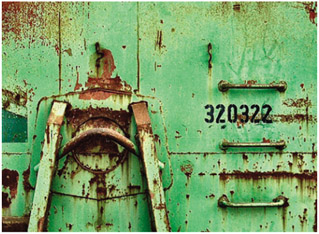
Corrosion. (Image courtesy of Norbert Wodhnl Norbert Wodhnl)
The Gospel according to St Matthew reminds us that we live in a world in which 'moth and rust doth corrupt' a world of corrosion, degradation and decay (cover picture). Not a happy thought with which to start a chapter. But by understanding them we can, to a degree, control them. This chapter describes ways in which materials degrade or corrode, how they are measured and what can be done to slow them down.
Start with the first: the ways in which materials degrade. There are many. There is the damaging effect of radiation and heat, not in changing the properties in a reversible way as in the last chapter, but in causing chemical changes that destroy them irreversibly. There is attack by aggressive chemicals: acids, alkalis and, in the case of polymers, organic solvents. And there is aqueous corrosion, even in pure fresh water, which, provided oxygen is dissolved in it, can be remarkably aggressive.
Because many different properties are involved here, the exploration of the science is split into two, one delving into oxidation, flammability and photo-degradation, the other into corrosion by liquids. Each section ends with a description of ways in which degradation can be inhibited.
The most stable state of most elements is as an oxide. For this reason the earth's crust is almost entirely made of simple or complex oxides: silicates like granite, aluminates like basalt, carbonates like...