Control Theory, Second Edition

Chapter 9: Linearisation

9.1 The motivation for linearisation

The most powerful tools for analysis and design of control systems operate only on linear models. It is therefore potentially very attractive when undertaking the design of a controller for a non-linear system to replace the non-linear system model by a linear approximation.

Questions that arise next are:

  • What is meant by linearisation?

  • How is it undertaken?

  • To what extent are designs, produced using linear approximations, valid in practice when applied to the original non-linear system?

9.2 What is linearisation?

9.2.1 An initial trivial example

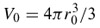
The volume V of a sphere is given by

  • V = 4 ? r 3/3

where r is the radius of the sphere

  • Suppose r 0 = 10 then V = 4188.79

  • Suppose r 1 = 10.1 then V = 4315.7147

  • Suppose r 2 = 11 then V = 5575.27956

These are the full solutions of the non-linear equation for three different r values.

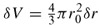
To linearise the equation we operate as follows. Let V = V 0+ ?v, r = r 0+ ?r. Then


while from earlier


Substracting the last equation from the one above yields


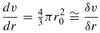
Linearisation consists in neglecting terms in ?r 2, ?r 3, etc., i.e.


and this result could have been obtained directly by using


To complete this little illustration, we will see how good the approximations are for two cases, keeping r 0

UNLIMITED FREE
ACCESS
TO THE WORLD'S BEST IDEAS

SUBMIT
Already a GlobalSpec user? Log in.

This is embarrasing...

An error occurred while processing the form. Please try again in a few minutes.

Customize Your GlobalSpec Experience

Category: Voltage Reference Chips
Finish!
Privacy Policy

This is embarrasing...

An error occurred while processing the form. Please try again in a few minutes.