7.1 INTRODUCTION
So far, all of the logic circuits we have studied were basically based on the analysis and design of combinational digital circuits. Though these type of circuits are very important, they constitute only a part of digital systems. The other major aspect of a digital system is the analysis and design of sequential digital circuits. However, sequential circuit design depends, greatly, on the combinational circuit design.
The logic circuits whose outputs at any instant of time depend only on the input signals present at that time are known as combinational circuits. The output in combinational circuits does not depend upon any past inputs or outputs. Moreover, in a combinational circuit, the output appears immediately for a change in input, except for the propagation delay through circuit gates.
On the other hand, the logic circuits whose outputs at any instant of time depend on the present inputs as well as on the past outputs are called sequential circuits. In sequential circuits, the output signals are fed back to the input side. A block diagram of a sequential circuit is shown in Figure 7.1
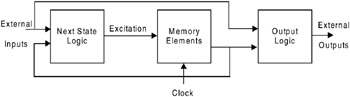 Figure 7.1: Block diagram of a sequential circuit.
 From Figure 7.1, we find that it consists of combinational circuits, which accept digital signals from external inputs and from outputs of memory elements and generates signals for external outputs and for inputs to memory elements, referred to as excitation.
A memory element is a medium in which one bit of information (0 or 1) can be stored...

 TABLE OF CONTENTS