Electromagnetics, Microwave Circuit, and Antenna Design for Communications Engineering, Second Edition

A complex function is an analytic function on a region if it is complex differentiable at every point in that region. For analytic functions the terms holomorphic function, regular function, and complex differentiable function are also used [1 4]. An analytic function is infinitely differentiable. An entire function is a complex function that is analytic at all finite points of the complex plane. A complex function
| (E.1) | |
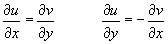
with z = x + jy is analytic if and only if the Cauchy-Riemann equations
| (E.2) | |
are fulfilled. The complex integral of an analytic function f( z) from z 1 to z 2 along a path C shown in Figure E.1 is given by
| (E.3) | |
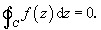
where F( z) is the antiderivative of f(z). Since the complex integral of an analytic function is equal to the difference of the antiderivatives of the limits of the integration, the integral of an analytic function over a closed contour vanishes:
| (E.4) | |
This is the Cauchy integral theorem. Consider a function f( z) that is analytic everywhere with the exception of the point z 0. If a function f( z) fails to be analytic at a point z 0 but is analytic in every neighborhood of the point z 0 this is called a singular point or a singularity. The integral over a closed path C shown in Figure E.2(a) enclosing...