Epoxy Adhesive Formulations
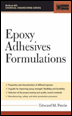
Based on a popular course sponsored by the Society of Plastics Engineers, this comprehensive text presents a variety of methods to ensure optimum epoxy performance and reliability.
 TABLE OF CONTENTS
 This chapter considers epoxy adhesive formulations that are rather unconventional. These include
Epoxy adhesives that cure via radiation (ultraviolet light or electron beam energy)
Epoxy adhesives that are available as waterborne emulsions
Epoxy adhesives that cure via indirect thermal means (induction, dielectric, microwave, and several others)
These adhesives have found their way into several niche markets where their advantages, such as fast setting speed, are highly valued. They have not seen application in the more ordinary markets because of their materials and equipment cost. However, it is expected that these epoxy adhesive systems will grow at a faster annual rate than the average market as their advantages become more widely known.
Radiation curing is a production technique for polymerizing and curing of adhesives through the use of radiant energy. The source of the radiant energy is generally electron beam (EB), ultraviolet (uv) light, or visible light. These forms of radiation have the energy necessary to initiate polymerization of low-molecular-weight, unsaturated resins including various types of epoxy resins.
Polymeric inks, coatings, adhesives, or similar products can be cured with radiant energy. Examples of adhesive applications include
Laminating and packaging adhesives
Bonding of woven and nonwoven textiles
Fastening (tacking and fixturing), potting, and encapsulation of electrical and electronic components
Vehicle assembly (aerospace, automotive, recreational, mobile home, etc.)
Glass-to-metal and glass-to-glass bonding, and jewelry assembly
Optical-fiber connector bonding
Plastic component bonding
The assembly of medical components and consumer products
One of the most...