Epoxy Adhesive Formulations
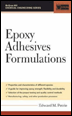
Based on a popular course sponsored by the Society of Plastics Engineers, this comprehensive text presents a variety of methods to ensure optimum epoxy performance and reliability.
 TABLE OF CONTENTS
 Glass and ceramic substrates are generally high-surface-energy materials, and most adhesives wet them readily. One problem in bonding optically clear glass is to select an adhesive that is optically clear and does not change the optical characteristics of the glass. Another problem is that shrinkage of the adhesive or differences in thermal expansion coefficients could provide high internal stresses that cause catastrophic failure of the brittle glass substrate.
Adhesives used for glass substrates are generally transparent, heat-setting resins that are water- and uv-resistant to meet the requirements of outdoor applications. They are usually flexibilized systems so as not to place stress on the glass substrate either after cure or during thermal cycling. These adhesives include polyvinyl butyl, phenolic butyral, phenolic nitrile, neoprene, polysulfide, silicone, vinyl acetate, and flexible epoxy adhesives. Optical adhesives used for bonding glass lenses are usually styrene modified polyesters and styrene monomer-based adhesives. Epoxies, especially UV cured epoxy adhesives, are also beginning to be used in this application.
Adhesives used for bonding glass and glazed ceramics should have minimum VOC content, since these substrates are nonporous. Epoxy adhesives, being 100 percent solids materials, are probably best for these applications. Thermosetting acrylic is good for bonding glass and ceramics to thermoplastic polymers and to metal surfaces. Where large areas and materials with greatly differing coefficients of thermal expansion are being bonded, polysulfides or urethanes should be considered, since these adhesives have very high elongation.
Usually solvent cleaning is the only surface preparation needed for...