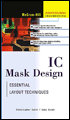
IC Mask Design: Essential Layout Techniques
Here's what you're going to see in this chapter:
Basic differences between digital and analog layout styles
Importance of knowing how circuits function
Assistance for the new analog mask designer
Three key questions to ask your circuit designer
How the answers directly affect your layout
Dialogue samples between mask designer and circuit designer
Importance of mask designer as problem spotter
Advantage of attending design review meetings
Expectations of an analog mask designer
Walkthrough of pre-layout communication with your circuit designer and what it will mean to you
In the previous chapters, we looked at the constraints you work with in order to create cells for use in big digital blocks. We saw a multitude of uncompromising rules that allow automated tools to toss our cells together by the millions for us, with DRC clean guarantees. Digital mask design proved to be rule-based. Very rigid. Very demanding. Lots of procedures, checklists, and flowcharting.
Some of the rules that most people are used to, like keeping elements on-grid or running metals horizontally and vertically in different layers are not so much of a worry in analog mask design. These techniques are relegated to the position of being mere options, choices you keep in your bag of tricks. You are free to consider boundless sizing options, placement options, neighboring and pairing options, or noise options, for example.
Considering the fact that we have so much control...