Optical System Design
Taking the math and the mystery out of optical design, this comprehensive book uses a graphics-oriented approach, making optical design techniques easy to understand through hundreds of detailed diagrams.
 TABLE OF CONTENTS
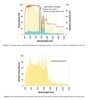
 While there are many glass types available for visible systems, there are only a very limited number of materials that can be effectively used in the MWIR and LWIR spectral bands. Table 12.1 shows the more common materials and their most important properties. Figure 12.13 shows a plot of the transmittance of the more common IR transmitting materials. It is important to note that these data include surface reflection losses, and often a significantly higher transmittance results after applying high-efficiency antireflection coatings.
| Material | Refractive Index at 4 m | Refractive Index at 10 m | dn / dt / C ) | Comments |
|---|---|---|---|---|
| Germanium | 4.0243 | 4.0032 | 0.000396 | Expensive, large dn/ dt |
| Silicon | 3.4255 | 3.4179 [*] | 0.000150 | Large dn/ dt |
| Zinc sulfide, CVD | 2.2520 | 2.2005 | 0.0000433 | |
| Zinc selenide, CVD | 2.4331 | 2.4065 | 0.000060 | Expensive, very low absorption |
| AMTIR I (Ge/As/SE:33/12/55) | 2.5141 | 2.4976 | 0.000072 | |
| Magnesium fluoride | 1.3526 | [ ] | 0.000020 | Low cost, no ctg required |
| Sapphire | 1.6753 | [ ] | 0.000010 | Very hard, low emissivity at high temperature |
| Arsenic trisulfide | 2.4112 | 2.3816 | [ ] | |
| Calcium fluoride | 1.4097 | [ ] | 0.000011 | |
| Barium fluoride | 1.4580 | [ ] | ?0.000016 | |
| [*]Not recommended. [ ]Does not transmit. [ ]Not available. [ ]Transmits up to 10 m but drops abruptly. |
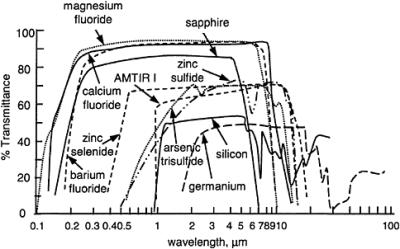
Figure 12.14 shows a "glass" map where we plot the refractive index in the ordinate versus the V# in the...