
Modem Spectrum Analyzers and Signal Analyzers
Last Updated: April 1, 2025
Description
Modem Spectrum Analyzers and Signal Analyzers are sophisticated instruments used to observe and measure signal levels and distortions. They provide a visual representation of the magnitude of the Fourier transform of input signals, mapping time domain signals into the frequency domain as a set of sines and cosines. These devices are essential for examining amplitude versus frequency of a given signal source, antenna, or signal distribution system, offering insights into signal stability, distortion, amplitude, and modulation types and quality .
Working Principle
Spectrum analyzers operate as frequency-selective, peak-responding voltmeters calibrated to display the RMS value of a sine wave. They are not power meters but can display power directly if certain values are known. Modern spectrum analyzers leverage digital technology and digital signal processing to enhance their capabilities. They capture and process blocks of spectrum to reveal amplitude and phase relationships between signals, and newer models can demodulate digitally modulated signals used in contemporary communication systems .
Applications
Spectrum analyzers are widely used in RF communication to locate and analyze interference problems, which have become more prevalent due to spectrum overcrowding. They are also integral in the design, manufacturing, and field service or repair of electrical systems or devices. For example, in communications, they help analyze modulated signals to determine performance and troubleshoot issues. They are also used in testing nonlinear devices like amplifiers or mixers to understand distortion products .
Advantages over other Spectrum Analyzers and Signal Analyzers
Modern spectrum analyzers offer the ability to quickly view wide spectrum widths and zoom in to examine signals of interest, which is highly valued in R&D. In manufacturing, their speed and data accessibility through computers allow for complex measurements to be made quickly, accurately, and repeatably. These capabilities make them versatile instruments suited for the modern communications era .
Limitations
Some spectrum analyzers, especially those incorporated into other equipment, are scaled-down versions and lack many features of standalone units. This can limit their functionality and the range of measurements they can perform .
Considerations
When considering spectrum analyzers, factors such as initial costs, operating expenses, durability, accuracy, and replacement and maintenance costs should be evaluated. The cost of a signal generator, an essential component in a communications test laboratory, largely depends on the additional functions and facilities available, as well as the type and quality of the frequency reference used .
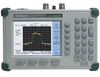
from Fiber Instrument Sales, Inc./FIS
Includes analysis software, carrying case, recharge/ replaceable battery [See More]
- Host Connection: RS232; USB; Modem; Radio
- Analyzer Type: Instrument
- Special Instrument Type: Handheld
- Test Type: Modulation; Distortion; Noise