
85° Cutting Tool Inserts
Last Updated: February 12, 2025
Description
85° Cutting Tool Inserts are specialized components used in machining operations. These inserts are characterized by their specific nose angle of 85 degrees, which is part of their geometric design. They are typically used in turning operations, where they are mounted onto a tool holder to perform cutting tasks on a rotating workpiece. The design of these inserts allows them to be rotated to utilize multiple cutting edges, enhancing their lifespan and efficiency.
Working Principle
The working principle of 85° Cutting Tool Inserts involves their use in turning operations, where they are fed into a rotating workpiece. The 85-degree nose angle provides a specific cutting geometry that can influence the cutting forces and the quality of the machined surface. These inserts are indexable, meaning they can be rotated to expose a fresh cutting edge once one becomes worn, thereby maximizing the use of the insert and reducing downtime for tool changes. The specific angle and shape of the insert help in achieving precise cuts and maintaining the desired dimensions of the workpiece.
Applications
85° Cutting Tool Inserts are primarily used in turning operations. They are suitable for machining tasks that require specific geometric precision and are often used in industries where high accuracy is crucial. Specific examples of applications include the automotive industry for machining engine components, the aerospace sector for crafting precision parts, and the manufacturing of custom machinery parts where specific angles and dimensions are required.
Advantages over other Cutting Tool Inserts
One of the main advantages of 85° Cutting Tool Inserts is their ability to provide precise cuts due to their specific nose angle. This can result in better surface finishes and more accurate dimensional control compared to inserts with different angles. Additionally, the ability to rotate the insert to use multiple cutting edges can lead to cost savings and increased productivity, as it reduces the frequency of insert changes.
Limitations
A limitation of 85° Cutting Tool Inserts is that their specific angle may not be suitable for all types of materials or cutting conditions. The geometry might not provide the best performance in terms of chip evacuation or cutting forces for certain applications, which could lead to increased wear or suboptimal machining results. Additionally, the initial cost of these specialized inserts might be higher compared to more generic options.
Considerations
When considering the use of 85° Cutting Tool Inserts, it is important to evaluate the initial costs, which may be higher due to their specialized nature. Operating expenses can be optimized by taking advantage of their multiple cutting edges, which extend the life of the insert. Durability and accuracy are generally high, but they depend on the specific material being machined and the cutting conditions. Replacement and maintenance costs can be minimized by proper handling and storage of the inserts to prevent damage to unused cutting edges.
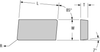
from Greenleaf Corporation
Rectangular geometry, no hole configuration [See More]
- Tip Angle: 85°
- Shape: Rectangular
- Application: Milling
- Thickness: 0.125