
Zinc Selenide Spherical Lenses
Description
Zinc Selenide (ZnSe) spherical lenses are optical components designed to manipulate light through refraction. These lenses are crafted from zinc selenide, a material known for its wide transmission range and low absorption in the infrared (IR) spectrum. The primary function of these lenses is to focus or diverge light, depending on their specific design, such as plano-convex or biconvex configurations.
Working Principle
Zinc Selenide spherical lenses operate by bending light rays that pass through them, a process known as refraction. The degree of bending is determined by the lens's curvature and the refractive index of zinc selenide. This material has a large refractive index, which allows it to effectively focus light, making it particularly useful in applications requiring precise light manipulation. The low absorption of zinc selenide in the IR spectrum makes these lenses ideal for high-power laser applications, as they can transmit light efficiently without significant energy loss.
Applications
Zinc Selenide spherical lenses are widely used in infrared applications, particularly with CO2 lasers. They are a popular choice for CO2 laser cutters in the manufacturing sector due to their ability to handle high-power laser outputs efficiently. These lenses are also employed in thermal imaging systems and other IR optical systems where precise light focusing is crucial.
Advantages over other Spherical Lenses
Compared to other materials, zinc selenide lenses offer a lower density and a lower refractive index than germanium, making them a suitable alternative in applications where weight is a consideration. Their wide transmission range and low absorption in the IR spectrum provide significant advantages in high-power laser applications, where minimizing energy loss is critical.
Limitations
Zinc Selenide lenses are relatively soft and susceptible to scratches, which limits their use in harsh environments. This softness necessitates careful handling and maintenance to avoid damage. Additionally, they require anti-reflective coatings to optimize performance due to their large refractive index.
Considerations
When considering zinc selenide spherical lenses, it is important to account for initial costs, which may be higher due to the specialized nature of the material and coatings required. Operating expenses can be influenced by the need for careful handling and maintenance to prevent damage. The durability of these lenses is contingent upon proper care, as their susceptibility to scratches can affect longevity and performance. Replacement and maintenance costs should also be considered, particularly in environments where the lenses are exposed to potential damage.
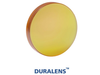
from Newport MKS
The 62670-117 DURALENS ™ coated Plano-Convex Infrared Lens is made of ZnSe material and is Amada ® OEM compatible. It has a diameter of 1.5 in. (38.1 mm), edge thickness of 7.6 mm, and a focal length of 5.0 inch. Zinc Selenide's low absorption coefficient makes it a perfect candidate for... [See More]
- Materials: Zinc Selenide; ZnSe
- Diameter: 38.1
- Lens Form: Plano-Convex; Plano-Convex
- Edge Thickness: 7.6

from Intrinsic Crystal Technology Co., Ltd. (ICC)
ICC spherical technology includes PITECH, high speed and CNC method, which can meet the requirements of small quantity for precision control, and large quantity for cost. All processes are completed in the factory. Our spherical lenses are widely used in a variety of industrial and detection camera,... [See More]
- Materials: BK7 Glass; Calcium Fluoride; Germanium; Zinc Selenide; BAF2, Silicon
- Lens Application: Infrared; Visible
- Lens Form: Plano-Convex; Plano-Concave; Convex-Convex; Concave-Concave

from Fairfield Crystal Technology, LLC.
OPTICAL COMPONENT MANUFACTURING. Fairfield Crystal provides component manufacturing for your most challenging designs and applications. Combined with our expertise in crystal growth our component fabrication team is able to manufacture highly polished single crystal lenses, prisms, wedges,... [See More]
- Materials: Calcium Fluoride; Zinc Selenide
- Surface Quality: 10-5 Scratch / Dig; 20-10 Scratch / Dig; 40-20 Scratch / Dig; 60-40 Scratch / Dig; 80-50 Scratch / Dig
- Lens Application: Infrared; Visible; Ultraviolet
- Surface Flatness: λ/2; λ/4; λ/5; λ/8; λ/10; λ/20

from Rocky Mountain Instrument/RMI Laser
Spherical Lenses are the most common lenses in optical systems design. RMI manufactures standard and custom spherical lenses from a wide range of materials with a wide range of size and shape specifications. Both sides can be coated with an RMI high efficiency narrowband, anti-reflective coating. [See More]
- Materials: BK7 Glass; Calcium Fluoride; Germanium; Sapphire; Zinc Selenide; Ultra-violet grade Fused Silica; Fused Silica, Cleartran, Barium fluoride, Magnesium Flouride, Silicon
- Surface Quality: 10-5 Scratch / Dig; 20-10 Scratch / Dig; 40-20 Scratch / Dig
- Lens Form: Plano-Convex; Plano-Concave; Convex-Convex; Concave-Concave
- Surface Flatness: λ/4; λ/10

from Thorlabs, Inc.
At Thorlabs, we constantly reinforce our desire to serve at the pleasure of our customers. From this comes our desire to be connected to our industry in a way that far exceeds what would typically be expected of a vendor. Thorlabs lives this core principle by seeking to enhance, at every turn, the... [See More]
- Materials: BK7 Glass; SF11 Glass; Calcium Fluoride; Zinc Selenide; Ultra-violet grade Fused Silica; Silicone
- Lens Application: Infrared; Visible; Ultraviolet
- Lens Form: Plano-Convex; Plano-Concave; Convex-Convex; Concave-Concave
- Focal Length: -1000 to 750
from Ophir-Spiricon Inc.
Plano-convex lenses provide a greater depth of field [See More]
- Materials: Zinc Selenide
- Lens Application: Infrared
- Lens Form: Plano-Convex
- Focal Length: 318