
λ/10 Spherical Lenses
Description
?/10 Spherical Lenses are precision optical components designed to manipulate light by focusing or diverging it. These lenses are characterized by their spherical surfaces, which can converge or diverge light rays. The ?/10 specification indicates a high degree of surface accuracy, meaning the lens surface deviates from the ideal shape by no more than one-tenth of the wavelength of light used, ensuring minimal optical aberrations and high-quality imaging.
Working Principle
Spherical lenses work by refracting light rays that pass through them. The curvature of the lens surfaces causes light rays to bend, converging them to a focal point in the case of positive lenses or diverging them in the case of negative lenses. The ?/10 precision ensures that the lens surfaces are extremely smooth and accurate, reducing imperfections that could lead to optical aberrations. This high level of precision is crucial for applications requiring high-resolution imaging and minimal distortion.
Applications
?/10 Spherical Lenses are used in a variety of high-precision optical applications. They are essential in scientific research where precise light manipulation is required, such as in microscopy and laser systems. These lenses are also used in optical instruments like telescopes and cameras, where high image quality is paramount. In industrial settings, they are employed in laser cutting and engraving systems, where precise light focusing is necessary for accurate material processing.
Advantages over other Spherical Lenses
The primary advantage of ?/10 Spherical Lenses over standard spherical lenses is their superior surface accuracy, which significantly reduces optical aberrations such as spherical aberration. This results in clearer and more precise imaging. The high precision of ?/10 lenses makes them ideal for applications where even minor deviations in lens shape could lead to significant performance issues.
Limitations
Despite their advantages, ?/10 Spherical Lenses have limitations. They are typically more expensive to manufacture due to the high precision required, which can increase the initial cost for users. Additionally, these lenses may require more careful handling and maintenance to preserve their precision surfaces, potentially increasing operating expenses.
Considerations
When considering ?/10 Spherical Lenses, it is important to weigh the initial costs against the benefits of improved optical performance. The high precision of these lenses can lead to increased durability and accuracy in applications, but they may also require more frequent maintenance to ensure their surfaces remain free of damage. Replacement costs can be higher compared to standard lenses due to the specialized manufacturing processes involved. Users should also consider the specific requirements of their application to determine if the enhanced performance of ?/10 lenses justifies the additional expense.
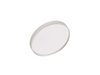
from Newport MKS
The SPX022AR.1 High Energy Fused Silica Lens is an AR.1 coated (at 1064 nm), 1 inch (25.4 mm) diameter plano-convex lens with an effective focal length of 100.0 mm at 546.1 nm. It is designed for high frequency laser pulses where standard grade fused silica does not perform very well. These lenses... [See More]
- Surface Flatness: λ/10
- Focal Length: 96.71
- Lens Form: Plano-Convex; Plano-Convex
- Diameter: 25.4

from CeNing Optics Co., Ltd.
Custom Capabilities of Spherical and Cylindrical Lenses. Diameter: From 0.5mm to 300mm. Diameter Tolerance: +/-0.01mm. Thickness Tolerance: +/-0.01mm. Irregularity: 0.2, (PV: Lambda/20). Centration: 30 arc sec. Surface Quality: 10-5 S/D. Quality Facility Machinery: Polishing Machines. Grinding... [See More]
- Surface Flatness: λ/10
- Lens Application: Infrared (optional feature); Visible
- Lens Form: Plano-Convex (optional feature); Plano-Concave (optional feature)
- Focal Length: 2 to 5000

from Rocky Mountain Instrument/RMI Laser
Spherical Lenses are the most common lenses in optical systems design. RMI manufactures standard and custom spherical lenses from a wide range of materials with a wide range of size and shape specifications. Both sides can be coated with an RMI high efficiency narrowband, anti-reflective coating. [See More]
- Surface Flatness: λ/4; λ/10
- Materials: BK7 Glass; Calcium Fluoride; Germanium; Sapphire; Zinc Selenide; Ultra-violet grade Fused Silica; Fused Silica, Cleartran, Barium fluoride, Magnesium Flouride, Silicon
- Lens Form: Plano-Convex; Plano-Concave; Convex-Convex; Concave-Concave
- Surface Quality: 10-5 Scratch / Dig; 20-10 Scratch / Dig; 40-20 Scratch / Dig

from Qioptiq
Uncoated. Suitable for DUV applications. Substrate for dielectric or metallic coatings. Extreme low scattering losses. High surface quality. Tolerances: Focal length f' : ± 2 %, Image distance s' : ± 2 %. Surface quality: λ/10 for concave surfaces, λ/4 for flat... [See More]
- Surface Flatness: λ/10
- Lens Application: Infrared; Visible
- Lens Form: Plano-Convex
- Focal Length: -1400 to -10
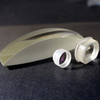
from Changchun Sunday Optics Co., Ltd.
The H-K9L double concave lens has excellent transmittance from visible to near infrared (350-2000nm).H-K9L (N-BK7) is a commonly used optical glass for the preparation of high-quality optical elements. When the additional advantages of UV melting quartz (good transmittance and low thermal expansion... [See More]
- Surface Flatness: λ/10
- Lens Application: Infrared; Visible
- Lens Form: Plano-Convex; Plano-Concave
- Materials: Germanium; Sapphire; Optical glass, UVFS, Germanium, Silicon, CaF2, MgF2, ZnSe ZnS, Sapphire

from Rainbow Research Optics, Inc.
Your One-Stop Source for Spherical Lenses. From prototype to production, Rainbow Research Optics, Inc (RROI) designs, manufactures and coats spherical lenses. Spherical lenses are one of the most basic optical components to produce. With complete in-house capabilities, RROI is able to offer... [See More]
- Surface Flatness: λ/10
- Lens Application: Infrared; Visible; Ultraviolet
- Lens Form: Convex-Convex (optional feature); Concave-Concave (optional feature)
- Diameter: 3 to 406

from Zygo Corporation
ZYGO's Optics business segment manufactures precision spheres and lenses ranging in diameter from 50 mm to 200 mm with radii from 12.7 mm to 8 meters. Our standard product line of transmission spheres is available in 4" and 6" clear apertures ranging in f-numbers from f/.65 to f/11 with wavefront... [See More]
- Surface Flatness: λ/10; λ/20
- Diameter: 50 to 200
- Lens Application: Infrared; Visible; Ultraviolet
- Radius of Curvature: 12.7 to 8000
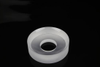
from HG Optronics, Inc.
Plano Concave Lenses are ideal for beam expansion, light projection, or for expanding an optical system's focal length. Plano Concave Lenses, which have one concave surface, are Optical Lenses with negative focal lengths. Plano-Concave Lenses should be shaped with the plano, or flat, surface towards... [See More]
- Surface Flatness: λ/4; λ/10
- Focal Length: -500 to -8
- Lens Form: Plano-Concave
- Diameter: 6 to 50.8

from ECOPTIK (CHANGCHUN) LTD
Achromatic Lenses are used to minimize or eliminate chromatic aberration. The achromatic design also helps minimize spherical aberrations. Achromatic Lenses are ideal for a range of applications, including fluorescence microscopy, image relay, inspection, or spectroscopy. An Achromatic Lens, which... [See More]
- Surface Flatness: λ/2; λ/4; λ/5; λ/8; λ/10
- Focal Length: 50 to 2000
- Lens Application: Visible
- Diameter: 6 to 200

from Fairfield Crystal Technology, LLC.
OPTICAL COMPONENT MANUFACTURING. Fairfield Crystal provides component manufacturing for your most challenging designs and applications. Combined with our expertise in crystal growth our component fabrication team is able to manufacture highly polished single crystal lenses, prisms, wedges,... [See More]
- Surface Flatness: λ/2; λ/4; λ/5; λ/8; λ/10; λ/20
- Materials: Calcium Fluoride; Zinc Selenide
- Lens Application: Infrared; Visible; Ultraviolet
- Surface Quality: 10-5 Scratch / Dig; 20-10 Scratch / Dig; 40-20 Scratch / Dig; 60-40 Scratch / Dig; 80-50 Scratch / Dig

from Changchun Sunday Optics Co., Ltd.
Cylindrical lenses are generally used to focus incoming light onto a line or to change the aspect ratio of an image.They are usually linear and control the direction of the light beam.A cylindrical lens has a cylindrical surface that enables incident light to focus on a dimension and stretch the... [See More]
- Surface Flatness: λ/10
- Lens Application: Infrared; Ultraviolet
- Lens Form: Plano-Convex; Plano-Concave
- Materials: Germanium; Sapphire; Optical glass, UVFS, Germanium, Silicon, CaF2, MgF2, ZnSe ZnS, Sapphire
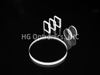
from HG Optronics, Inc.
A Plano-Convex lens causes light to focus to a point,it has a positive focal length,which is ideal for light collimation or for focusing applications utilizing monochromatic illumination, in a range of industries. HG OPTRONICS offers Plano-Convexlenses with a variety of coating options. 1.1. What is... [See More]
- Surface Flatness: λ/4; λ/10
- Lens Application: Ultraviolet
- Lens Form: Plano-Convex
- Focal Length: 8 to 250
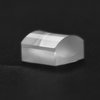
from ECOPTIK (CHANGCHUN) LTD
A cemented cylindrical lens can minimize chromatic aberration, so it can be used to focus a single direction of a multi-color light beam. Unlike a spherical lens that produces a point focusing spot, a cylindrical lens can produce a linear focusing spot. Our cylindrical achromatic doublets are... [See More]
- Surface Flatness: λ/2; λ/4; λ/5; λ/8; λ/10
- Diameter: 6 to 200
- Focal Length: 50 to 2000
- Center Thickness: 2 to 50
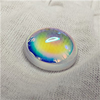
from Changchun Sunday Optics Co., Ltd.
Cylindrical lenses are generally used to focus incoming light onto a line or to change the aspect ratio of an image.They are usually linear and control the direction of the light beam.A cylindrical lens has a cylindrical surface that enables incident light to focus on a dimension and stretch the... [See More]
- Surface Flatness: λ/10
- Materials: Germanium; Sapphire; Optical glass, UVFS, Germanium, Silicon, CaF2, MgF2, ZnSe ZnS, Sapphire
- Lens Form: Plano-Convex
- Surface Quality: 10-5 Scratch / Dig
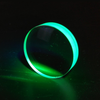
from ECOPTIK (CHANGCHUN) LTD
A double concave lens has negative focal length, thereby causing collimated incident light to diverge. Double concave lens has equal radius of curvature on both side of lens. They are generally used to expand light or increase focal length in existing system, such as beam expander and projection... [See More]
- Surface Flatness: λ/2; λ/4; λ/5; λ/8; λ/10
- Focal Length: -2000 to -50
- Lens Form: Concave-Concave
- Diameter: 2 to 300
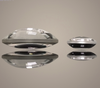
from Changchun Sunday Optics Co., Ltd.
Rod lenses are mainly used in Sensors, light guides, and endoscopes, laser systems. Sunday can make polishing either the end faces or the cylindrical faces depanding on customer's using.Rod lens can be two end faces polished, cylindrical faces polished, coating is available. [See More]
- Surface Flatness: λ/10
- Surface Quality: 10-5 Scratch / Dig
- Materials: Germanium; Sapphire; Optical glass, UVFS, Germanium, Silicon, CaF2, MgF2, ZnSe ZnS, Sapphire
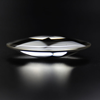
from ECOPTIK (CHANGCHUN) LTD
The double convex lens is symmetrical across both its horizontal and vertical axis. Each of the lens' two faces can be thought of as originally being part of a sphere. The fact that a double convex lens is thicker across its middle is an indicator that it will converge rays of light that travel... [See More]
- Surface Flatness: λ/2; λ/4; λ/5; λ/8; λ/10
- Focal Length: 50 to 2000
- Lens Form: Convex-Convex
- Diameter: 2 to 300
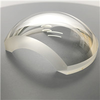
from Changchun Sunday Optics Co., Ltd.
Axicon Lens the minimum size can be 0.3mm with optical glass material. [See More]
- Surface Flatness: λ/10
- Surface Quality: 10-5 Scratch / Dig
- Materials: Germanium; Sapphire; Optical glass, UVFS, Germanium, Silicon, CaF2, MgF2, ZnSe ZnS, Sapphire
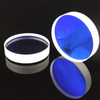
from ECOPTIK (CHANGCHUN) LTD
BRD Optical provide meniscus lens in both positive and negative focal lengths. These lenses are useful when used with another lenses to increase or decrease the focal length. This lens element configuration does not introduce any additional coma or spherical aberrations [See More]
- Surface Flatness: λ/2; λ/4; λ/5; λ/8; λ/10
- Diameter: 2 to 300
- Focal Length: -2000 to -50
- Center Thickness: 2 to 20
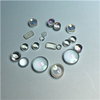
from Changchun Sunday Optics Co., Ltd.
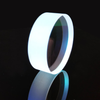
Spherical Positive Mensicus Lens. H-K9L Positive Meniscus Lens has excellent transmittance from visible to near infrared (350-2000nm).H-K9L (N-BK7) is a commonly used optical glass for the preparation of high-quality optical elements. When the additional advantages of UV melting quartz (good... [See More]
- Surface Flatness: λ/10
- Lens Application: Infrared; Visible
- Lens Form: Plano-Convex; Plano-Concave
- Materials: Germanium; Sapphire; Optical glass, UVFS, Germanium, Silicon, CaF2, MgF2, ZnSe ZnS, Sapphire
from ECOPTIK (CHANGCHUN) LTD
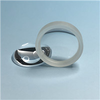
Plano concave lens bend parallel input rays so they diverge from one another on the output side of the lens and hence have a negative focal length. The spherical aberration of the plano concave lenses is negative and can be used to balance aberrations created by other lenses. Similar to the plano... [See More]
- Surface Flatness: λ/2; λ/4; λ/5; λ/8; λ/10
- Focal Length: -2000 to -50
- Lens Form: Plano-Concave
- Diameter: 2 to 300
from Changchun Sunday Optics Co., Ltd.
The roles of aspheric is to Simplify the system structure, shorten the tube length, reduce the weight of the system, improve the imaging quality, and make the optical system extend to the infrared and ultraviolet bands.With the development, , the cost of aspheric surface processing has been... [See More]
- Surface Flatness: λ/10
- Lens Application: Infrared; Ultraviolet
- Lens Form: Plano-Concave
- Materials: Germanium; Sapphire; Optical glass, UVFS, Germanium, Silicon, CaF2, MgF2, ZnSe ZnS, Sapphire
from ECOPTIK (CHANGCHUN) LTD
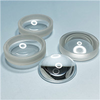
Plano-convex lenses are positive focal length elements that have one spherical surface and one flat surface. These lenses are designed for infinite conjugate (parallel light) use or simple imaging in non-critical applications. These optic lenses are ideal for all-purpose focusing elements. [See More]
- Surface Flatness: λ/2; λ/4; λ/5; λ/8; λ/10; λ/20
- Diameter: 2 to 300
- Lens Form: Convex-Convex
- Materials: Sapphire; Optical Glass, Fused Silica
from Changchun Sunday Optics Co., Ltd.
The roles of aspheric is to Simplify the system structure, shorten the tube length, reduce the weight of the system, improve the imaging quality, and make the optical system extend to the infrared and ultraviolet bands.With the development, , the cost of aspheric surface processing has been... [See More]
- Surface Flatness: λ/10
- Lens Application: Infrared; Ultraviolet
- Lens Form: Plano-Concave
- Materials: Germanium; Sapphire; Optical glass, UVFS, Germanium, Silicon, CaF2, MgF2, ZnSe ZnS, Sapphire