
Convex-Convex Spherical Lenses
Description
Convex-convex spherical lenses, also known as double convex or bi-convex lenses, have both surfaces curved outward. These lenses are designed to converge light rays to a focal point, making them effective in focusing applications.
Working Principle
Convex-convex spherical lenses work by bending incoming parallel light rays towards a common focal point on the opposite side of the lens. This convergence occurs because the outward curvature on both sides of the lens causes the light to refract towards the lens's central axis. The ability to focus light makes these lenses particularly useful in applications requiring image magnification or light concentration.
Applications
Convex-convex spherical lenses are commonly used in optical devices such as projectors and cameras. In projectors, they help focus and direct light to create clear and sharp images on a screen. In cameras, these lenses are integral to focusing light onto the camera sensor, ensuring that captured images are sharp and well-defined.
Advantages over other Spherical Lenses
Compared to plano-convex lenses, which have one flat and one curved surface, convex-convex lenses generally have a shorter focal length for the same diameter and surface radius. This characteristic makes them preferable in applications where a shorter focal length is advantageous, such as in compact optical systems where space is limited.
Limitations
One limitation of convex-convex spherical lenses is their tendency to introduce spherical aberrations, especially when used with light sources that are not monochromatic or when the lens is not used at its ideal conjugate ratio. This can result in image distortion or blurring, which may require additional corrective measures.
Considerations
When selecting convex-convex spherical lenses, considerations should include initial costs, which can vary based on the precision and quality of the lens. Operating expenses are generally low, but durability and accuracy are crucial factors, especially in high-precision applications. Replacement and maintenance costs should also be considered, as lenses may need periodic cleaning or replacement due to wear or damage over time.

from Gurley Precision Instruments
1:1 Imaging and Multi-Element Applications, Broadband coatings are recommended for aspherical lenses [See More]
- Lens Form: Convex-Convex
- Diameter: 25
- Focal Length: 50
- Center Thickness: 5
from Newport MKS
The 39323 Focusing Lens is used with the 77259 Focusing Lens Assembly. It is a 1.5 inch (38.1 mm) diameter, UV Fused Silica, Bi-convex Lens with a 51 mm Focal Length. Bi-convex lenses are for imaging with little change in magnification. 190 to 2500 nm wavelength range. [See More]
- Lens Form: Convex-Convex; Bi-Convex
- Materials: Ultra-violet grade Fused Silica; UV Fused Silica
- Diameter: 38.1
- Surface Quality: 60-40 Scratch / Dig

from CeNing Optics Co., Ltd.
CeNing Optics specializes in manufacturing high precision optical components, including optical lenses, prisms, beam splitters, waveplates, polarizers, interference filters, laser mirrors, BBO crystals, achromatic lenses, cylindrical lenses, and CaF2 windows. CeNing Optics produces optical... [See More]
- Lens Form: Convex-Convex
- Focal Length: 25 to 500
- Lens Application: Visible
- Diameter: 12.7 to 25.4

from CASTECH, Inc.
Other sizes and focal length are available upon request. Also the lens ring mounts are available upon request. [See More]
- Lens Form: Convex-Convex
- Radius of Curvature: 5.62
- Diameter: 6.35
- Materials: BK7 Glass
from Newport MKS
The SBX013AR.33 Fused Silica Bi-Convex Lens is a 12.7 mm diameter, 1064 nm anti-reflection coated, fused silica bi-convex lens with an effective focal length of 12.7 mm. It is designed to meet the demanding requirements of laser electro-optic applications. Newport's UV grade fused silica precision... [See More]
- Lens Form: Convex-Convex; Bi-Convex
- Diameter: 12.7
- Focal Length: 9.86
- Center Thickness: 7.35
from Newport MKS
The SBX028AR.33 Fused Silica Bi-Convex Lens is a 25.4 mm diameter, 1064 nm anti-reflection coated, fused silica bi-convex lens with an effective focal length of 100 mm. It is designed to meet the demanding requirements of laser electro-optic applications. Newport's UV grade fused silica precision... [See More]
- Lens Form: Convex-Convex; Bi-Convex
- Diameter: 25.4
- Focal Length: 98.34
- Center Thickness: 4.78
from Newport MKS
The SBX055AR.33 Fused Silica Bi-Convex Lens is a 50.8 mm diameter, 1064 nm anti-reflection coated, fused silica bi-convex lens with an effective focal length of 100 mm. It is designed to meet the demanding requirements of laser electro-optic applications. Newport's UV grade fused silica precision... [See More]
- Lens Form: Convex-Convex; Bi-Convex
- Diameter: 50.8
- Focal Length: 96.4
- Center Thickness: 10.3

from Newport MKS
The KBX022AR.18 N-BK7 Bi-Convex Lens is a 1/2 inch (12.7 mm) diameter, 1000 to 1550 nm anti-reflection coated, N-BK7 bi-convex lens with an effective focal length of 12.7 mm. It is designed to meet the demanding requirements of laser electro-optic applications. Newport's N-BK7 precision bi-convex... [See More]
- Lens Form: Convex-Convex; Bi-Convex
- Diameter: 12.7
- Focal Length: 10.26
- Center Thickness: 6.68
from Newport MKS
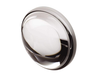
The KBX154AR.18 N-BK7 Bi-Convex Lens is a 2 inch (50.8 mm) diameter, 1000 to 1550 nm anti-reflection coated, N-BK7 bi-convex lens with an effective focal length of 100 mm. It is designed to meet the demanding requirements of laser electro-optic applications. Newport's N-BK7 precision bi-convex... [See More]
- Lens Form: Convex-Convex; Bi-Convex
- Diameter: 50.8
- Focal Length: 96.83
- Center Thickness: 9.44

from Newport MKS
The KBX013AR.18 N-BK7 Bi-Convex Lens is a 1/4 inch (6.35 mm) diameter, 1000 to 1550 nm anti-reflection coated, N-BK7 bi-convex lens with an effective focal length of 12.7 mm. It is designed to meet the demanding requirements of laser electro-optic applications. Newport's N-BK7 precision bi-convex... [See More]
- Lens Form: Convex-Convex; Bi-Convex
- Diameter: 6.35
- Focal Length: 11.37
- Center Thickness: 3.82
from Newport MKS
The KPA15AR.14 Precision Polished Aspheric Lens is an bi-convex aspheric lens, made with L-BAL35 optical glass, with 20.0 mm diameter and 15.0 mm effective focal length. AR.14 coating provides less than 1.5% reflection from 425 nm to 675 nm. Aspheric lenses are typically used to reduce the number of... [See More]
- Lens Form: Convex-Convex; Bi-Convex Aspheric
- Diameter: 20
- Focal Length: 9.12
- Center Thickness: 9.6

from Thorlabs, Inc.
At Thorlabs, we constantly reinforce our desire to serve at the pleasure of our customers. From this comes our desire to be connected to our industry in a way that far exceeds what would typically be expected of a vendor. Thorlabs lives this core principle by seeking to enhance, at every turn, the... [See More]
- Lens Form: Plano-Convex; Plano-Concave; Convex-Convex; Concave-Concave
- Focal Length: -1000 to 750
- Lens Application: Infrared; Visible; Ultraviolet
- Diameter: 5 to 75
from Foctek Photonics, Inc.
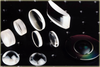
FOCtek provides five kinds of spheric lens forms, or shapes, that determine the imaging Characteristics. of the lenses, they are plano-convex, plano-concave, Double-convex, Double-concave and Meniscus. Plano-convex lens has a positive focal length, which makes it ideal for collecting and focusing... [See More]
- Lens Form: Plano-Convex; Plano-Concave; Convex-Convex; Concave-Concave
- Surface Quality: 10-5 Scratch / Dig; 60-40 Scratch / Dig
- Materials: BK7 Glass; Calcium Fluoride; Sapphire; H-K9, Fused Silica, N-SF10, Silicon
- Surface Flatness: λ/4

from UNI OPTICS(Fujian) Co., Ltd
Double Convex Lenses are used in image relay applications, or for imaging objects at close conjugates. Double Convex Lenses have positive focal lengths, along with two convex surfaces with equal radii. Aberrations will increase as the conjugate ratios increase. DCV Lenses are used in a range of... [See More]
- Lens Form: Convex-Convex
- Materials: Ultra-violet grade Fused Silica
- Diameter: 10 to 50
from ECOPTIK (CHANGCHUN) LTD
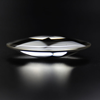
The double convex lens is symmetrical across both its horizontal and vertical axis. Each of the lens' two faces can be thought of as originally being part of a sphere. The fact that a double convex lens is thicker across its middle is an indicator that it will converge rays of light that travel... [See More]
- Lens Form: Convex-Convex
- Diameter: 2 to 300
- Focal Length: 50 to 2000
- Center Thickness: 2 to 20

from Rocky Mountain Instrument/RMI Laser
Spherical Lenses are the most common lenses in optical systems design. RMI manufactures standard and custom spherical lenses from a wide range of materials with a wide range of size and shape specifications. Both sides can be coated with an RMI high efficiency narrowband, anti-reflective coating. [See More]
- Lens Form: Plano-Convex; Plano-Concave; Convex-Convex; Concave-Concave
- Surface Quality: 10-5 Scratch / Dig; 20-10 Scratch / Dig; 40-20 Scratch / Dig
- Materials: BK7 Glass; Calcium Fluoride; Germanium; Sapphire; Zinc Selenide; Ultra-violet grade Fused Silica; Fused Silica, Cleartran, Barium fluoride, Magnesium Flouride, Silicon
- Surface Flatness: λ/4; λ/10

from Intrinsic Crystal Technology Co., Ltd. (ICC)
ICC spherical technology includes PITECH, high speed and CNC method, which can meet the requirements of small quantity for precision control, and large quantity for cost. All processes are completed in the factory. Our spherical lenses are widely used in a variety of industrial and detection camera,... [See More]
- Lens Form: Plano-Convex; Plano-Concave; Convex-Convex; Concave-Concave
- Materials: BK7 Glass; Calcium Fluoride; Germanium; Zinc Selenide; BAF2, Silicon
- Lens Application: Infrared; Visible

from Qioptiq
Precision lenses for use at infinite object distance. Spherical (aperture-dependent) aberration minimized. N-BK7 lenses with ARB2 coating. Lens mounts fit to Microbench or Nanobench system. Broadband anti-reflection coating ARB2 for the visible spectral range (R < 0.5 % for λ = 450-700 nm... [See More]
- Lens Form: Convex-Convex
- Focal Length: 4 to 20
- Lens Application: Visible
- Diameter: 16

from Artifex Engineering
Double-Convex (DCX) lenses are most suitable where the conjugates are on opposite sides of the lens and the ratio of the distances is less than 5:1, e.g. as simple image relay components. [See More]
- Lens Form: Convex-Convex
- Focal Length: 4 to 30
- Lens Application: Visible
- Diameter: 4 to 25.4

from MOK Optics Co., Ltd.
MOK Optics bi-convex lenses are popular for many finite imaging applications, our biconvex lenses are fabricated from N-BK7, UV fused silica, N-SF11, Germanium, Silicon etc. [See More]
- Lens Form: Convex-Convex
- Materials: Germanium; Sapphire; Ultra-violet grade Fused Silica; CDGM, SCHOTT, OHARA, HOYA, MgF2, CaF2, ZnSe, ZnS etc
- Diameter: 3 to 250
- Surface Quality: 10-5 Scratch / Dig

from HG Optronics, Inc.
Double Convex Lenses are used in image relay applications, or for imaging objects at close conjugates. Double Convex Lenses have positive focal lengths, along with two convex surfaces with equal radii. Aberrations will increase as the conjugate ratios increase. Double-Convex Lenses are used in a... [See More]
- Lens Form: Convex-Convex
- Diameter: 10 to 50
- Focal Length: 10 to 500
- Center Thickness: 2.4 to 10.4
from Edmund Optics Inc.
AR Coated to Provide <0.4% Reflectance per Surface for 425 - 675nm. Designed for 0 ° Angle of Incidence. Double-Convex (DCX) Lenses have two outward curved surfaces, a positive focal length and are useful for 1:1 imaging and in multi-element systems.These lenses are available uncoated or... [See More]
- Lens Form: Convex-Convex
- Focal Length: 10
- Lens Application: Visible
- Diameter: 10

from Ross Optical Industries
Similar to Standard Achromats but smaller in diameter, these Micro Achromats provide good spherical and chromatic correction, enabling them to be used in laser applications. [See More]
- Lens Form: Convex-Convex
- Focal Length: 6
- Lens Application: Infrared (optional feature); Visible; Ultraviolet (optional feature)
- Diameter: 3
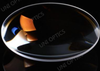
from UNI OPTICS(Fujian) Co., Ltd
The Positive Meniscus Lenses are a convex-concave lens, but it is thicker at the center than at the edges. They are felt polished and are used universally in the ophthalmic industry where convention dictates that lens power be specified in Diopters. The Negative Meniscus Lenses are a convex-concave... [See More]
- Lens Form: Convex-Convex
- Materials: Ultra-violet grade Fused Silica
- Diameter: 25.4
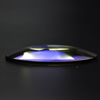
from ECOPTIK (CHANGCHUN) LTD
Plano-convex lenses are positive focal length elements that have one spherical surface and one flat surface. These lenses are designed for infinite conjugate (parallel light) use or simple imaging in non-critical applications. These optic lenses are ideal for all-purpose focusing elements. [See More]
- Lens Form: Convex-Convex
- Materials: Sapphire; Optical Glass, Fused Silica
- Diameter: 2 to 300
- Surface Quality: 10-5 Scratch / Dig; 20-10 Scratch / Dig; 60-40 Scratch / Dig; 80-50 Scratch / Dig

from Qioptiq
Precision lenses for use at infinite object distance. Spherical (aperture-dependent) aberration minimized. N-BK7 lenses with ARB2 coating. Broadband anti-reflection coating ARB2 for the visible spectral range (R < 0.5 % for λ = 450-700 nm on lenses made of N-BK7). Tolerances: Focal length... [See More]
- Lens Form: Convex-Convex
- Focal Length: 4 to 150
- Lens Application: Visible
- Diameter: 31.5 to 55
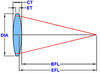
from Ross Optical Industries
Bi-convex lenses have a positive focal length. Our catalog bi-convex lenses have an identical curvature on both sides of the lens and are therefore symmetric. At unit conjugation, coma and distortion cancel out due to the symmetry. They can be used to focus incoming light. [See More]
- Lens Form: Convex-Convex
- Focal Length: 6
- Lens Application: Infrared (optional feature); Visible; Ultraviolet (optional feature)
- Diameter: 6

from Qioptiq
Precision designed for 1:1 imaging. Surfaces uncoated. Centering accuracy: better than 4'. Our singlets are also available with the following coatings: VIS range (ARB2: R < 0.5 % per surface, AOI = 0 °, λ = 450 - 700 nm). NIR range (ARB2: R < 0.5 % per surface, AOI = 0 °,... [See More]
- Lens Form: Convex-Convex
- Focal Length: 5 to 500
- Lens Application: Infrared; Visible
- Diameter: 6 to 50
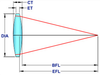
from Ross Optical Industries
Similar to standard Bi-Convex Lenses but smaller in diameter, these micro Bi-Convex Lenses are ideal for low conjugate ratios systems. Used for converging light beams. [See More]
- Lens Form: Convex-Convex
- Focal Length: 3
- Lens Application: Infrared (optional feature); Visible; Ultraviolet (optional feature)
- Diameter: 3

from Ross Optical Industries
Our catalog Laser Achromats are designed primarily for a diode laser with an 830nm wavelength. They perform well through the near-infrared spectrum. They have been corrected for spherical aberration, coma and astigmatism. They are intended to be used for diode beam manipulation. [See More]
- Lens Form: Convex-Convex
- Focal Length: 10
- Lens Application: Infrared; Visible (optional feature); Ultraviolet (optional feature)
- Diameter: 5

from Ross Optical Industries
The Steinheil triplets are made of a low index crown element cemented in between two identical meniscus flint elements. Specially designed for 1:1 conjugation, they perform well for conjugate ratios up to 5. These lenses make good relay optics for both on- and off-axis application and are often used... [See More]
- Lens Form: Convex-Convex
- Focal Length: 7.5
- Lens Application: Infrared (optional feature); Visible; Ultraviolet (optional feature)
- Diameter: 6.5