
Ultraviolet Spherical Lenses
Description
Ultraviolet spherical lenses are optical components designed to focus or disperse ultraviolet (UV) light. These lenses are crafted from materials that can transmit UV light effectively, allowing them to manipulate light within the ultraviolet spectrum, which ranges from 4 to 380 nm .
Working Principle
Ultraviolet spherical lenses work by refracting UV light through their curved surfaces. The materials used in these lenses, such as fused silica and various fluorides, have specific refractive indices that allow them to bend UV light efficiently. Due to the shorter wavelength of UV light compared to visible light, these lenses require precise manufacturing to maintain optical performance. The lenses often need to be nitrogen purged to prevent moisture damage, as some materials used are hygroscopic . Additionally, UV lenses may incorporate designs to correct chromatic aberration, which is more challenging due to the limited selection of UV optical materials and their low dispersion coefficients .
Applications
Ultraviolet spherical lenses have a wide range of applications, particularly in fields that require precise UV light manipulation. They are used in ultraviolet astronomy to observe celestial phenomena that emit UV radiation. In sky communications, these lenses help in transmitting and receiving UV signals. They are also employed in fire monitoring systems to detect UV emissions from flames and in environmental monitoring to analyze UV radiation levels. Furthermore, they play a role in military early warning systems, where detecting UV signatures can be crucial .
Advantages over other Spherical Lenses
Ultraviolet spherical lenses are specifically designed to handle the challenges of UV light, which general visible light lenses cannot efficiently manage due to natural absorption bands in the UV region. These lenses use special UV optical materials that allow for better transmission and manipulation of UV light, making them superior in applications requiring UV light handling .
Limitations
One of the primary limitations of ultraviolet spherical lenses is the difficulty in manufacturing due to the limited number of viable optical materials. Many of these materials, such as fluorides, are hygroscopic and require careful handling and assembly. The low refractive index of UV optical materials can lead to increased lens thickness, reducing the transmittance of the optical system. Additionally, the correction of chromatic aberration is more challenging due to the small dispersion coefficients of available materials .
Considerations
When considering ultraviolet spherical lenses, it is important to account for the initial costs associated with the specialized materials required for UV transmission. Operating expenses may include maintenance of nitrogen purging systems to prevent moisture damage. The durability of these lenses can be affected by the hygroscopic nature of some materials, necessitating careful handling and storage. Accuracy in UV light manipulation is highly dependent on the precision of lens manufacturing and assembly. Replacement and maintenance costs can be significant due to the specialized nature of the materials and the potential need for frequent maintenance to ensure optimal performance .

from Fairfield Crystal Technology, LLC.
OPTICAL COMPONENT MANUFACTURING. Fairfield Crystal provides component manufacturing for your most challenging designs and applications. Combined with our expertise in crystal growth our component fabrication team is able to manufacture highly polished single crystal lenses, prisms, wedges,... [See More]
- Lens Application: Infrared; Visible; Ultraviolet
- Surface Quality: 10-5 Scratch / Dig; 20-10 Scratch / Dig; 40-20 Scratch / Dig; 60-40 Scratch / Dig; 80-50 Scratch / Dig
- Materials: Calcium Fluoride; Zinc Selenide
- Surface Flatness: λ/2; λ/4; λ/5; λ/8; λ/10; λ/20

from Thorlabs, Inc.
At Thorlabs, we constantly reinforce our desire to serve at the pleasure of our customers. From this comes our desire to be connected to our industry in a way that far exceeds what would typically be expected of a vendor. Thorlabs lives this core principle by seeking to enhance, at every turn, the... [See More]
- Lens Application: Infrared; Visible; Ultraviolet
- Focal Length: -1000 to 750
- Lens Form: Plano-Convex; Plano-Concave; Convex-Convex; Concave-Concave
- Diameter: 5 to 75

from Changchun Sunday Optics Co., Ltd.
Cylindrical lenses are generally used to focus incoming light onto a line or to change the aspect ratio of an image.They are usually linear and control the direction of the light beam.A cylindrical lens has a cylindrical surface that enables incident light to focus on a dimension and stretch the... [See More]
- Lens Application: Infrared; Ultraviolet
- Materials: Germanium; Sapphire; Optical glass, UVFS, Germanium, Silicon, CaF2, MgF2, ZnSe ZnS, Sapphire
- Lens Form: Plano-Convex; Plano-Concave
- Surface Quality: 10-5 Scratch / Dig

from Rainbow Research Optics, Inc.
Your One-Stop Source for Spherical Lenses. From prototype to production, Rainbow Research Optics, Inc (RROI) designs, manufactures and coats spherical lenses. Spherical lenses are one of the most basic optical components to produce. With complete in-house capabilities, RROI is able to offer... [See More]
- Lens Application: Infrared; Visible; Ultraviolet
- Diameter: 3 to 406
- Lens Form: Convex-Convex (optional feature); Concave-Concave (optional feature)
- Materials: BK7 Glass; SF11 Glass; Calcium Fluoride; Ultra-violet grade Fused Silica; VUV grade MgF2; IR grade CaF2; VUV grade CaF2

from Zygo Corporation
ZYGO's Optics business segment manufactures precision spheres and lenses ranging in diameter from 50 mm to 200 mm with radii from 12.7 mm to 8 meters. Our standard product line of transmission spheres is available in 4" and 6" clear apertures ranging in f-numbers from f/.65 to f/11 with wavefront... [See More]
- Lens Application: Infrared; Visible; Ultraviolet
- Radius of Curvature: 12.7 to 8000
- Diameter: 50 to 200
- Surface Flatness: λ/10; λ/20
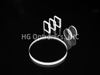
from HG Optronics, Inc.
A Plano-Convex lens causes light to focus to a point,it has a positive focal length,which is ideal for light collimation or for focusing applications utilizing monochromatic illumination, in a range of industries. HG OPTRONICS offers Plano-Convexlenses with a variety of coating options. 1.1. What is... [See More]
- Lens Application: Ultraviolet
- Focal Length: 8 to 250
- Lens Form: Plano-Convex
- Diameter: 6 to 25.4
from Edmund Optics Inc.
12.7 and 25.4mm size lenses discounted 30% from original list prices. 50.8mm size lenses discounted 50% from original list prices. These high performance optical elements are manufactured utilizing state of the art CNC equipment. Zygos GPI-XP Interferometer is used to assure the surface accuracy and... [See More]
- Lens Application: Visible; Ultraviolet
- Focal Length: 12
- Lens Form: Convex-Convex
- Diameter: 12

from Shanghai Optics
A Ball Lens consists of a highly transparent spherical ball, usually made of solid glass (fused silica) or another optical material with index of refraction less than 2. Most ball lenses are made with small diameters – a few millimeters or even less than a millimeter. The optical physics can... [See More]
- Lens Application: Visible; Ultraviolet
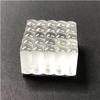
from Changchun Sunday Optics Co., Ltd.
A plano-concave lens is machined from a plane and a concave sphere.It has a negative focal length, which makes it widely used.In optical system, it is used for beam expansion, projection ray and extension of optical system focal length.Plane-concave lenses can diverge a collimating beam into a... [See More]
- Lens Application: Infrared; Ultraviolet
- Materials: H-K9L (Customization)
- Lens Form: Plano-Convex; Plano-Concave
- Surface Quality: 20-10 Scratch / Dig
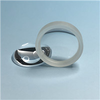
from Changchun Sunday Optics Co., Ltd.
The roles of aspheric is to Simplify the system structure, shorten the tube length, reduce the weight of the system, improve the imaging quality, and make the optical system extend to the infrared and ultraviolet bands.With the development, , the cost of aspheric surface processing has been... [See More]
- Lens Application: Infrared; Ultraviolet
- Materials: Germanium; Sapphire; Optical glass, UVFS, Germanium, Silicon, CaF2, MgF2, ZnSe ZnS, Sapphire
- Lens Form: Plano-Concave
- Surface Quality: 10-5 Scratch / Dig
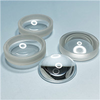
from Changchun Sunday Optics Co., Ltd.
The roles of aspheric is to Simplify the system structure, shorten the tube length, reduce the weight of the system, improve the imaging quality, and make the optical system extend to the infrared and ultraviolet bands.With the development, , the cost of aspheric surface processing has been... [See More]
- Lens Application: Infrared; Ultraviolet
- Materials: Germanium; Sapphire; Optical glass, UVFS, Germanium, Silicon, CaF2, MgF2, ZnSe ZnS, Sapphire
- Lens Form: Plano-Concave
- Surface Quality: 10-5 Scratch / Dig
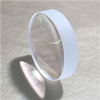
from Changchun Sunday Optics Co., Ltd.
The roles of aspheric is to Simplify the system structure, shorten the tube length, reduce the weight of the system, improve the imaging quality, and make the optical system extend to the infrared and ultraviolet bands.With the development, , the cost of aspheric surface processing has been... [See More]
- Lens Application: Infrared; Ultraviolet
- Materials: Polycrystal CaF2, Singlecrystal CaF2
- Lens Form: Plano-Convex
- Surface Quality: 60-40 Scratch / Dig
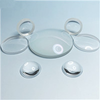
from Changchun Sunday Optics Co., Ltd.
The roles of aspheric is to Simplify the system structure, shorten the tube length, reduce the weight of the system, improve the imaging quality, and make the optical system extend to the infrared and ultraviolet bands.With the development, , the cost of aspheric surface processing has been... [See More]
- Lens Application: Infrared; Ultraviolet
- Materials: Germanium; Sapphire; Optical glass, UVFS, Germanium, Silicon, CaF2, MgF2, ZnSe ZnS, Sapphire
- Lens Form: Plano-Convex
- Surface Quality: 10-5 Scratch / Dig