
Infrared Spherical Lenses
Description
Infrared spherical lenses are specialized optical components designed to capture and focus infrared radiation. These lenses are crafted from materials such as germanium, zinc selenide, and chalcogenide glasses, which are transparent to infrared radiation. Their primary function is to facilitate the detection and analysis of thermal energy emitted by objects, enabling the capture of infrared images that are not visible to the human eye.
Working Principle
Infrared spherical lenses operate by focusing infrared radiation onto a sensor, similar to how a camera lens focuses visible light onto a camera sensor. The materials used in these lenses are specifically chosen for their ability to transmit infrared wavelengths, allowing the lenses to capture thermal emissions effectively. This capability is crucial for applications where detecting temperature variations and thermal emissions is necessary. The lenses are designed to minimize energy attenuation and maintain image clarity, even in challenging conditions such as fog or rain, where infrared wavelengths can penetrate more effectively than visible light.
Applications
Infrared spherical lenses are used in a variety of applications across different industries. In medical instrumentation, they are employed in thermal imaging cameras to detect temperature variations in the human body. In the field of surveillance and security, these lenses are used in night vision equipment to monitor areas in low-light conditions. Additionally, they are utilized by electricians and building inspectors to detect leaks, corrosion, and other structural issues in buildings.
Advantages over other Spherical Lenses
Infrared spherical lenses offer several advantages over traditional spherical lenses. They are capable of capturing images in low-light conditions, which is particularly useful in security and surveillance applications. The focus of these lenses is consistent with visible light, ensuring clearer images. Furthermore, infrared lenses have higher penetration rates, making them suitable for use in environments with smoke, dust, and fumes. They are also less sensitive to moderate vibrations, enhancing their durability and reliability in various applications.
Limitations
One of the primary limitations of infrared spherical lenses is the cost associated with the materials used in their construction. Materials like germanium and zinc selenide are more expensive than ordinary glass, which can increase the overall cost of the lenses. Additionally, the complexity of manufacturing these lenses can also contribute to higher production costs.
Considerations
When considering the use of infrared spherical lenses, it is important to account for the initial costs and operating expenses associated with these components. The specialized materials and manufacturing processes can lead to higher upfront costs. However, the reduction in the number of components needed in an optical system can offset some of these expenses by lowering system complexity and weight. Durability and accuracy are generally high, but regular maintenance and potential replacement costs should be factored into the overall cost of ownership.

from Intrinsic Crystal Technology Co., Ltd. (ICC)
ICC spherical technology includes PITECH, high speed and CNC method, which can meet the requirements of small quantity for precision control, and large quantity for cost. All processes are completed in the factory. Our spherical lenses are widely used in a variety of industrial and detection camera,... [See More]
- Lens Application: Infrared; Visible
- Materials: BK7 Glass; Calcium Fluoride; Germanium; Zinc Selenide; BAF2, Silicon
- Lens Form: Plano-Convex; Plano-Concave; Convex-Convex; Concave-Concave

from Ross Optical Industries
Our catalog Laser Achromats are designed primarily for a diode laser with an 830nm wavelength. They perform well through the near-infrared spectrum. They have been corrected for spherical aberration, coma and astigmatism. They are intended to be used for diode beam manipulation. [See More]
- Lens Application: Infrared; Visible (optional feature); Ultraviolet (optional feature)
- Focal Length: 10
- Lens Form: Convex-Convex
- Diameter: 5
from Edmund Optics Inc.
AR Coated to Provide <0.7% Reflectance per Surface for 750 - 1550nm. Double-Concave Lenses Have Two Inward Curved Surfaces and a Negative Focal Length. Used for Image Reduction and to Spread Light. Double-Concave (DCV) Lenses have two inward curved surfaces and a negative focal length. They are... [See More]
- Lens Application: Infrared
- Focal Length: -12
- Lens Form: Concave-Concave
- Diameter: 12

from Zygo Corporation
ZYGO's Optics business segment manufactures precision spheres and lenses ranging in diameter from 50 mm to 200 mm with radii from 12.7 mm to 8 meters. Our standard product line of transmission spheres is available in 4" and 6" clear apertures ranging in f-numbers from f/.65 to f/11 with wavefront... [See More]
- Lens Application: Infrared; Visible; Ultraviolet
- Radius of Curvature: 12.7 to 8000
- Diameter: 50 to 200
- Surface Flatness: λ/10; λ/20

from Fairfield Crystal Technology, LLC.
OPTICAL COMPONENT MANUFACTURING. Fairfield Crystal provides component manufacturing for your most challenging designs and applications. Combined with our expertise in crystal growth our component fabrication team is able to manufacture highly polished single crystal lenses, prisms, wedges,... [See More]
- Lens Application: Infrared; Visible; Ultraviolet
- Surface Quality: 10-5 Scratch / Dig; 20-10 Scratch / Dig; 40-20 Scratch / Dig; 60-40 Scratch / Dig; 80-50 Scratch / Dig
- Materials: Calcium Fluoride; Zinc Selenide
- Surface Flatness: λ/2; λ/4; λ/5; λ/8; λ/10; λ/20

from Shanghai Optics
Si Spherical lens and lens assemblies are available from Shanghai Optics in a wide range of specifications. These lenses are designed to to meet applicationsfrom microscopy to laser processing and medical research to defense. Spherical lenses include both converging lenses such as plano-convex and... [See More]
- Lens Application: Infrared; Ultraviolet
- Materials: Si Spherical Lens
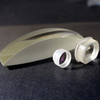
from Changchun Sunday Optics Co., Ltd.
The H-K9L double concave lens has excellent transmittance from visible to near infrared (350-2000nm).H-K9L (N-BK7) is a commonly used optical glass for the preparation of high-quality optical elements. When the additional advantages of UV melting quartz (good transmittance and low thermal expansion... [See More]
- Lens Application: Infrared; Visible
- Materials: Germanium; Sapphire; Optical glass, UVFS, Germanium, Silicon, CaF2, MgF2, ZnSe ZnS, Sapphire
- Lens Form: Plano-Convex; Plano-Concave
- Surface Quality: 10-5 Scratch / Dig

from Axetris AG
Axetris Shack-Hartmann lens arrays are the heart of Shack-Hartmann wavefront-sensors. These micro-lens arrays are available in a variety of focal lengths. Features. Applications. Diffraction limited spot size. Superior surface quality. Low surface roughness and low stray light. Long focal lengths. [See More]
- Lens Application: Infrared
- Center Thickness: 1.6
- Diameter: 10
- Edge Thickness: 1.6

from Rainbow Research Optics, Inc.
Your One-Stop Source for Spherical Lenses. From prototype to production, Rainbow Research Optics, Inc (RROI) designs, manufactures and coats spherical lenses. Spherical lenses are one of the most basic optical components to produce. With complete in-house capabilities, RROI is able to offer... [See More]
- Lens Application: Infrared; Visible; Ultraviolet
- Diameter: 3 to 406
- Lens Form: Convex-Convex (optional feature); Concave-Concave (optional feature)
- Materials: BK7 Glass; SF11 Glass; Calcium Fluoride; Ultra-violet grade Fused Silica; VUV grade MgF2; IR grade CaF2; VUV grade CaF2

from ProPhotonix, Ltd.
The optical components department of Helvoet Rubber & Plastic Technologies NV manufactures injection molded lenses, mirrors, polygons, with or without reflective coatings, with extreme accuracy for barcode scanning and sensor module applications. High accuracy off-the-shelf lenses (spherical and... [See More]
- Lens Application: Infrared; Visible
- Materials: BK7 Glass; Acrylic; Polycarbonate; CCD
- Lens Form: Plano-Convex

from Thorlabs, Inc.
At Thorlabs, we constantly reinforce our desire to serve at the pleasure of our customers. From this comes our desire to be connected to our industry in a way that far exceeds what would typically be expected of a vendor. Thorlabs lives this core principle by seeking to enhance, at every turn, the... [See More]
- Lens Application: Infrared; Visible; Ultraviolet
- Focal Length: -1000 to 750
- Lens Form: Plano-Convex; Plano-Concave; Convex-Convex; Concave-Concave
- Diameter: 5 to 75

from HG Optronics, Inc.
The Positive Meniscus Lenses are a convex-concave lens, but it is thicker at the center than at the edges. They are felt polished and are used universally in the ophthalmic industry where convention dictates that lens power be specified in Diopters. The Negative Meniscus Lenses are a convex-concave... [See More]
- Lens Application: Infrared
- Focal Length: -600 to 100
- Lens Form: convex-concave
- Diameter: 25.4

from Qioptiq
Compact optics and short setting time: EL-10-30 allows for that due to its electrically tunable focal range. Within 10 ms, the radius of this plano-convex lens can be changed by applying a voltage between 0 and 5 V. The lens can be operated with commercial power supplies allowing for current... [See More]
- Lens Application: Infrared; Visible
- Focal Length: -600 to 200
- Lens Form: Plano-Convex
- Diameter: 12 to 12.7

from Changchun Sunday Optics Co., Ltd.
Cylindrical lenses are generally used to focus incoming light onto a line or to change the aspect ratio of an image.They are usually linear and control the direction of the light beam.A cylindrical lens has a cylindrical surface that enables incident light to focus on a dimension and stretch the... [See More]
- Lens Application: Infrared; Ultraviolet
- Materials: Germanium; Sapphire; Optical glass, UVFS, Germanium, Silicon, CaF2, MgF2, ZnSe ZnS, Sapphire
- Lens Form: Plano-Convex; Plano-Concave
- Surface Quality: 10-5 Scratch / Dig

from Qioptiq
An infinite number of lenses in just one lens: ML-20-35 is a shape-changing polymer lens. The spherical curvature of this lens with an aperture of 20 mm can be changed manually by rotating an adjustment ring. The focal length can be changed from positive (plano-convex) to infinity (flat) to negative... [See More]
- Lens Application: Infrared; Visible
- Focal Length: -600 to 200
- Lens Form: Plano-Convex; Plano-Concave
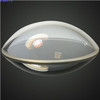
from Changchun Sunday Optics Co., Ltd.
The H-K9L Bi convex lens has excellent transmittance from visible to near infrared (350-2000nm) and is commonly used in limited imaging applications.H-K9L(N-BK7) is a commonly used optical glass for the preparation of high-quality optical elements. When the additional advantages of UV melting quartz... [See More]
- Lens Application: Infrared; Visible
- Materials: Sapphire; H-K9L, JGS1, Sapphire
- Lens Form: Plano-Convex
- Surface Quality: 60-40 Scratch / Dig

from Qioptiq
Mounted lenses fit to Microbench m or Nanobench n. Surfaces uncoated. Tolerances: Focal length f' : ± 2 %, Image distance s' : ± 2 %. Our singlets are also available with the following coatings: VIS range (ARB2: R < 0.5 % per surface, AOI = 0 °, λ = 450 - 700 nm). NIR... [See More]
- Lens Application: Infrared; Visible
- Focal Length: -150 to -10
- Lens Form: Plano-Concave
- Diameter: 16 to 25
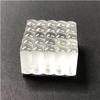
from Changchun Sunday Optics Co., Ltd.
A plano-concave lens is machined from a plane and a concave sphere.It has a negative focal length, which makes it widely used.In optical system, it is used for beam expansion, projection ray and extension of optical system focal length.Plane-concave lenses can diverge a collimating beam into a... [See More]
- Lens Application: Infrared; Ultraviolet
- Materials: H-K9L (Customization)
- Lens Form: Plano-Convex; Plano-Concave
- Surface Quality: 20-10 Scratch / Dig

from Qioptiq
Uncoated. Suitable for DUV applications. Substrate for dielectric or metallic coatings. Extreme low scattering losses. High surface quality. Tolerances: Focal length f' : ± 2 %, Image distance s' : ± 2 %. Surface quality: λ/10 for concave surfaces, λ/4 for flat... [See More]
- Lens Application: Infrared; Visible
- Focal Length: -1400 to -10
- Lens Form: Plano-Convex
- Diameter: 6 to 25.4
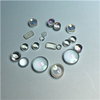
from Changchun Sunday Optics Co., Ltd.
Spherical Positive Mensicus Lens. H-K9L Positive Meniscus Lens has excellent transmittance from visible to near infrared (350-2000nm).H-K9L (N-BK7) is a commonly used optical glass for the preparation of high-quality optical elements. When the additional advantages of UV melting quartz (good... [See More]
- Lens Application: Infrared; Visible
- Materials: Germanium; Sapphire; Optical glass, UVFS, Germanium, Silicon, CaF2, MgF2, ZnSe ZnS, Sapphire
- Lens Form: Plano-Convex; Plano-Concave
- Surface Quality: 10-5 Scratch / Dig

from Qioptiq
Mounted or unmounted. In mount fitting to Microbench m. Surfaces uncoated. Tolerances: Focal length f' : ± 5 %, Image distance s' : ± 5 %. Our singlets are also available with the following coatings: VIS range (ARB2: R < 0.5 % per surface, AOI = 0 °, λ = 450 - 700 nm). [See More]
- Lens Application: Infrared; Visible
- Focal Length: 5 to 156
- Lens Form: Plano-Convex
- Diameter: 12.5 to 22.4
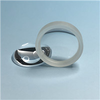
from Changchun Sunday Optics Co., Ltd.
The roles of aspheric is to Simplify the system structure, shorten the tube length, reduce the weight of the system, improve the imaging quality, and make the optical system extend to the infrared and ultraviolet bands.With the development, , the cost of aspheric surface processing has been... [See More]
- Lens Application: Infrared; Ultraviolet
- Materials: Germanium; Sapphire; Optical glass, UVFS, Germanium, Silicon, CaF2, MgF2, ZnSe ZnS, Sapphire
- Lens Form: Plano-Concave
- Surface Quality: 10-5 Scratch / Dig

from Qioptiq
Suitable for DUV-applications. Two equal radii of curvature. Surfaces uncoated. Tolerances: Focal length f' : ± 2 %, Image distance s' : ± 2 %. Our singlets are also available with the following coatings: VIS range (ARB2: R < 0.5 % per surface, AOI = 0 °, λ = 450 - 700... [See More]
- Lens Application: Infrared; Visible
- Focal Length: -150 to -20
- Lens Form: Concave-Concave
- Diameter: 22.4
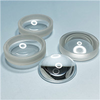
from Changchun Sunday Optics Co., Ltd.
The roles of aspheric is to Simplify the system structure, shorten the tube length, reduce the weight of the system, improve the imaging quality, and make the optical system extend to the infrared and ultraviolet bands.With the development, , the cost of aspheric surface processing has been... [See More]
- Lens Application: Infrared; Ultraviolet
- Materials: Germanium; Sapphire; Optical glass, UVFS, Germanium, Silicon, CaF2, MgF2, ZnSe ZnS, Sapphire
- Lens Form: Plano-Concave
- Surface Quality: 10-5 Scratch / Dig
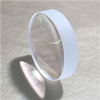
from Changchun Sunday Optics Co., Ltd.
The roles of aspheric is to Simplify the system structure, shorten the tube length, reduce the weight of the system, improve the imaging quality, and make the optical system extend to the infrared and ultraviolet bands.With the development, , the cost of aspheric surface processing has been... [See More]
- Lens Application: Infrared; Ultraviolet
- Materials: Polycrystal CaF2, Singlecrystal CaF2
- Lens Form: Plano-Convex
- Surface Quality: 60-40 Scratch / Dig
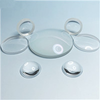
from Changchun Sunday Optics Co., Ltd.
The roles of aspheric is to Simplify the system structure, shorten the tube length, reduce the weight of the system, improve the imaging quality, and make the optical system extend to the infrared and ultraviolet bands.With the development, , the cost of aspheric surface processing has been... [See More]
- Lens Application: Infrared; Ultraviolet
- Materials: Germanium; Sapphire; Optical glass, UVFS, Germanium, Silicon, CaF2, MgF2, ZnSe ZnS, Sapphire
- Lens Form: Plano-Convex
- Surface Quality: 10-5 Scratch / Dig