
Butene Industrial Gases
Description
Butene, also known as butylene, is a hydrocarbon gas with the chemical formula C4H8. It exists in three isomeric forms: 1-butene, cis-2-butene, and trans-2-butene. These isomers are typically obtained from the olefinic C4 fraction of catalytic cracking and steam cracking processes. Butene is primarily used in the production of synthetic rubbers and as a precursor for various chemicals and polymers.
Working Principle
Butene works by undergoing chemical reactions that transform it into valuable compounds. The mixture of n-butenes can be oxidized to produce different products depending on the reaction conditions and catalysts used. For example, 1-butene is often used as a comonomer with ethylene to produce linear low-density polyethylene (LLDPE). The ability of butene to participate in such reactions makes it a versatile and useful industrial gas.
Applications
Butene is extensively used in the chemical industry for the production of synthetic rubbers. It serves as a key component in the manufacture of polymers such as polybutadiene and is also used in the synthesis of chemicals like methyl-ter-butyl ether and butylene oxide. Approximately 70% of 1-butene is used in the production of LLDPE, a type of polyethylene that is widely used in packaging materials.
Advantages over other Industrial Gases
One of the advantages of butene over other industrial gases is its ability to produce a wide range of valuable chemicals and polymers. Its isomeric forms allow for flexibility in chemical reactions, making it a preferred choice for producing specific compounds like LLDPE. Additionally, butene's role as a precursor in synthetic rubber production highlights its importance in industries that require durable and elastic materials.
Limitations
Butene, like other hydrocarbons, is highly flammable and requires careful handling to prevent accidents. Its flammable nature poses safety risks, particularly in environments where ignition sources are present. Additionally, the separation of its isomers can be a complex process, which may add to production costs and complexity.
Considerations
When considering the use of butene, it is important to account for initial costs associated with its production and separation processes. Operating expenses may include safety measures to handle its flammable properties. The durability and accuracy of butene in chemical reactions depend on the purity of the gas and the specific conditions under which it is used. Replacement and maintenance costs can vary based on the equipment used for its storage and handling, as well as the need for regular safety inspections to ensure compliance with industry standards.

from Kin-Tek Laboratories Inc.
Used for generating moderate concentrations of low vapor pressure compounds such as C2H5SH, benzene, and water, and for generating high concentration mixtues of SO2, CH,3SH and other moderate vapor pressure compounds. Typical emission rate is 1 to 10 ppm, depending on the compound and the operating... [See More]
- Industrial Gases: Butene; 1-Butene
- Composition: Pure
- Application / Function: Calibration Gas / Gas Standard; Laboratory / Analytical
- Product Form: Liquid

from Linde North America, Inc.
Constant monitoring through various analytical procedures ensures that the pure gases you receive meet the minimum purity levels specified by Linde, and of course your exact specifications. In addition to our standard catalogue products, many gases of higher purity are available on special order. [See More]
- Industrial Gases: Butene
- Concentration: 99 to 99.9
- Composition: Pure
- Product Form: Bulk Gaseous; Liquid

from Kin-Tek Laboratories Inc.
Generate moderate concentrations of low vapor pressure compounds such as acrylonitrile, benzene, styrene, etc. and high concentrations of SO2, CH3SH and other moderate vapor compounds. [See More]
- Industrial Gases: Butene; 1-Butene
- Composition: Pure
- Application / Function: Calibration Gas / Gas Standard; Laboratory / Analytical
- Product Form: Liquid

from Kin-Tek Laboratories Inc.
Generate moderate concentrations of high vapor pressure compounds such as SO2, H2S, NH3, Cl2, etc. and very low concentrations of low vapor pressure compounds such as carbon disulfide, methylene chloride, nitric acid, etc. [See More]
- Industrial Gases: Butene; cis-2-Butene
- Composition: Pure
- Application / Function: Calibration Gas / Gas Standard; Laboratory / Analytical
- Product Form: Liquid

from Kin-Tek Laboratories Inc.
Generates high concentration mixtures of high vapor pressure gases CO, CO2, NO, N2O, CH4, etc. Typical concentrations: 10 ppm to over 1,000 ppm. Tube dimensions: 1 ¾ inches diameter by 6 inches long [See More]
- Industrial Gases: Butene; cis-2-Butene
- Composition: Pure
- Application / Function: Calibration Gas / Gas Standard; Laboratory / Analytical
- Product Form: Bulk Gaseous
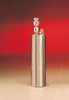
from Kin-Tek Laboratories Inc.
Generates low concentration gas standards of high vapor pressure gases such as CO, CO2, NO, CH4 etc. Typical concentrations: ppb to 10 ppm. Tube dimensions: 1 ¾ inches diameter by 6 inches long [See More]
- Industrial Gases: Butene; 1-Butene
- Composition: Pure
- Application / Function: Calibration Gas / Gas Standard; Laboratory / Analytical
- Product Form: Bulk Gaseous
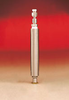
from Kin-Tek Laboratories Inc.
Generates extremely low concentration mixtures of Cl2, NO2, COCl2, SO2, H2S. Features long life for service in remote areas where the use of disposable permeation tubes is impractical. Tube dimensions: 1 inch diameter by 6 inches long. [See More]
- Industrial Gases: Butene; 1-Butene
- Composition: Pure
- Application / Function: Calibration Gas / Gas Standard; Laboratory / Analytical
- Product Form: Liquid