
Measures Level Gas Flow Meters
Last Updated: April 1, 2025
Description
Measures Level Gas Flow Meters are devices designed to quantify the flow rate of gas within a system. They provide critical data on the volume of gas passing through a conduit over a specified period, ensuring that systems operate efficiently and safely.
Working Principle
Gas flow meters operate based on various measurement principles, each suited to different applications and conditions. Some common types include thermal dispersion, differential pressure, and Coriolis meters. Thermal dispersion meters, for example, measure the heat loss from a heated element to the flowing gas, which correlates to the flow rate. These meters are particularly useful because they can provide accurate measurements over a wide range of flow conditions and are capable of handling both low and high flow rates with precision .
Applications
Gas flow meters are widely used in industries such as electric power plants and oil/gas refineries. In these settings, they are essential for measuring air and gas flow in turbines and compressors, ensuring optimal performance and safety compliance. They are also used in the semiconductor industry, where precise gas flow measurement is critical for manufacturing processes .
Advantages over other Electrical Products
Gas flow meters, particularly those without moving parts, offer advantages over other electrical measurement devices. For instance, they are less prone to mechanical wear and can handle dirty or contaminated gases better than meters with moving parts. This makes them more reliable and reduces maintenance needs in harsh environments .
Limitations
Despite their advantages, gas flow meters can face challenges such as compatibility with the size of the installation space and the need for hazardous area approvals in certain applications. Additionally, they may require careful calibration and installation to ensure accurate measurements .
Considerations
When selecting a gas flow meter, several factors should be considered. Initial costs can vary significantly depending on the technology and specifications required. Operating expenses may include calibration and maintenance, which are crucial for ensuring long-term accuracy and reliability. Durability is another important factor, as meters exposed to harsh conditions may require more frequent replacement or maintenance. Accuracy is paramount, especially in applications where precise measurements are critical for safety and efficiency .

from Sierra Instruments, Inc.
Overview. The InnovaSwitch insertion-type level switch is a high-performance, industrial-grade liquid level indicator for tanks and process vessels. This product switches on level changes as small as 0.03 inch (0.8 mm) on dry-to-wet and wet-to-dry occurrences in a tank or vessel. The instrument was... [See More]
- Additional Variables Measured: Level
- Mounting: Insertion
- Meter Technology: Thermal
- End Fittings: In-line Threaded

from OMEGA Engineering, Inc.
The FSW-6000/7000 Series are thermal flow switch monitors designed to monitor flow status and also used to detect level of liquids, air and gas. A chain of 8 LED ’s gives the user a visual indication of the flow rate. In addition, there isalso a dichromatic LED, which shows the switch point... [See More]
- Additional Variables Measured: Level
- Pipe Diameter: 0.50 to 0.75
- Meter Technology: Thermal
- Mounting: Insertion
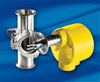
from Fluid Components Intl. (FCI)
The FLT93C insertion and inline type FlexSwitches for sanitary flow, level and temperature monitoring represents the first true technological breakthrough in thermal technology in over a decade. This product is specifically designed for sanitary 3A process applications. FCI is the only thermal... [See More]
- Additional Variables Measured: Temperature; Level
- Mounting: Insertion
- Meter Technology: Thermal
- End Fittings: In-line Flanged