
Polyacrylate (ACM) O-rings
Last Updated: April 1, 2025
Description
Polyacrylate (ACM) O-rings are sealing components designed to prevent the leakage of fluids or gases between two or more parts. They are made from polyacrylate elastomers, which provide a balance between quality and cost. These O-rings are particularly known for their resistance to high temperatures and chemicals, making them suitable for various demanding environments.
Working Principle
Polyacrylate O-rings function by sitting in a groove between two or more components. When compressed, they create a seal that prevents the passage of fluids or gases. The material's resistance to high temperatures and oxidation enhances their sealing capability, especially in environments where hot oils are present. This makes them useful in maintaining the integrity of systems by preventing leaks and contamination.
Applications
Polyacrylate O-rings are commonly used in automotive transmissions and hoses due to their excellent resistance to hot oils and oxidation. They are also employed in shaft seals, gaskets, and other sealing applications where high temperature resistance is required. Their ability to withstand harsh conditions makes them suitable for use in various industrial settings.
Advantages over other Manufacturing - Machine Tool Accessories and Components
Compared to other materials like Viton, polyacrylate O-rings offer a cost-effective alternative while still providing good performance in high-temperature environments. They are a great substitute for more expensive high-temperature resistant materials, offering a balance between performance and cost.
Limitations
Polyacrylate O-rings have poor water compatibility and cold flexibility, which can limit their use in environments where these factors are critical. Additionally, they may not perform as well as other materials like Viton in extremely high-temperature applications.
Considerations
When considering polyacrylate O-rings, it is important to evaluate the initial costs and operating expenses. While they offer a cost-effective solution, their limitations in water compatibility and cold flexibility should be taken into account. Durability and maintenance costs are generally favorable, but the specific application environment will dictate the overall cost-effectiveness and longevity of the O-rings.
from Western Rubber & Supply, Inc.
AS-568 o-ring size must be specified when ordering [See More]
- Synthetic Rubbers: Polyacrylate (ACM)
- O-ring Hardness (Durometer): 70 durometer
- O-ring Size: Available in all 'AS568A-' standard sizes (001-475)
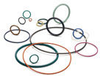
from Parker Hannifin / Seal Group
O-rings are circular sealing elements with circular cross-sections, and are mainly used in static applications. The sizes are specified by the inside diameter and the cross section diameter. Our O-rings are manufactured according to metric and imperial international standards such as AS 568B, DIN... [See More]
- Synthetic Rubbers: Butyl Rubber (IIR); Ethylene propylene rubber (EPR, EPDM, EP, EPT); Fluoroelastomer (FKM); Fluorosilicone (FVMQ, FMQ, FPM, FSI); Nitrile Rubber (NBR, HNBR, HSN ); Perfluoroelastomer (FFKM, FFPM); Polyacrylate (ACM); Polychloroprene (CR - Neoprene)
- Cross-section: 0.0400 to 0.2750
- Inside Diameter (ID): 0.0290 to 26
- O-ring Hardness (Durometer): 40 durometer; 50 durometer; 60 durometer; 65 durometer; 70 durometer; 75 durometer; 80 durometer; 85 durometer; 90 durometer; >90 durometer