
Monorail Scale Scales and Balances
Last Updated: April 1, 2025
Description
Monorail scales are specialized weighing devices designed to measure the weight of items as they move along a monorail system. These scales are integrated into the monorail track and provide continuous weight measurements without interrupting the flow of items being transported.
Working Principle
Monorail scales operate by integrating load cells into the monorail track. As items pass over these load cells, the weight is measured based on the deflection or compression of the load cells. This data is then converted into a readable weight measurement. The continuous weighing capability of monorail scales makes them particularly useful in environments where items need to be weighed without stopping the production or transportation process.
Applications
Monorail scales are commonly used in industries where items are transported along a monorail system, such as in meat processing plants where carcasses are moved along a rail for weighing. They are also used in manufacturing and distribution centers where products are transported via monorail systems for packaging and shipping.
Advantages over other Scales and Balances
Monorail scales offer the advantage of in-motion weighing, which allows for continuous measurement without halting the transportation process. This feature is particularly beneficial in high-throughput environments where stopping the line for weighing would be inefficient and costly. Additionally, their integration into existing monorail systems means they can be seamlessly incorporated into production lines without requiring significant modifications.
Limitations
One limitation of monorail scales is that they are specifically designed for use with monorail systems, which means they are not suitable for environments without such infrastructure. Additionally, the accuracy of the weight measurement can be affected by the speed of the items moving along the rail, requiring careful calibration and maintenance to ensure precise readings.
Considerations
When considering the implementation of monorail scales, it is important to evaluate the initial costs of integrating the scales into the existing monorail system. Operating expenses may include regular calibration and maintenance to ensure accuracy and reliability. Durability is a key factor, as the scales must withstand the continuous movement and weight of items. Replacement and maintenance costs should also be considered, as these can impact the long-term cost-effectiveness of the system.

from Fairbanks Scales, Inc.
Fairbanks' Unirail Scale is a self-contained unit that's supported by an existing rail system. The scale is fully assembled and tested at the factory. The installation is simply a matter of cutting the rail, inserting the scale and attaching it to the rail hangers. No additional overhead structural... [See More]
- Type: Monorail Scale
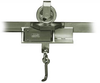
from Meridian Scale
Summary: Portable & Permanent Designs. 8-Inch Live Rail Weighs One Trolly. Zinc Plated Steel Construction. Rail Sizes: 3/8 x 2-1/2 and 1/2 x 2-1/2. [See More]
- Type: Monorail Scale
from Avery Weigh-Tronix
Tough design, reduced downtime, simple installation, static or in-motion [See More]
- Type: Monorail Scale
- Weigh Module Type: Tension
- Capacity: 0.0 to 2000
- Features: Washdown