
Hydraulic Scale Scales and Balances
Last Updated: April 1, 2025
Description
Hydraulic scales and balances are devices used to measure weight by utilizing the principles of fluid mechanics. These scales typically consist of a platform or hook where the object to be weighed is placed, and they provide a weight reading based on the pressure exerted by the object on a hydraulic system.
Working Principle
Hydraulic scales operate on the principle of fluid compression. When an object is placed on the scale, it depresses a piston, which in turn compresses a fluid within the system. This compressed fluid is then used to provide a weight reading, either through a Bourdon tube analog gauge or an electronic sensor. The use of fluid mechanics allows these scales to provide accurate weight measurements, making them useful in various applications where precision is required.
Applications
Hydraulic scales are commonly used in heavy lifting equipment such as cranes. They are also employed in environments where electronic scales might not be suitable due to harsh conditions or where power sources are limited. Specific examples include weighing large industrial components or materials in construction and manufacturing settings.
Advantages over other Scales and Balances
One of the primary advantages of hydraulic scales over other types of scales is their ability to function accurately in environments where electronic scales might fail due to temperature fluctuations or power issues. Additionally, hydraulic scales are less affected by variables such as local gravity, which can impact the accuracy of other scales.
Limitations
Hydraulic scales can be limited by their reliance on fluid systems, which may require regular maintenance to prevent leaks and ensure accuracy. They may also be less portable than electronic scales due to their mechanical components and the need for a stable setup to function correctly.
Considerations
When considering hydraulic scales, it is important to account for initial costs, which may be higher than some electronic scales due to their mechanical complexity. Operating expenses can include maintenance of the hydraulic system to prevent leaks and ensure accuracy. Durability is generally high, but regular checks are necessary to maintain performance. Accuracy can be very high, but it is dependent on the condition of the hydraulic system. Replacement and maintenance costs should be factored into the overall cost of ownership, as these can vary depending on the specific application and environment in which the scale is used.
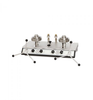
from Transcat, Inc.
Product Highlights. Hydraulic Range 29 to 10000psi. Total measurement uncertainty to 0.008% of differential pressure plus 0.0001% (1ppm) of static pressure. Complete stand-alone system, also suitable for on-site use. High long-term stability with recommended recalibration interval every five years. [See More]
- Type: Hydraulic Scale
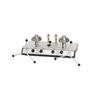
from Transcat, Inc.
Product Highlights. Hydraulic Range 29 to 14500psi. Total measurement uncertainty to 0.008% of differential pressure plus 0.0001% (1ppm) of static pressure. Complete stand-alone system, also suitable for on-site use. High long-term stability with recommended recalibration interval every five years. [See More]
- Type: Hydraulic Scale
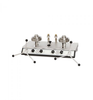
from Transcat, Inc.
Product Highlights. Hydraulic Range 25 to 1600bar. Total measurement uncertainty to 0.008% of differential pressure plus 0.0001% (1ppm) of static pressure. Complete stand-alone system, also suitable for on-site use. High long-term stability with recommended recalibration interval every five years. [See More]
- Type: Hydraulic Scale
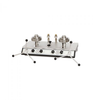
from Transcat, Inc.
Product Highlights. Hydraulic Range 350 to 23,200psi. Total measurement uncertainty to 0.008% of differential pressure plus 0.0001% (1ppm) of static pressure. Complete stand-alone system, also suitable for on-site use. High long-term stability with recommended recalibration interval every five... [See More]
- Type: Hydraulic Scale
from Transcat, Inc.
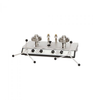
Product Highlights. Hydraulic Range 14.5 to 5000psi. Total measurement uncertainty to 0.008% of differential pressure plus 0.0001% (1ppm) of static pressure. Complete stand-alone system, also suitable for on-site use. High long-term stability with recommended recalibration interval every five years. [See More]
- Type: Hydraulic Scale