
Automated Loading Thin Film Equipment
Description
Automated Loading Thin Film Equipment is designed to facilitate the efficient and precise deposition of thin film layers onto various substrates. This equipment automates the process of loading parts to be processed, ensuring consistent and repeatable results. It is equipped with features such as integral process controllers and metrology capabilities to monitor thin film characteristics during the deposition process.
Working Principle
The working principle of Automated Loading Thin Film Equipment involves several advanced deposition techniques, such as chemical vapor deposition (CVD) and physical vapor deposition (PVD). In CVD, precursor gases are introduced into a chamber where they react with an energy source to form thin film coatings. PVD involves the evaporation or sputtering of atoms from a source, which then condense onto the substrate. The automation of the loading process enhances the efficiency and accuracy of these techniques, making them highly useful for producing uniform thin films with precise thickness control.
Applications
Automated Loading Thin Film Equipment is utilized in a variety of applications, including semiconductor manufacturing, where it is used to deposit materials like silicon and compound semiconductors. It is also employed in the production of flat panel displays, optical coatings, and cutting tools. Additionally, it finds applications in the medical field for creating biocompatible coatings and in research settings for surface analysis.
Advantages over other Thin Film Equipment
One of the primary advantages of Automated Loading Thin Film Equipment is its ability to handle multiple processes simultaneously or sequentially, which increases throughput and reduces processing time. The automation of the loading process minimizes human error and enhances repeatability, leading to higher quality and more consistent thin films compared to manual loading systems.
Limitations
Despite its advantages, Automated Loading Thin Film Equipment may have limitations such as high initial costs and complexity in setup and operation. The equipment requires precise calibration and maintenance to ensure optimal performance, which can be resource-intensive.
Considerations
When considering Automated Loading Thin Film Equipment, it is important to evaluate the initial investment and operating expenses. The equipment's durability and accuracy are critical factors, as they directly impact the quality of the thin films produced. Additionally, replacement and maintenance costs should be considered, as regular upkeep is necessary to maintain the equipment's performance and extend its lifespan.

from Plasma Etch, Inc.
The generous aluminum chamber accommodates a properly sized active processing surface with our standard configurations having as few as 6 or as many as 24 plasma processing levels, each 24 ” by 18. ”. Our oxygen service vacuum pump and booster is equipped with a two point purge system to... [See More]
- Type: Free Standing System
- Applications: Research / Surface Analysis; Printed Circuit Boards
- Process: Plasma Etching and Cleaning
- Materials Processed: Tungsten; Metal; Gallium Arsenide or Compound Semiconductors; Precious Metals
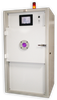
from Plasma Etch, Inc.
Benefits to you are better adhesion or marking, cleaner parts with less labor and reduced chemical expense by eliminating unwelcome and often expensive chemical waste associated with cleaning and priming. The large all aluminum chamber accommodates a generously sized active processing surface, our... [See More]
- Type: Free Standing System
- Applications: Research / Surface Analysis; Printed Circuit Boards
- Process: Plasma Etching and Cleaning
- Materials Processed: Tungsten; Metal; Gallium Arsenide or Compound Semiconductors; Precious Metals

from Plasma Etch, Inc.
Based on our popular BT-1, it shares the same robust and reliable characteristics while providing yet another example of Plasma Etch surface modification innovation. The large all aluminum chamber accommodates a generously sized circular, rotating active processing surface has the option of... [See More]
- Type: Free Standing System
- Applications: Research / Surface Analysis; Printed Circuit Boards
- Process: Plasma Etching and Cleaning
- Materials Processed: Tungsten; Metal; Gallium Arsenide or Compound Semiconductors; Precious Metals